Back to Subscribers’ Gallery Maritime
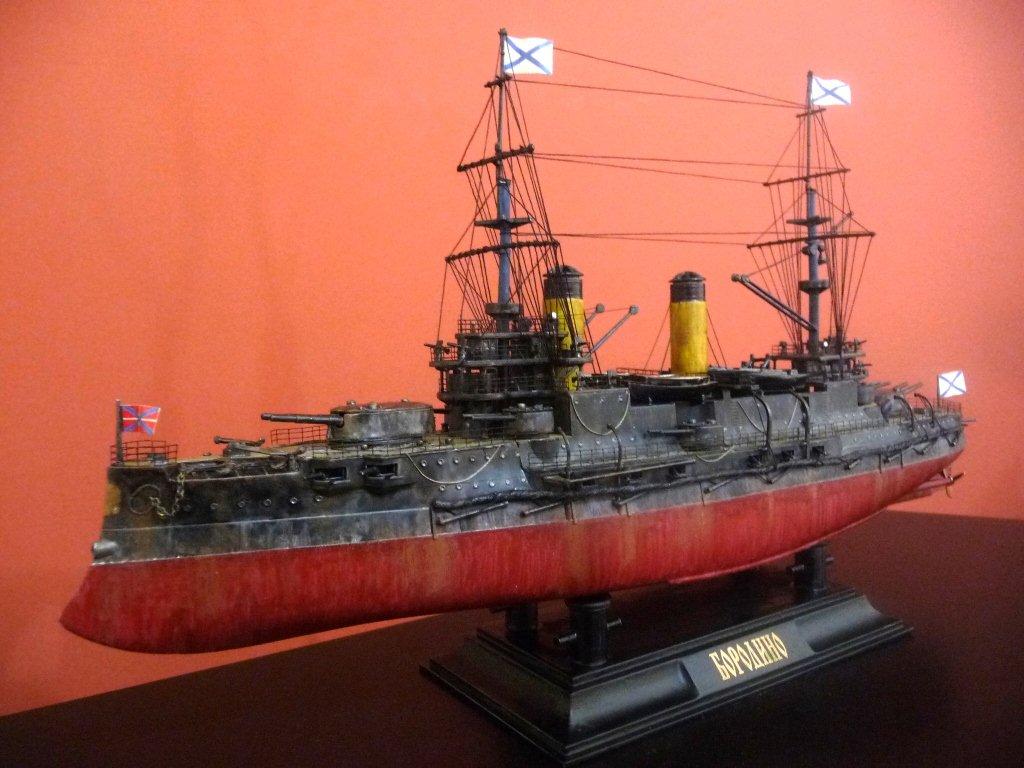
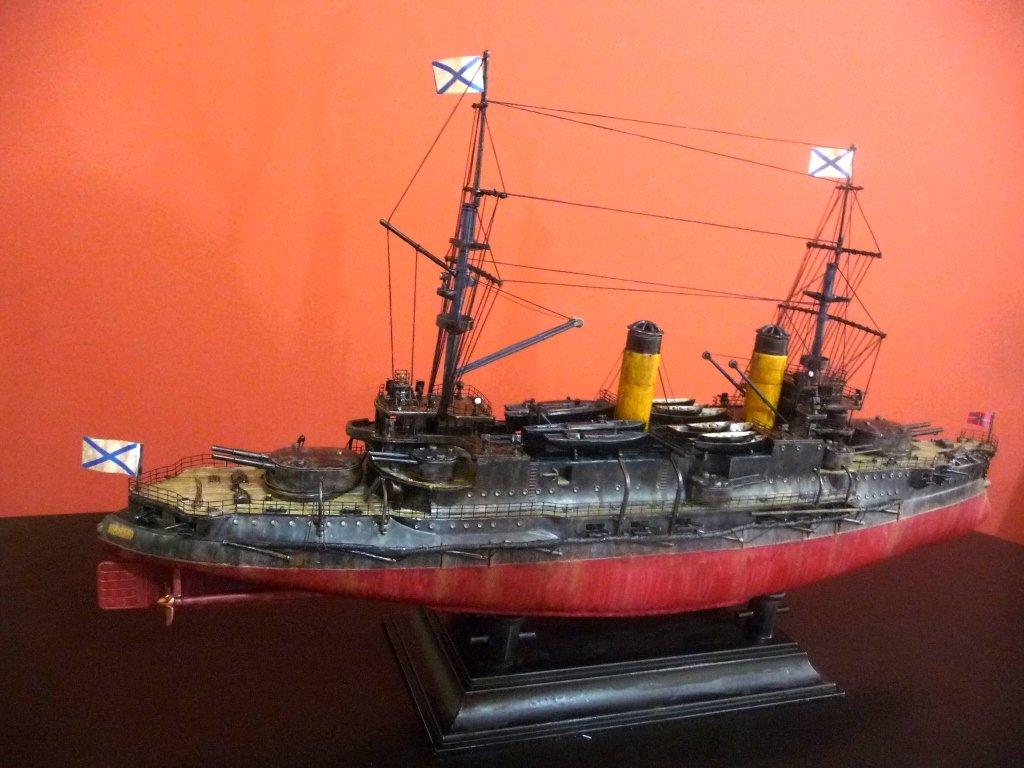
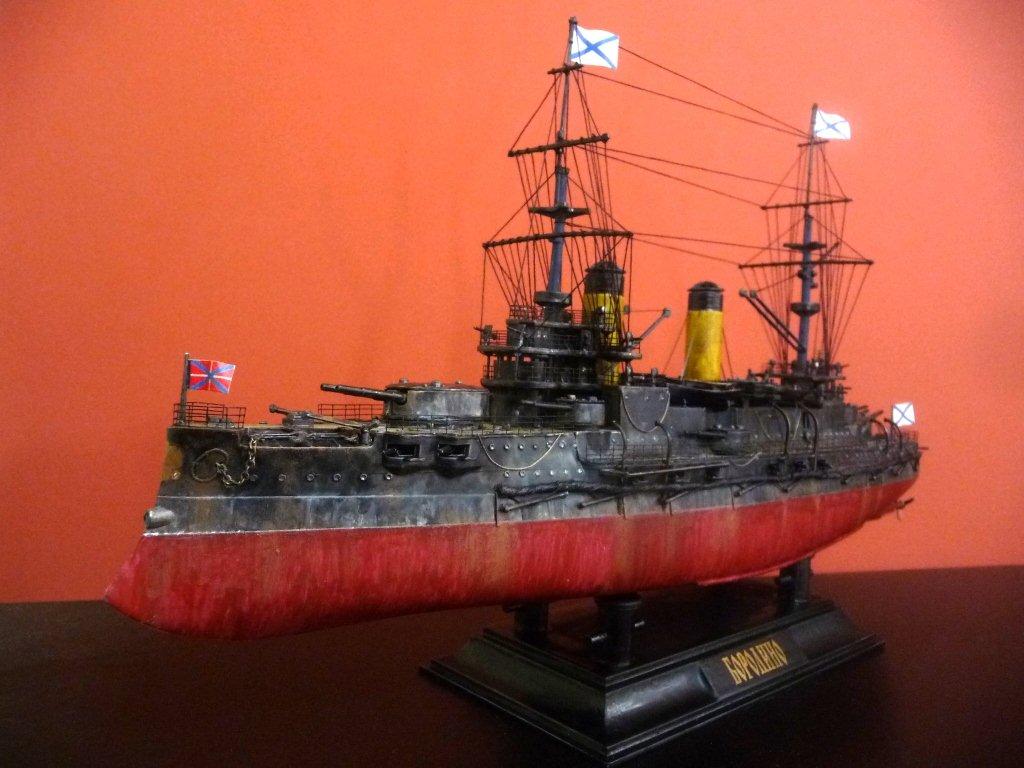
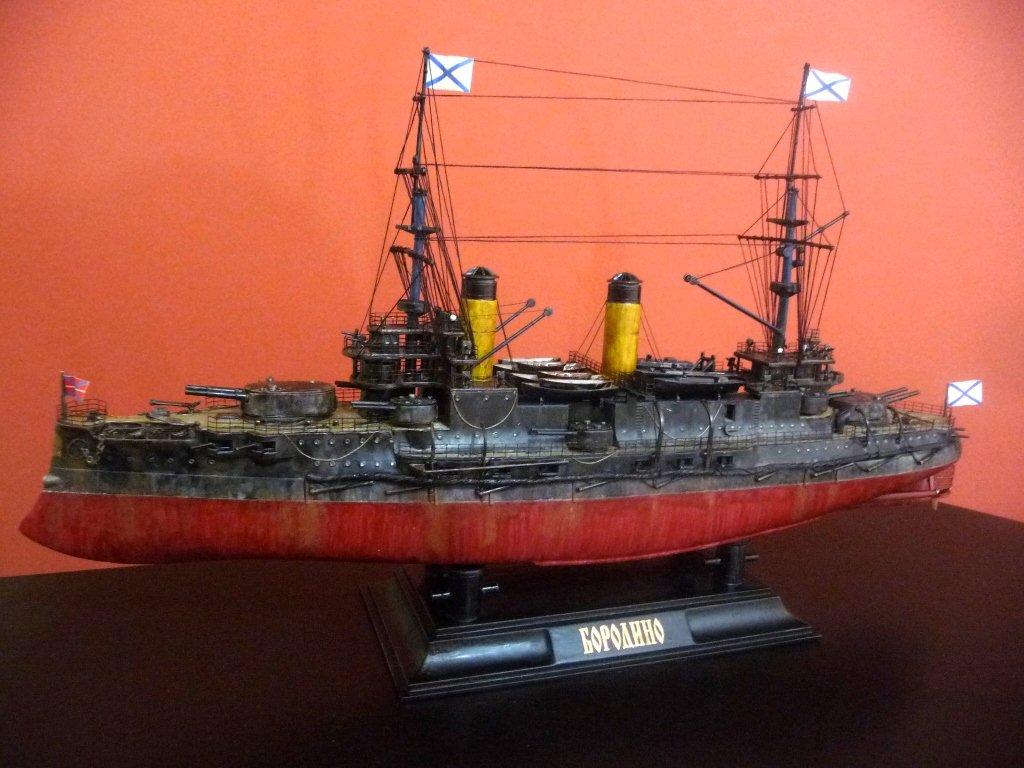
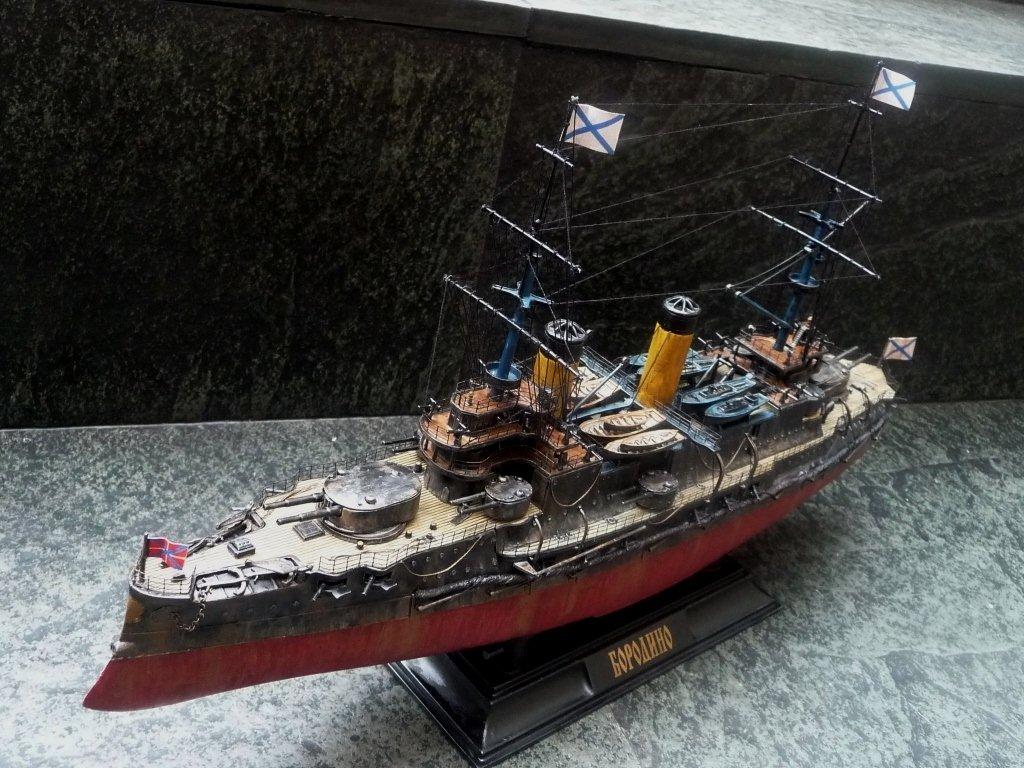
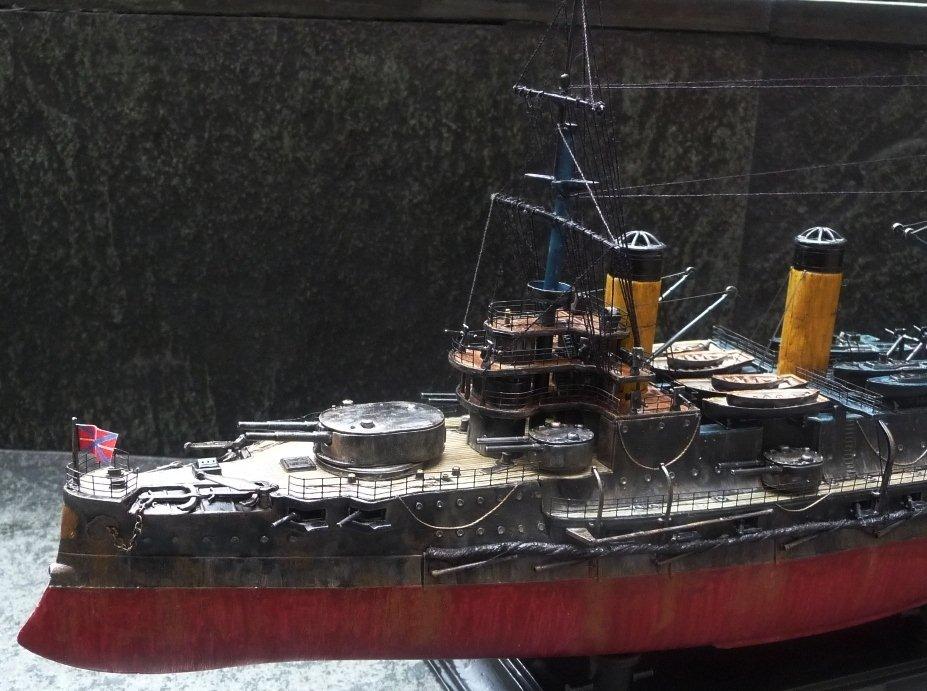
The Borodino (Russian: Бородино) was the leader of his class of warships belonging to the Russian imperial army, and the second ship of its kind to be completed. Named in memory of the Battle of Borodino in 1812. The Tsushima Borodino was sunk with only one survivor among the 785 crew members.
The Borodino sailed as part of the Russian Baltic fleet in October 1904 to the Pacific. While in route, was re-designated as a second Pacific squadron. He was part of the battle line of Admiral Zinovy Rozhestvensky in the Battle of Tsushima of May 27, 1905. The Borodino was hit in one of the secondary batteries of 152 mm by 305 mm projectile from the Japanese battleship Fuji, which caused the catastrophic explosion of one of its turrets. The Borodino exploded, overturned and sank quickly, leaving a single survivor in his crew.
Admiralty Shipyard, St. Petersburg
Class Borodino class
Battleship Type
Laid down July 1889
Launched in September de1901
Appointed September 1, 1904
Baja May 27, 1905
Destination sunk in the Battle of Tsushima
Features
13,732 t standard displacement
14,378 t apc
Length 121 m
Beam 23.2 m
Draught 8.9 m
Shield Belt: 193 mm
Turrets: 254 mm max
Cover: 51 mm
torpedo bulkhead: 25 mm
Armament 4 guns of 305 mm (2 × 2)
12 guns of 152 mm (6 × 2)
20 guns of 75 mm (20 × 1)
20 guns of 47 mm (20 × 1)
8 37 mm cannon
4 381 mm torpedo tubes
Propulsion 2 steam triple expansion
12 Belleville coal boilers
Power 15,800 hp
Speed 18 knots
Crew 28 officers, 754 crew
Capacity 1580 t of coal
The Battle of Tsushima (Japanese: 対 马海 戦), commonly known as the Battle of the Sea of Japan (Japanese: 日本 海海 戦) in Japan, was an armed encounter between the Japanese fleet and the Russian Baltic Fleet, sent from Europe, who fought in the straits between Korea and Japan are located near the group of islands of Tsushima in May 1905. The victory encouraged to Japan.
Background
Earlier, the Russian Pacific Fleet was attacked without warning and destroyed Japanese in the Battle of Shantung on August 10, 1904. This defeat had exalted the spirits against the Czar Nicholas II of Russia, and he had ordered to be mobilized in the Baltic fleet, under Admiral putting Rozhdéstvenski.
They were finishing some modern battleships but most of the units were very old, with most designed for coastal waters, without failures in maintenance and training of the troops. The mission called for the Tsar was almost unenforceable.
The Baltic Fleet sailed, being pompously dismissed by Nicholas II. Sailed across the North Sea, causing a diplomatic incident very heavy (Dogger Bank incident) when they attacked the British fleet there fishing. Then he went to Africa and touched port in Indochina.
The trip was very long and the crews were unhappy. Part of the fleet took way along the African coast and over the Mediterranean, where they met at the exit of the Red Sea.
The machinery of ships was driven by steam, so they had to organize parallel convoy of colliers who had time to carry their cargo to ports in which to spend his burden on the fleet while sailing to your destination . Russian merchant fleet did not have enough to carry out the supply, so you had to hire outside companies belonging to neutral countries, which brought diplomatic conflicts, delays, sometimes even paralyzed for many days, the discharge into neutral ports . This stagnated the progress of the fleet and wore out their machinery which, being driven by steam, had to be continually under pressure. One of the operations to transfer coal fleet to the Russian coal had to be carried out at sea.
Then the Russians ordered to break the blockade of Port Arthur (a town that is now part of the modern city of Dalian), although by then the place had already fallen to the Japanese before the arrival of Russian ships, so that veered to route the Russian port of Vladivostok.
The Russians could have sailed through one of three possible routes to reach Vladivostok, according to the Straits of La Perouse, Tsugaru Strait or Tsushima.
The Russian admiral chose Rozhdéstvenski Tsushima in an attempt to simplify the route. Admiral Togo Heichachiro, which had docked in Pusan, Korea, also believed that Tsushima was the preferred alternative by the Russians. This stretch includes an area east of Tsushima Island located about halfway between the islands of Kyushu and the Korean peninsula, the shortest and most direct route from Indochina. The other two routes required the fleet sailed east of Japan.
Read about the battle
