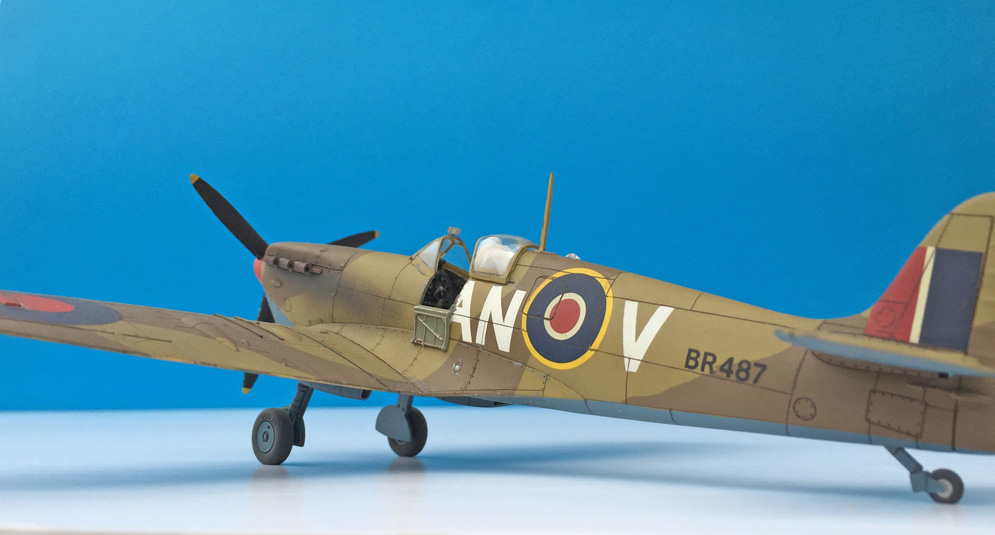
We’re delighted to showcase the Supermarine Spitfire Scale Model Gallery — a curated collection of builds submitted by talented modellers from around the world. Whether you’re just starting in the hobby or you’ve been building for years, our gallery is a great place to:
- Explore inspiring builds spanning different Spitfire marks, scales and techniques.
- Appreciate the craftsmanship and creativity that goes into each model.
- Learn from fellow enthusiasts by seeing how others tackle paintwork, weathering and detail.
This gallery showcases Supermarine Spitfire scale model builds created by modellers from around the world. You’ll find a wide variety of scales, versions and finishing styles — from factory-fresh RAF fighters to heavily weathered combat veterans. Each gallery offers close-up photography so you can study paintwork, markings, detailing and modelling techniques in depth.
Over its long service life, the Spitfire evolved into dozens of variants — from the early Mk.I interceptors of 1940 to high-performance Griffon-engined fighters later in the war. This diversity makes it one of the most rewarding aircraft for scale modellers, offering endless possibilities for markings, camouflage schemes, weathering styles and historical settings.
Not yet a Subscriber? Unlock full access all for just £1.50/month (£18/year)
Spitfire Scale Models – From Mk.I to Late-War Variants
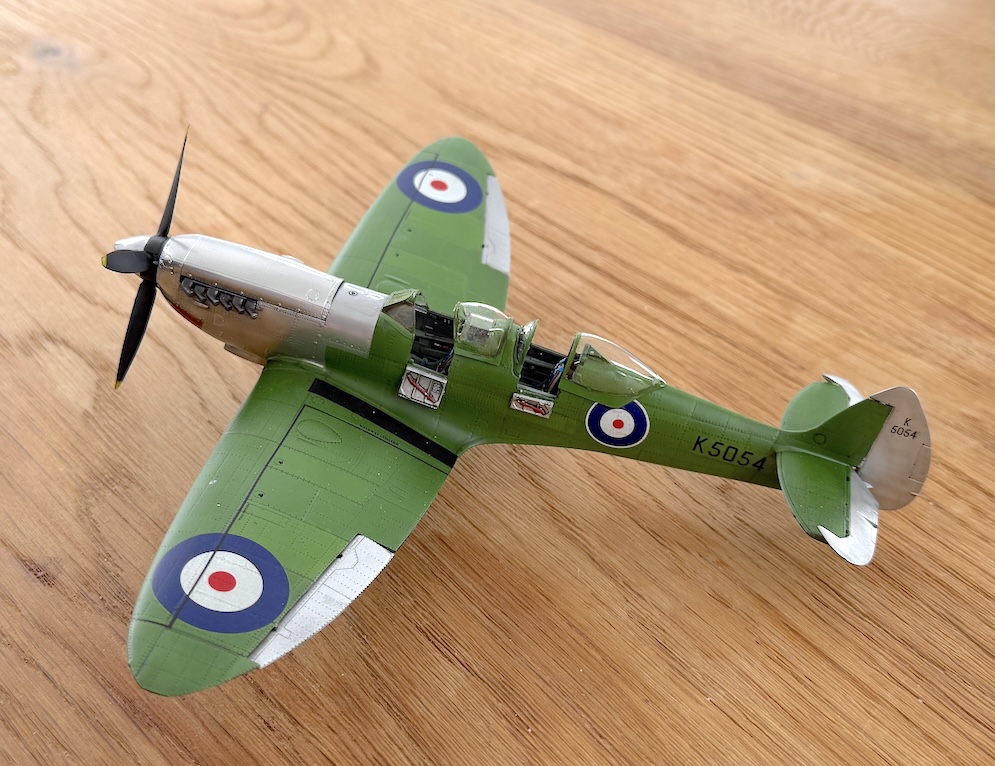
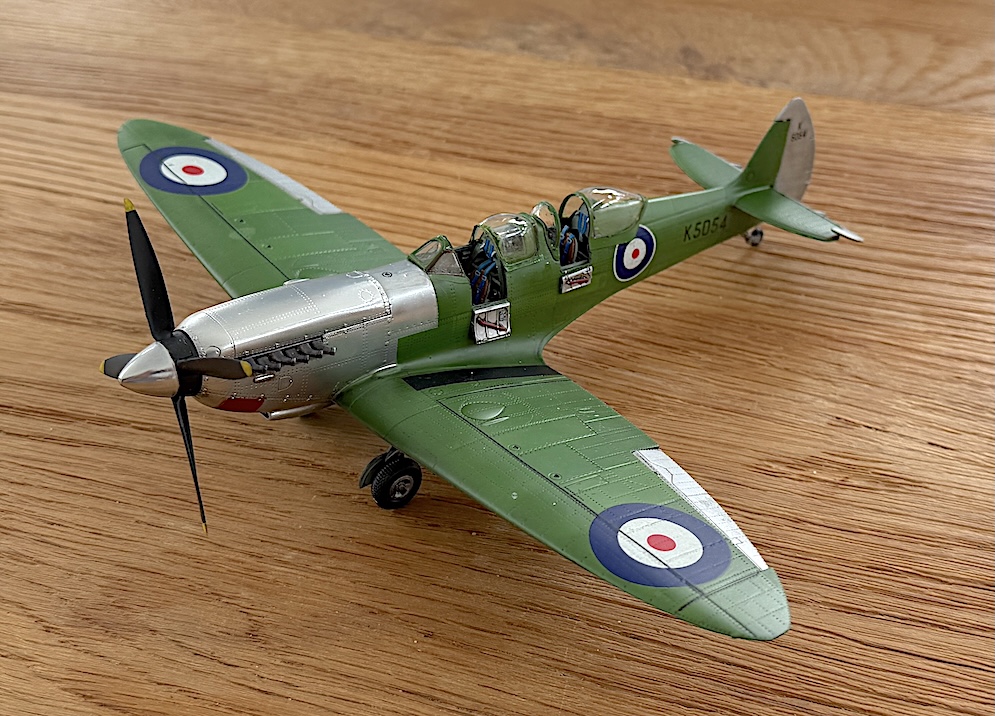
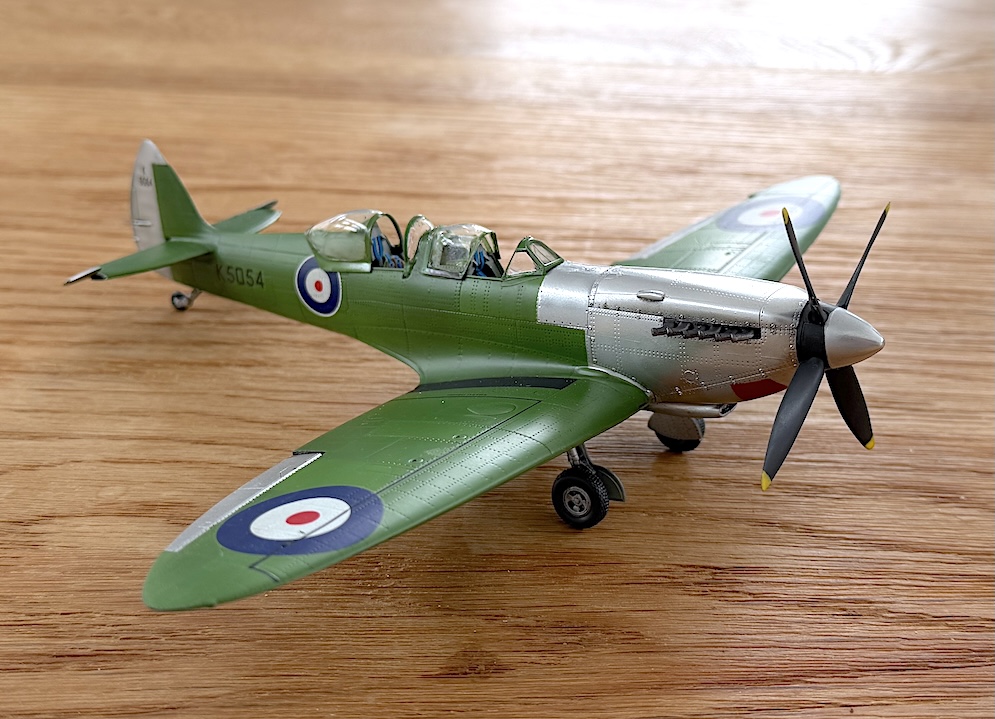
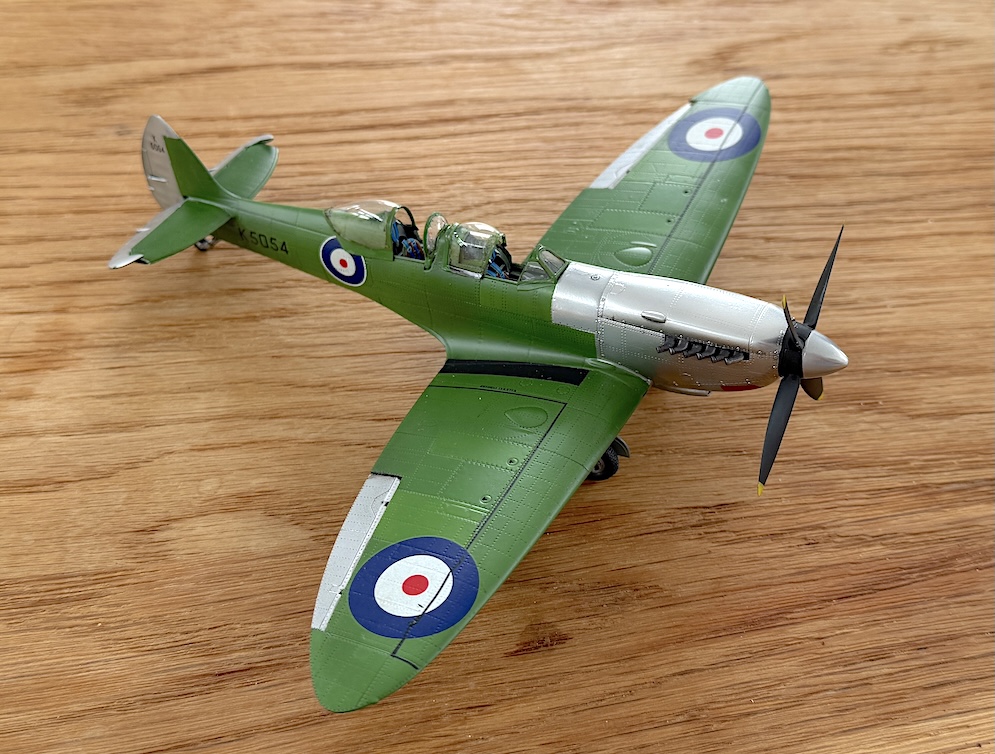
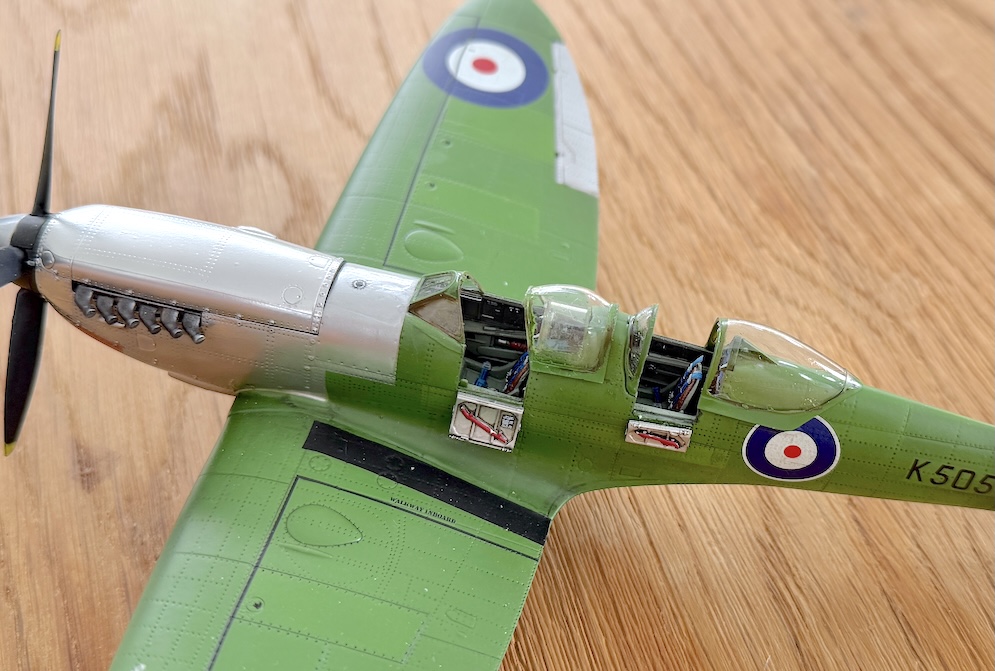
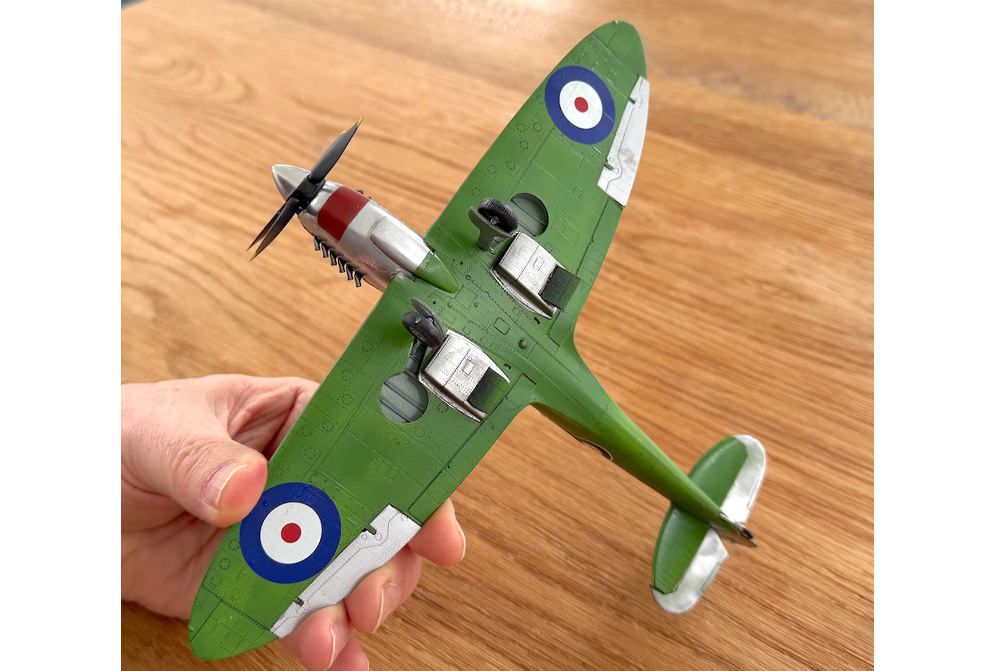
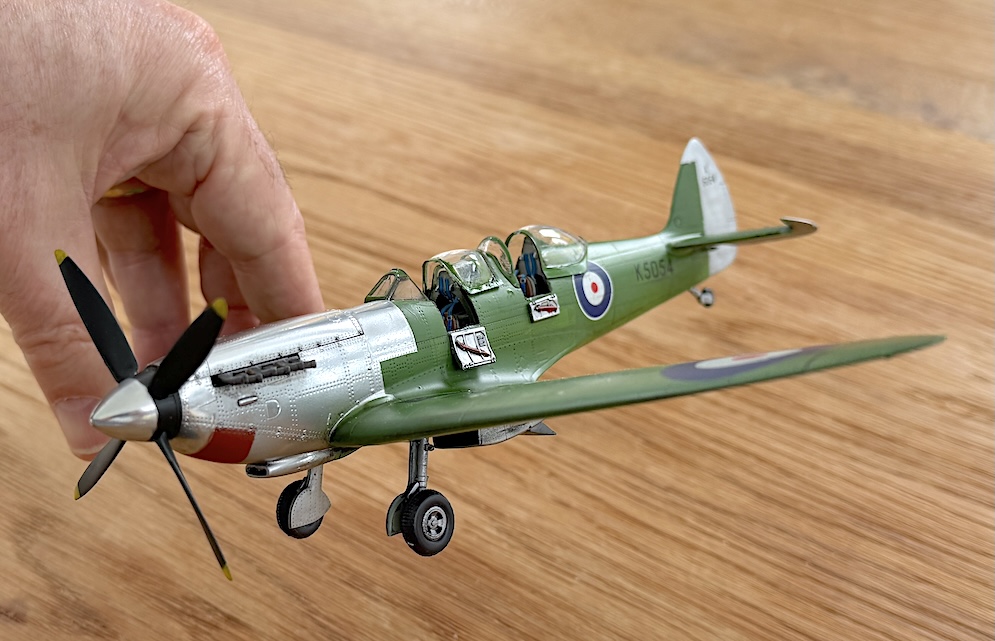
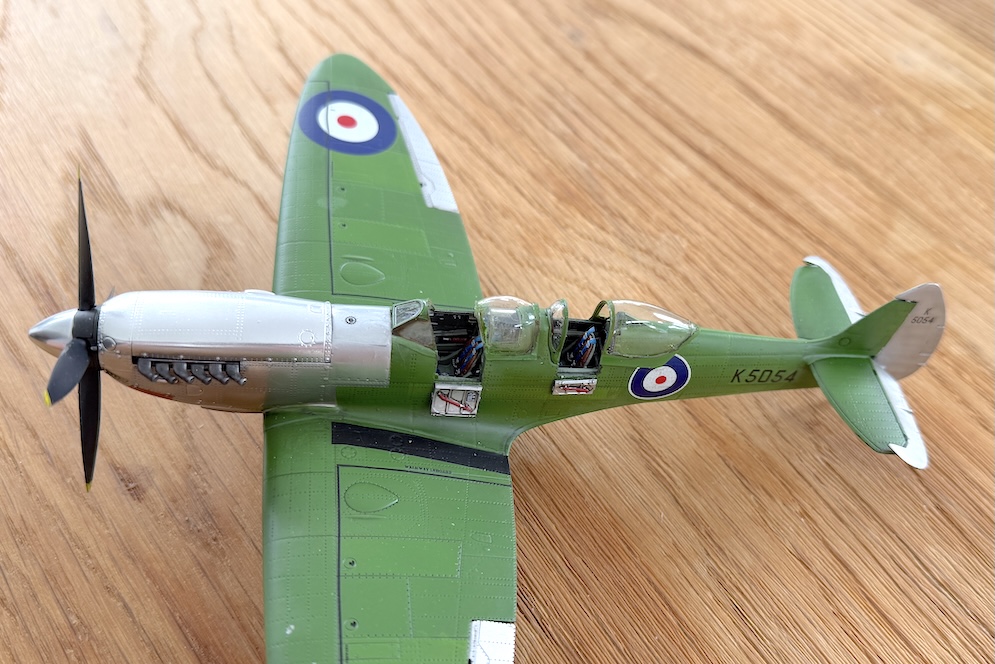
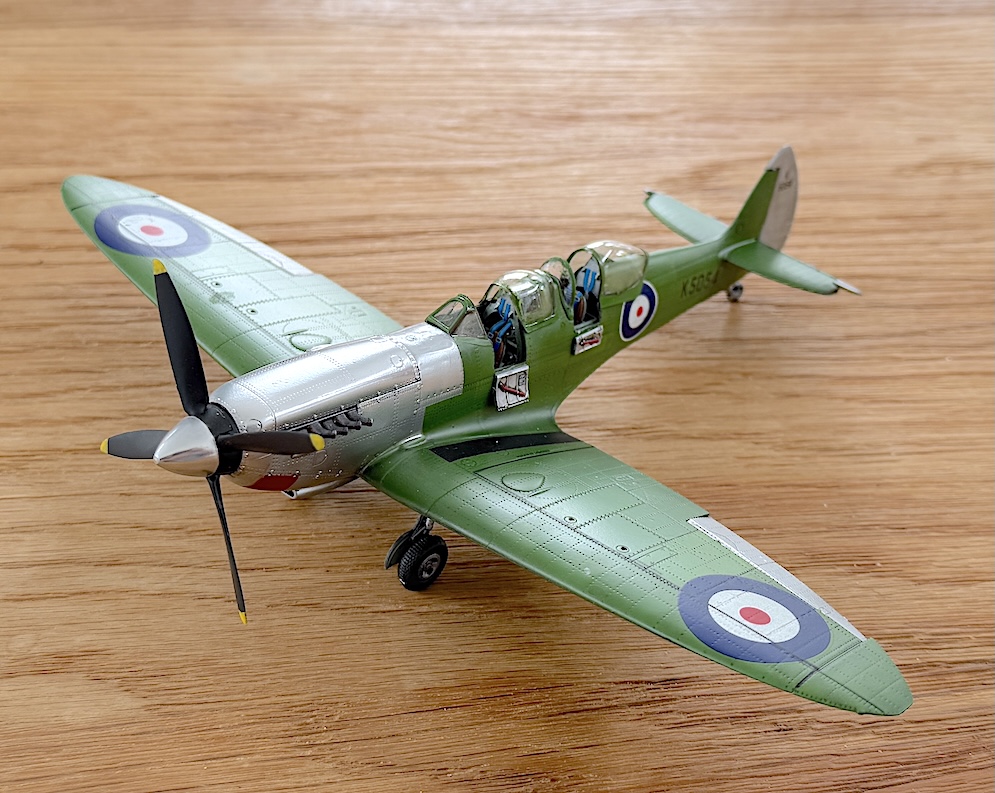
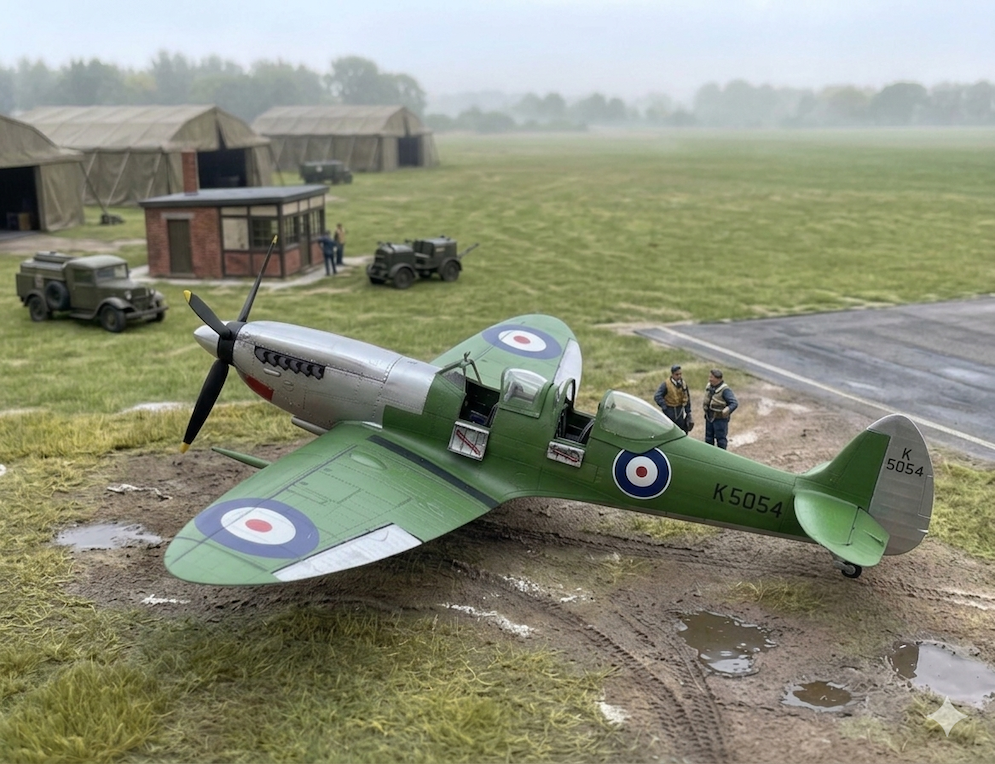
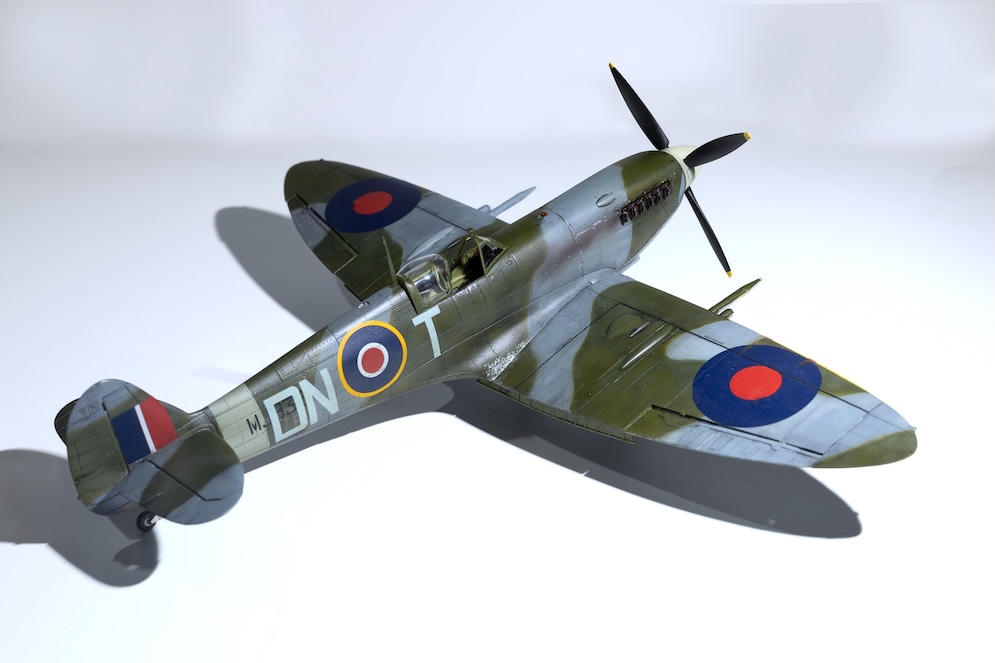
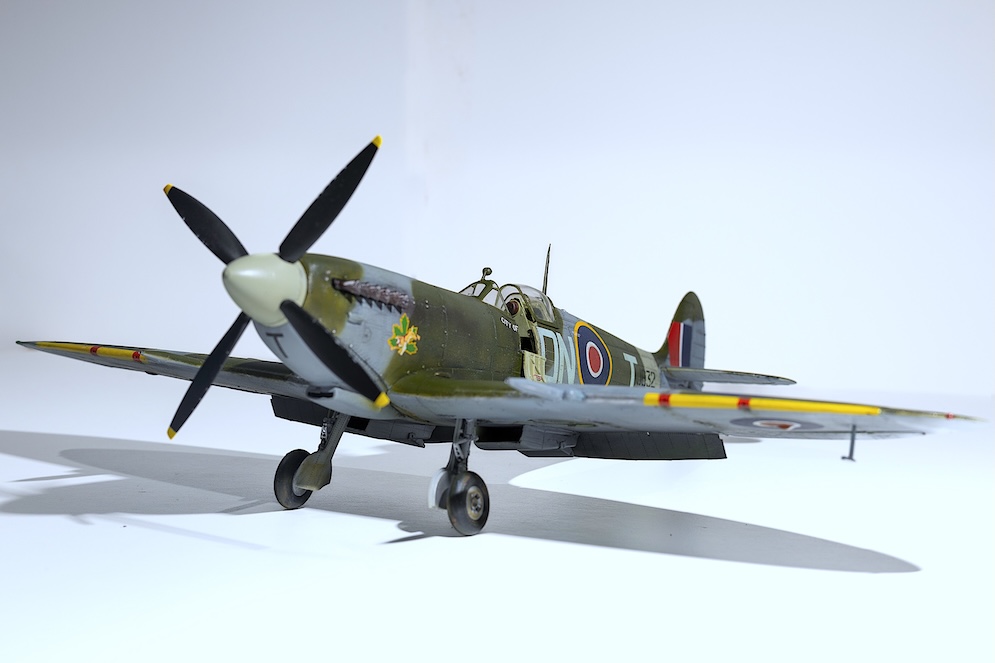
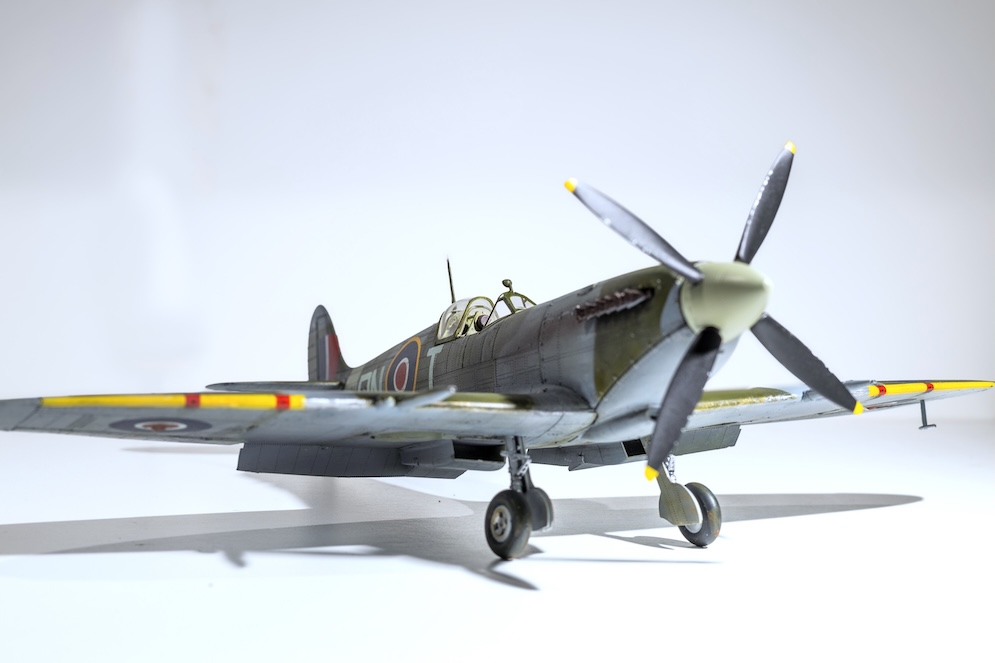
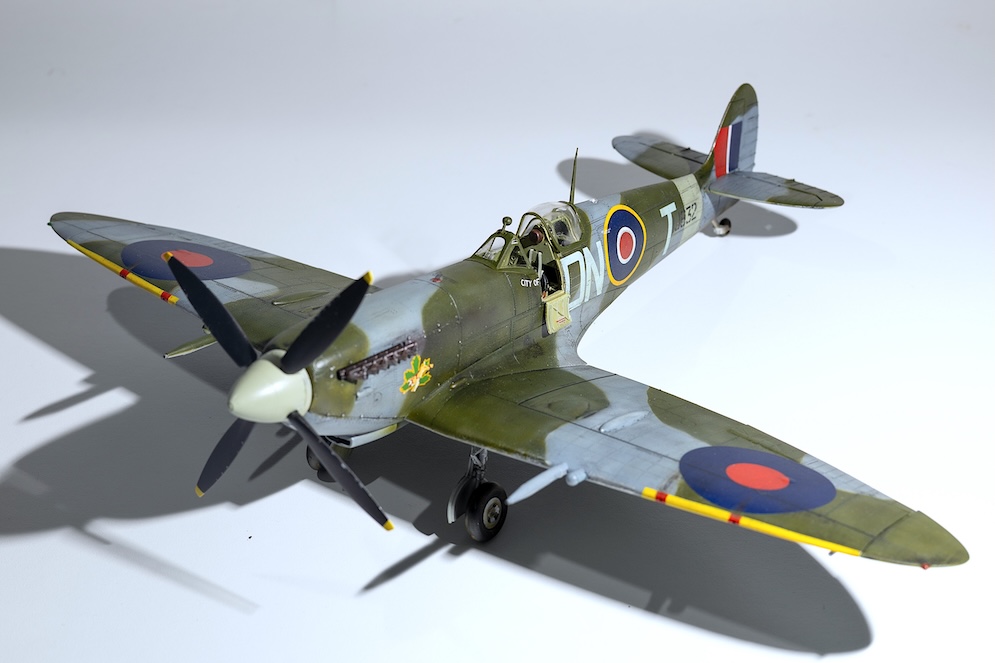
The kit is the Airfix 1:48 Spitfire TR.9 mostly out of the box with exception of Eduard seat belts.
I decided to pay tribute to the Spitfire’s first prototype flight 90 years ago which was made with K5054.
At this time it had the cowlings in polished bare metal the control surfaces in painted aluminium and the remainder in what was said to be Supermarine Green. There are no colour references to prove this. Some argue it was like zinc chromate green but I felt this was too like late war or USAAF aircraft. I used RAF cockpit green with a touch of blue and yellow to come up with what I’d read described. I may be wrong. I used little weathering and only a touch of colour modulation to improve visual appearance of the model.
It’s a fabulous kit and thoroughly enjoyable. Highly recommended.
Les V.
PS: the final image in the gallery has been created using Google Gemini AI software to set my model in a realistic setting and the result certainly sets the model off nicely. (By GC)
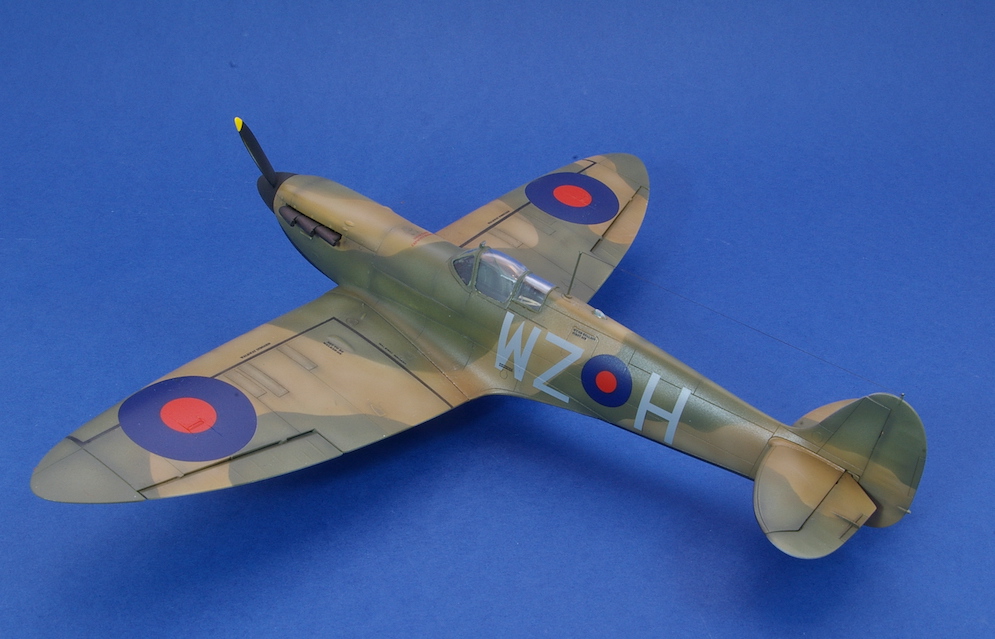
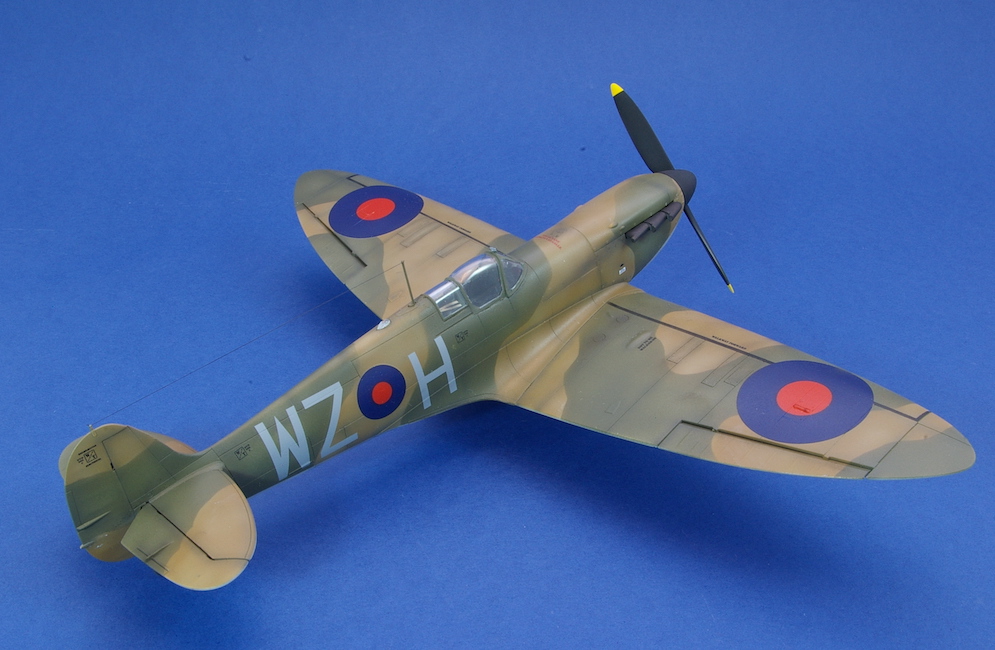
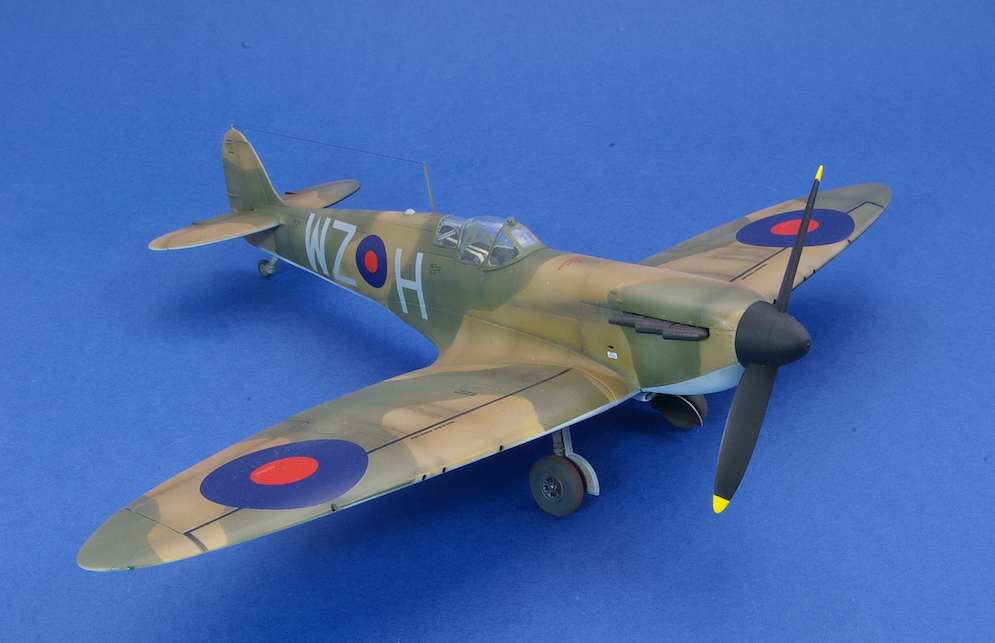
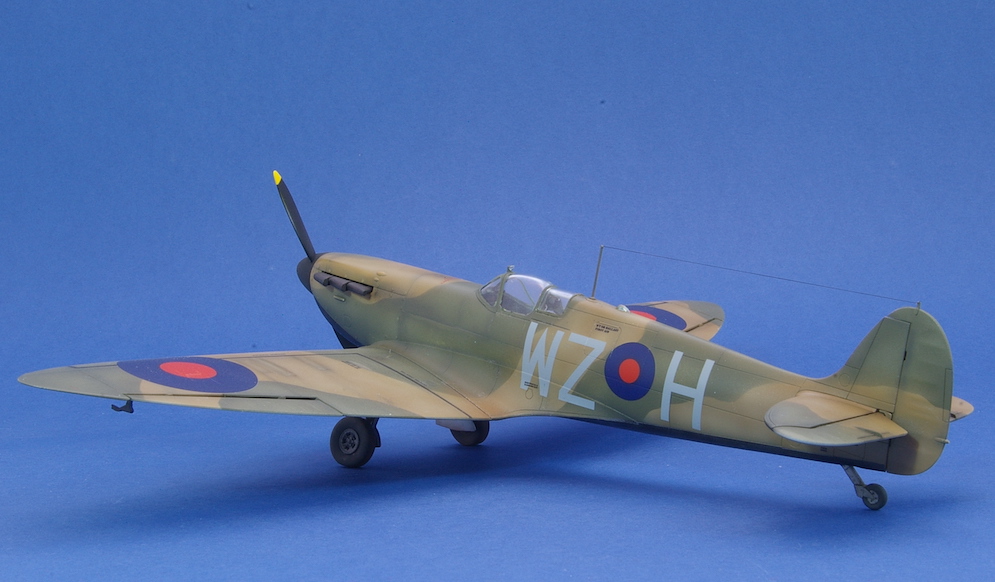
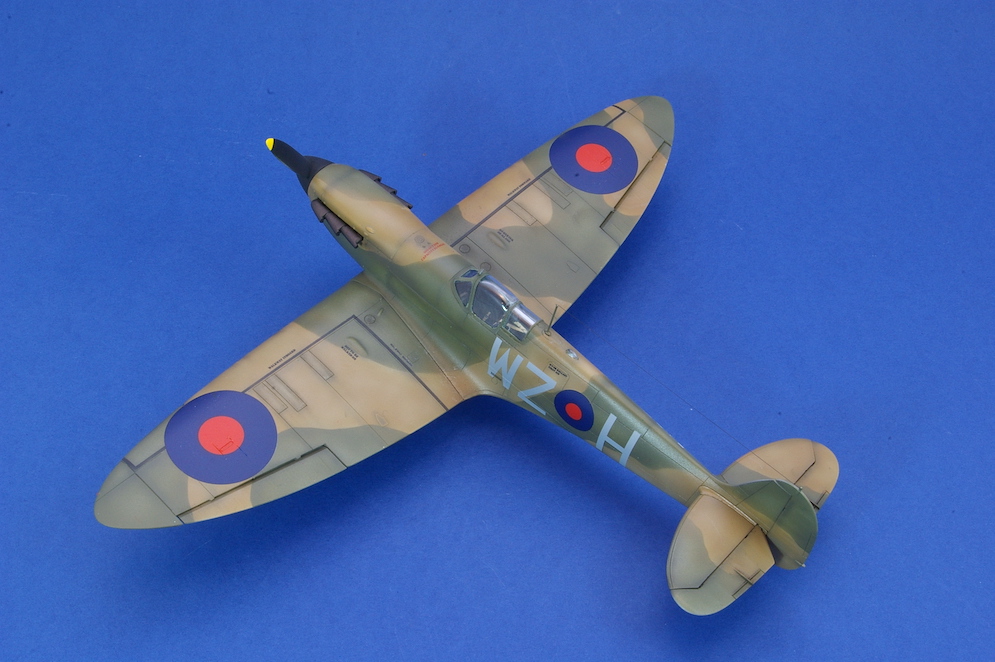
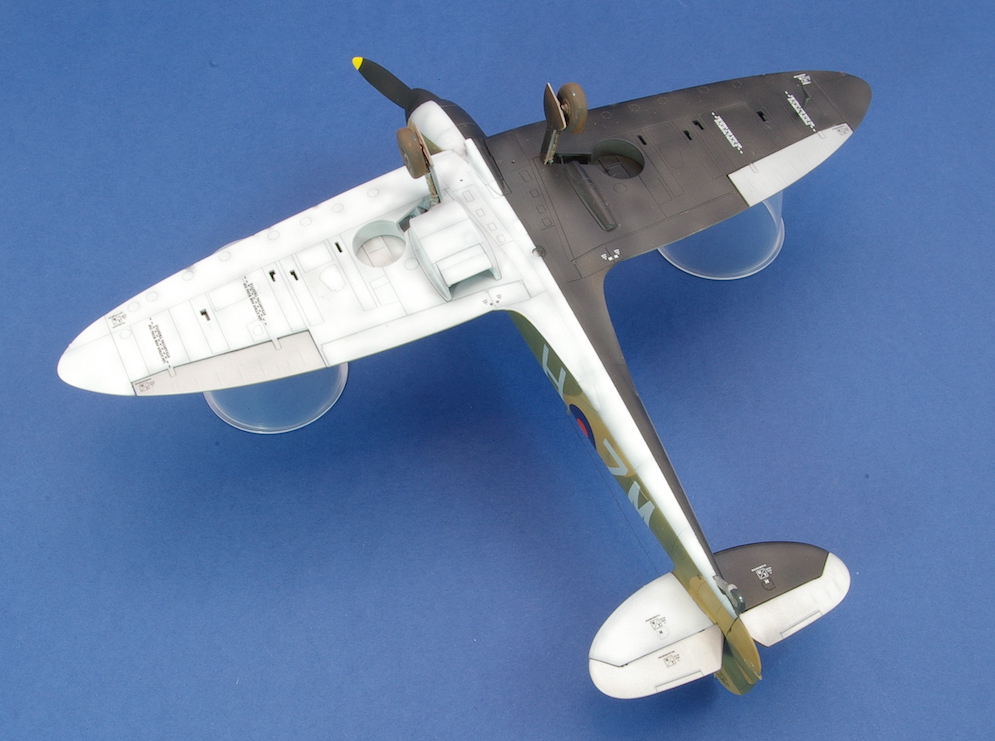
The subject of this project was the Airfix 1:48th scale Spitfire Mk. 1 released in 2015.
The kit comes with a number of different styles of canopy and windscreen. It also supplies two and three blade propellers allowing several sub-variants of the Mk. 1 to be modelled. Three marking options were provided in the kit including the pre-war version that I chose to model.
I found the kit fairly easy to build though for some reason getting the cockpit to fit into the fuselage proved to be something of a challenge (something that has been noted in a couple of reviews of this kit that I have seen online). The sides of the cockpit tub needed to be trimmed to get them to fit.
Attaching the undercarriage legs also needed care. The attachment points are not particularly positive, and I found it difficult to align them correctly. They are also not particularly secure and so I ended up reinforcing them with thin brass wire.
The only things that I felt needed to be added by the modeller were a seat harness (I chose a Sutton harness from an eduard etched set) and an aerial wire (made from thin elastic rigging thread). The IFF wires running from the fuselage sides to the elevators do not seem to have been fitted to these early machines so none were added to my model.
The painting was done using a selection of Mr. Hobby and Tamiya paints.
As usual with the Spitfire models that I make, I chose to mask and spray the black walkway markings rather than using the kit’s transfers. This was to avoid the transfers along with their carrier film being visible as raised areas under the wing roundels.
Note that the red fabric patches used to keep dirt out of the gun ports are not visible on the photos that I could find of pre-war Spitfires and so these were not used on the model.
Period photos of pre-war Spitfires showed that they were not subject to heavy weathering and did not show extensive exhaust staining. This was presumably because the ground crews had time to keep the machines clean and tidy – a luxury perhaps not available during the war. I therefore limited weathering to some dark brown pastel chalks applied around the gun ports and access panels and some light chipping on the left wing root from a sharp silver pencil.
Dai W.
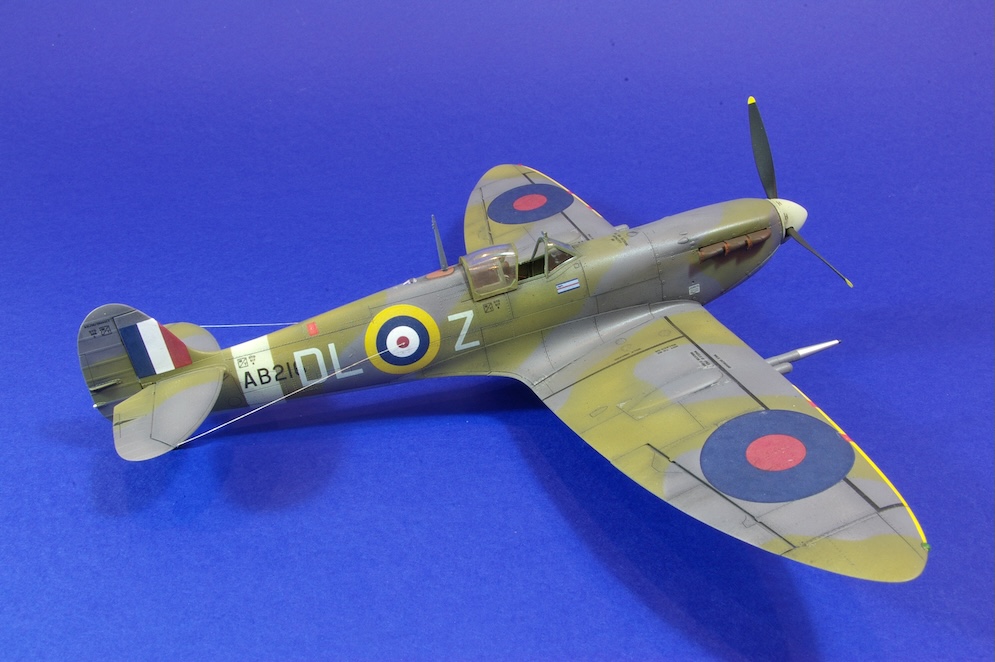
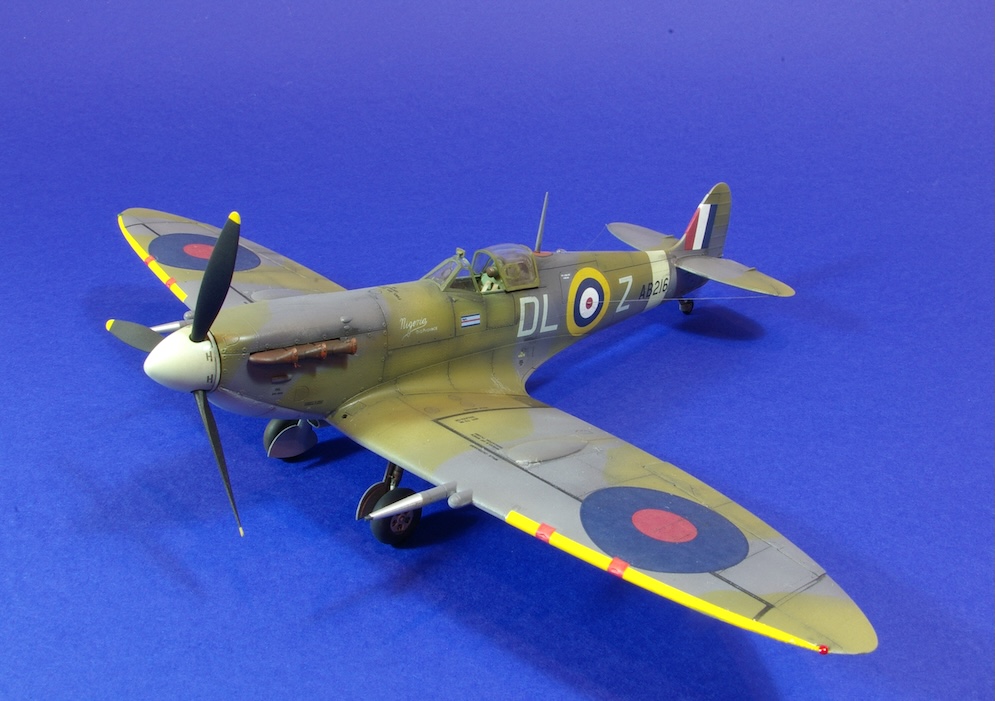
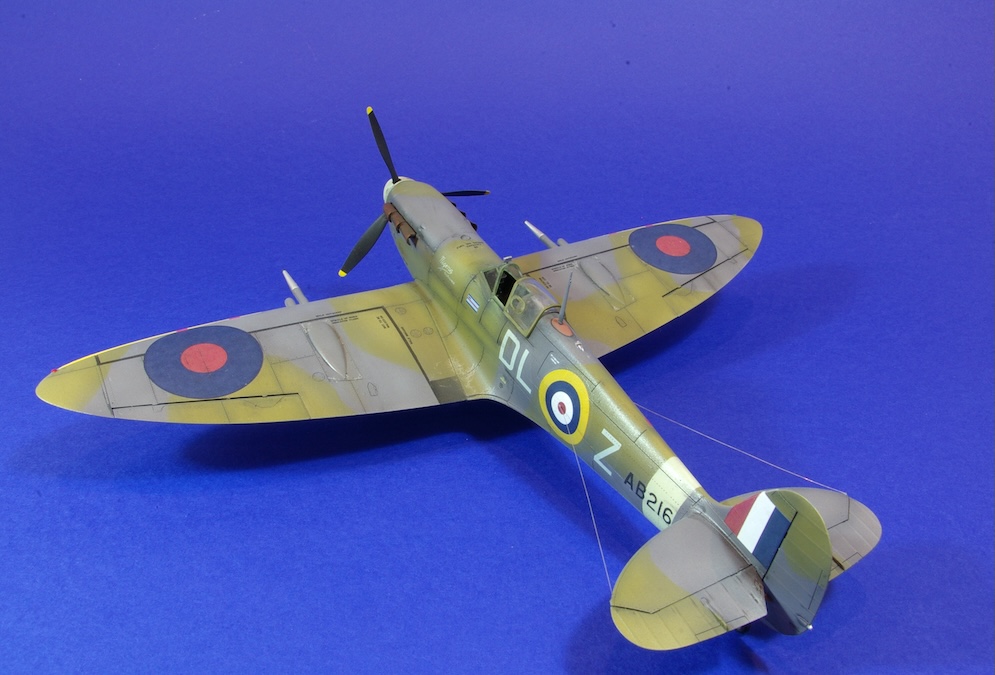
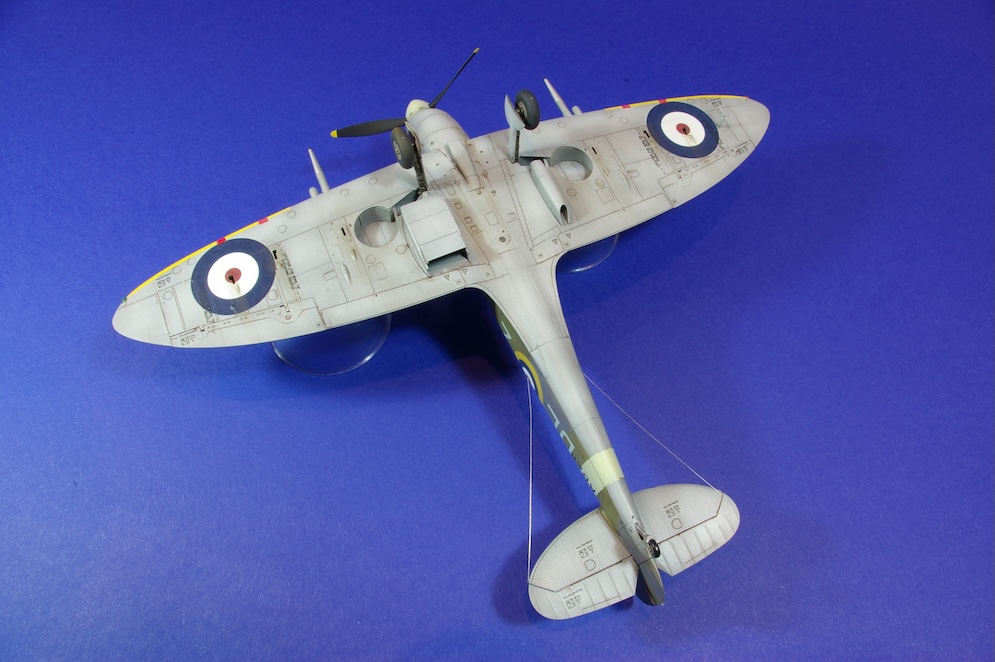
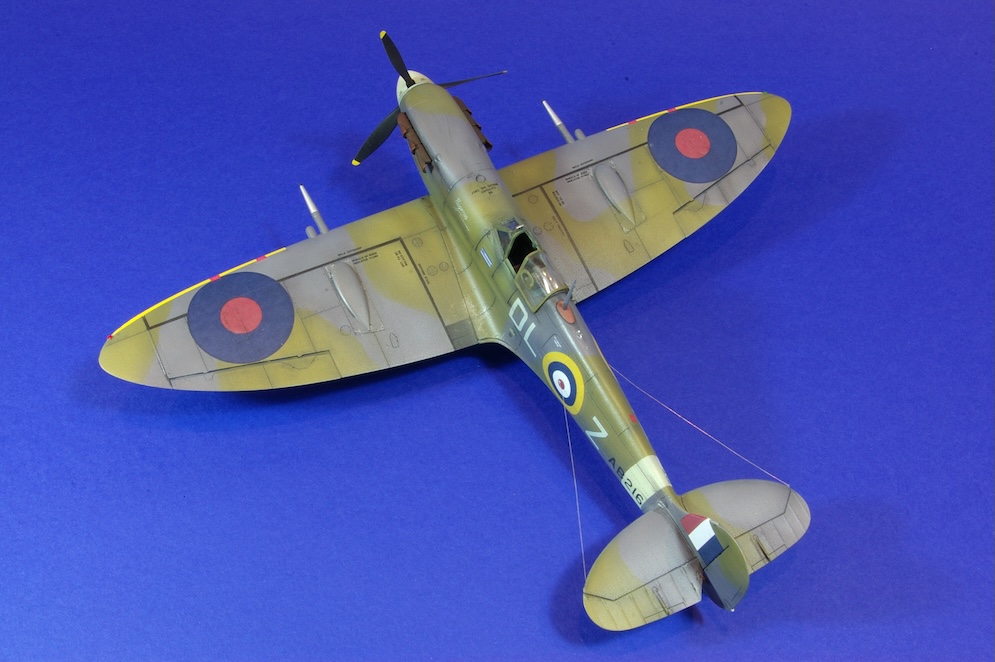
The subject of this project was the eduard Spitfire Mk. V built from their Weekend edition kit.
The kit was built from the box with only a set of seatbelts added from an accessory set. The kit was painted using Mr. Hobby paints and varnishes, which were thinned with their own self-levelling thinner.
The transfers were dated 2022 and after an experiment with a couple of unused images from the sheet, it appeared that they had removable transfer film. I believe that any sheets dated before 2022 do not have peelable film. Whilst I have had problems with this in the past, I decided to take the risk and have a go.
After the transfers had set for 24 hours I peeled the film from the larger images with no problem.
However …… apply the fin flashes one at a time. Allow the first to set at least overnight and then peel off the film before the second transfer is applied to the other side of the fin as the two will overlap slightly. If you don’t do this, removing the film from the first transfer will damage the second. I found that out the hard way with a previous Spitfire build leading to the use of intemperate language including profane dockland vulgarity.
The peeling process seemed to be somewhat less successful with the smaller images such as the stencils, some of which peeled away with the film, and so I gave up and left these as they were. The transfer film in general is not that much of a problem though, as it is thin, glossy and was easily disguised with a coat of gloss varnish.
I masked and sprayed the walkway markings on the upper wings instead of using the transfers supplied in the kit. This is because I usually fail to apply the long thin images in straight lines which will immediately draw the eye for all the wrong reasons! Also, the wing roundels are to be applied on top of these walkway transfers, and they will then appear as raised areas under the roundels which is both horrible and also disgraceful.
The weathering was done with Flory chalk-based washes after seeing some excellent and very subtle results on an Airfix two-seat Spitfire at a recent model show which like eduard kits features very restrained rivet detail. I found that these washes worked well on a gloss surface and were very forgiving as the excess was easy to clean away using slightly dampened kitchen towel or cotton buds. I’ll be using these a lot more in the future in place of oil washes to emphasise panel lines.
This particular aircraft was fitted with a VHF radio and so dd not have a wire going from the aerial to the fin. However, it did have IFF wires running from the mid fuselage to the tips of the elevators. These were made using pieces of steel surgical wire which was rolled straight under a steel ruler and attached with white glue. When rolled straight under a ruler, a short length of this material will support its own weight and will stay straight and so was OK to use here. A length of wire any longer than the pieces used here will droop after a while and so I think that then stretched elastic thread placed into pre-drilled holes is a better alternative.
I think that eduard’s series of Spitfire kits are excellent and I will hopefully get to build more of these in the future.
Dai W.
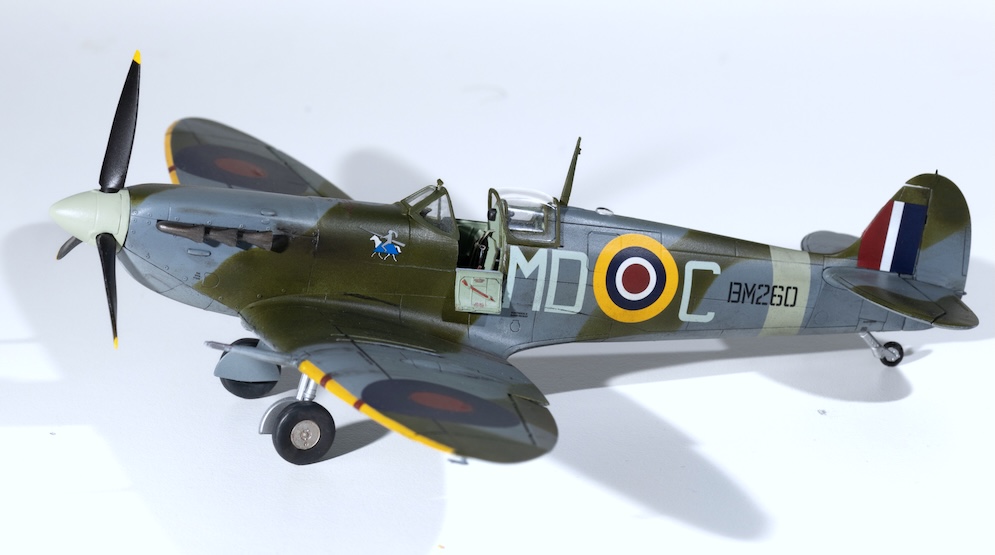
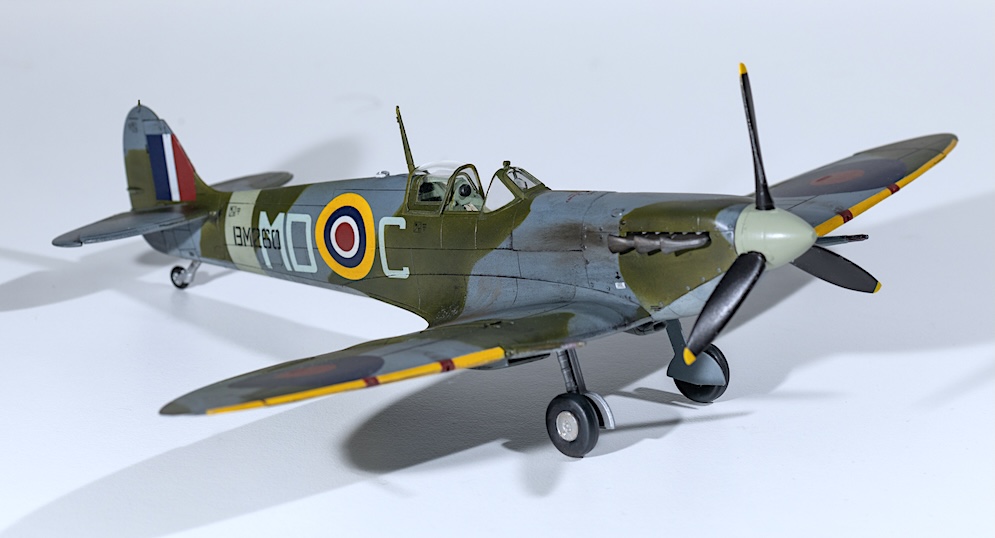
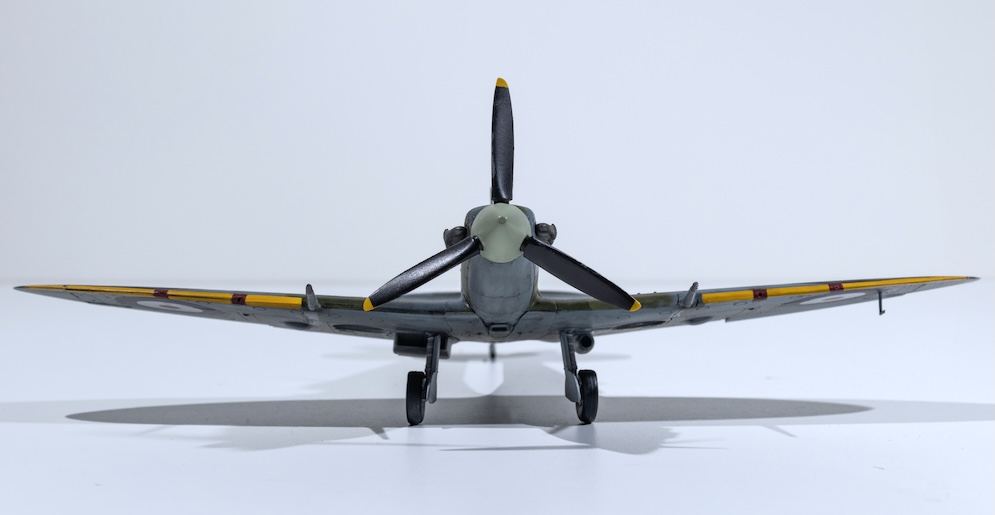
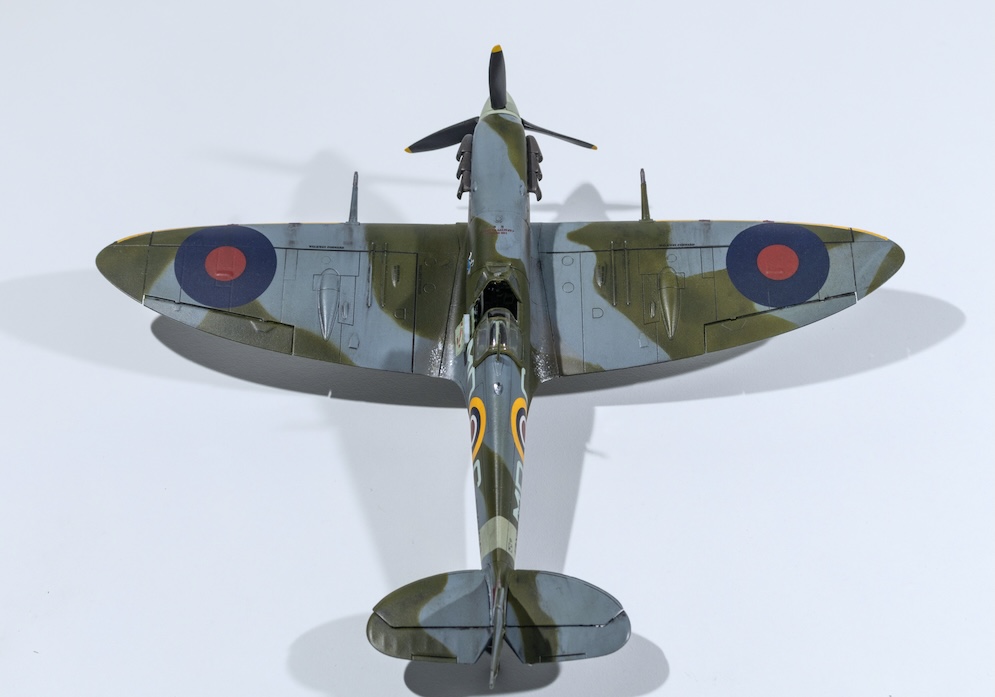
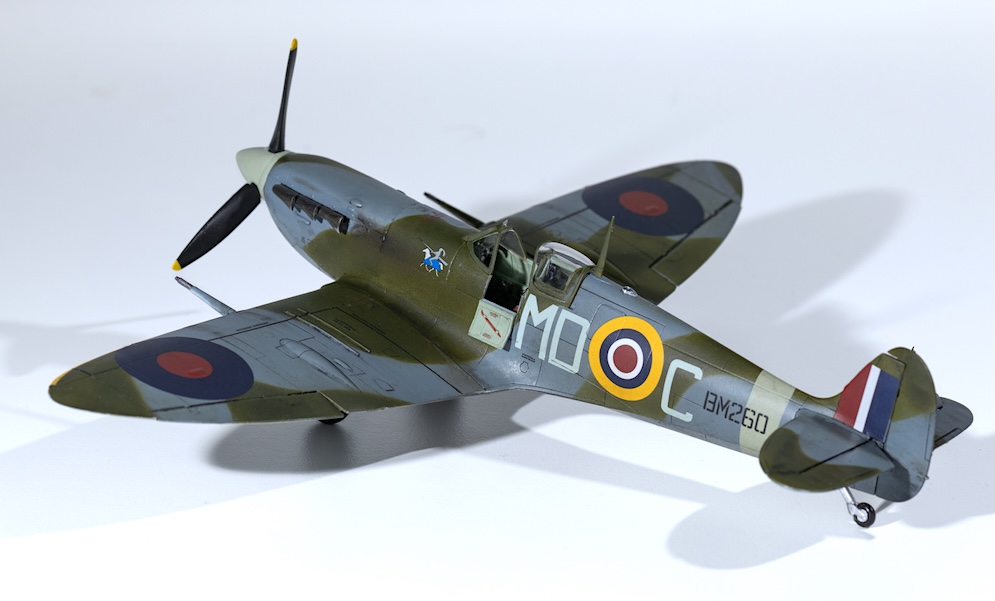
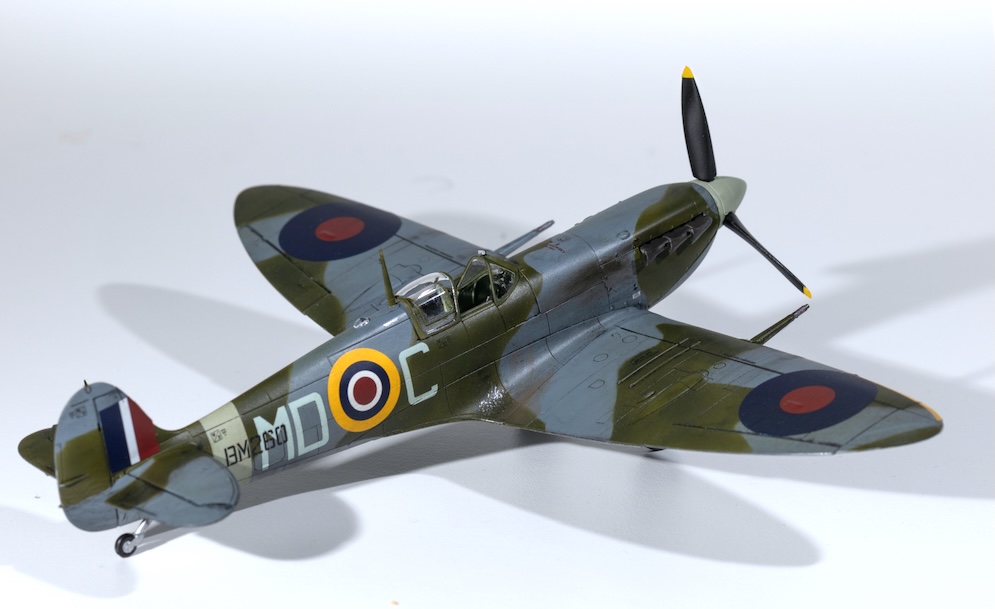
My attempt at the Airfix 1:48 Spitfire Vb
This kit came as a freebee from Airfix when I bought my upcoming Fairey Gannet, so decided to give it a go!
Nice kit but had a few issues with cowling over the fuel tank, with a pretty poor fit! quite a bit of remedial work required to get a half decent seam line, sanding down the top of instrument panel and inside of the cowing did the job. Also found the undercarriage very fragile and bayonet joint very flimsy, which won’t take many knocks, before the legs fall off… again.
The recessed panel lines are very prominent on the fuselage, but better after primer and sprayed. Decals were excellent and worked great with Micro Set and Sol with no silvering, that I can see.
Enjoyed the build however and a challenge working on for me such a small kit, after many recent 1:48 F-4’s.
Richard A.
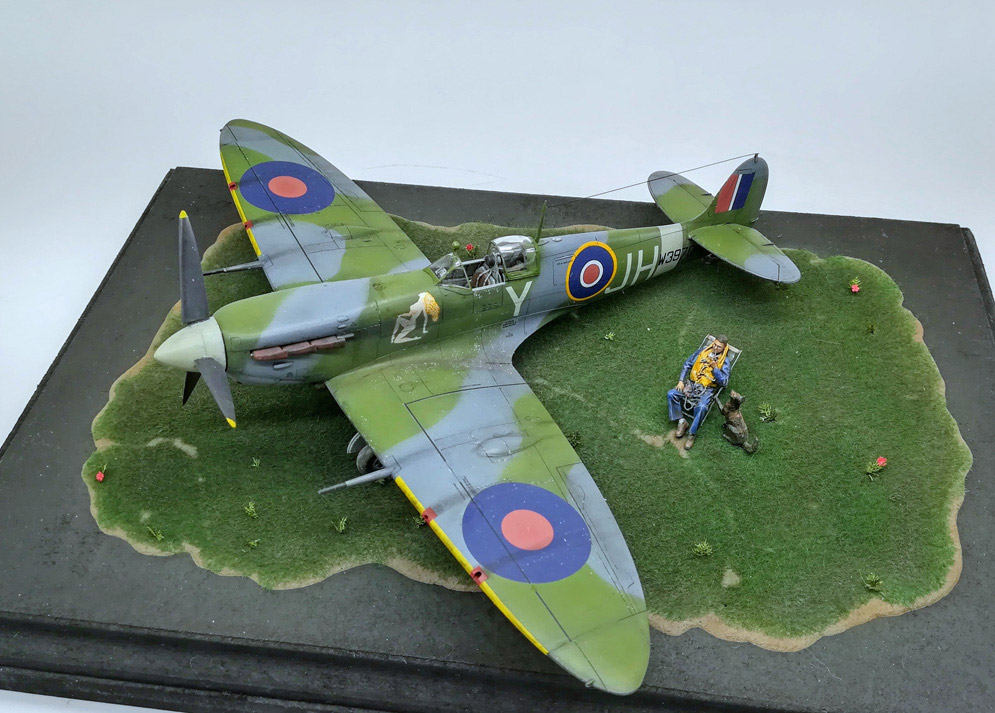

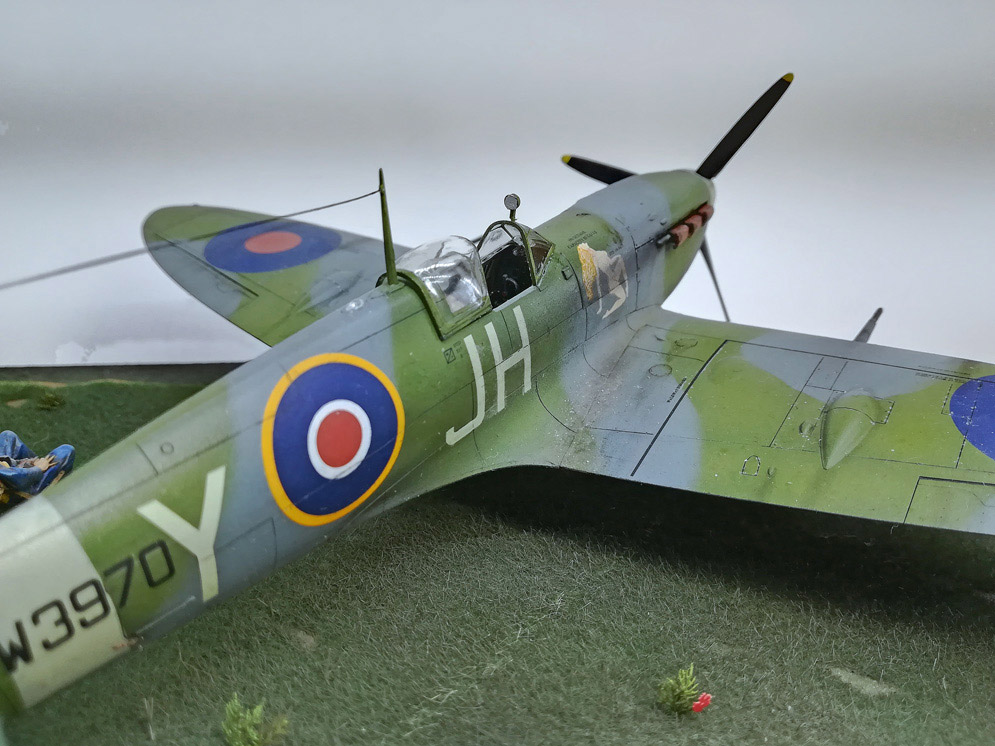
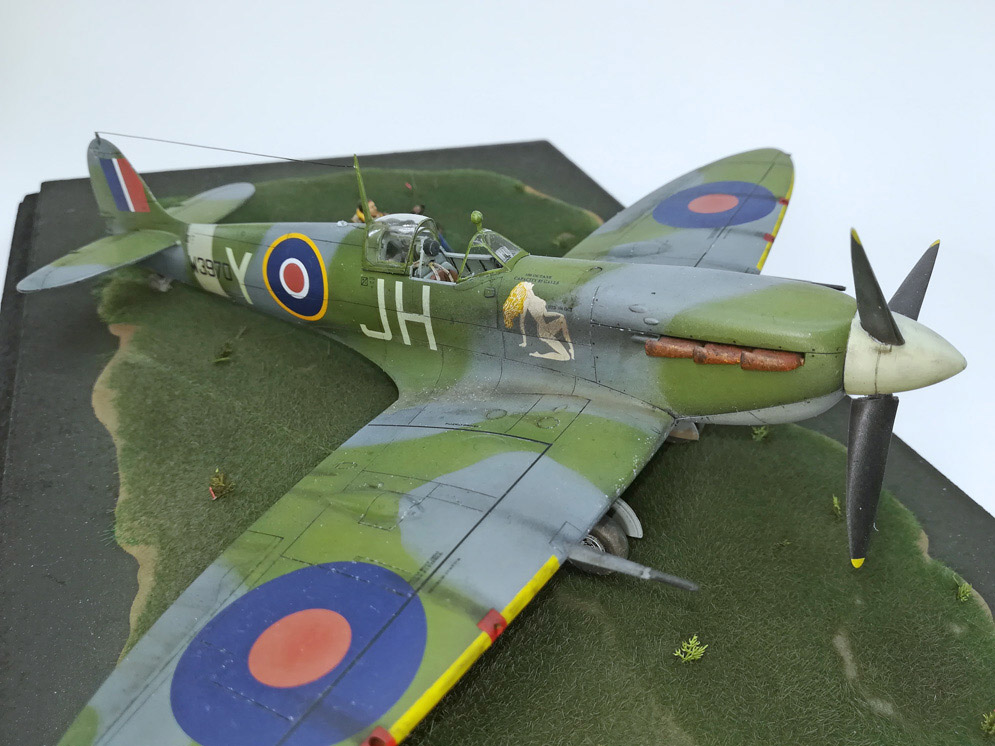
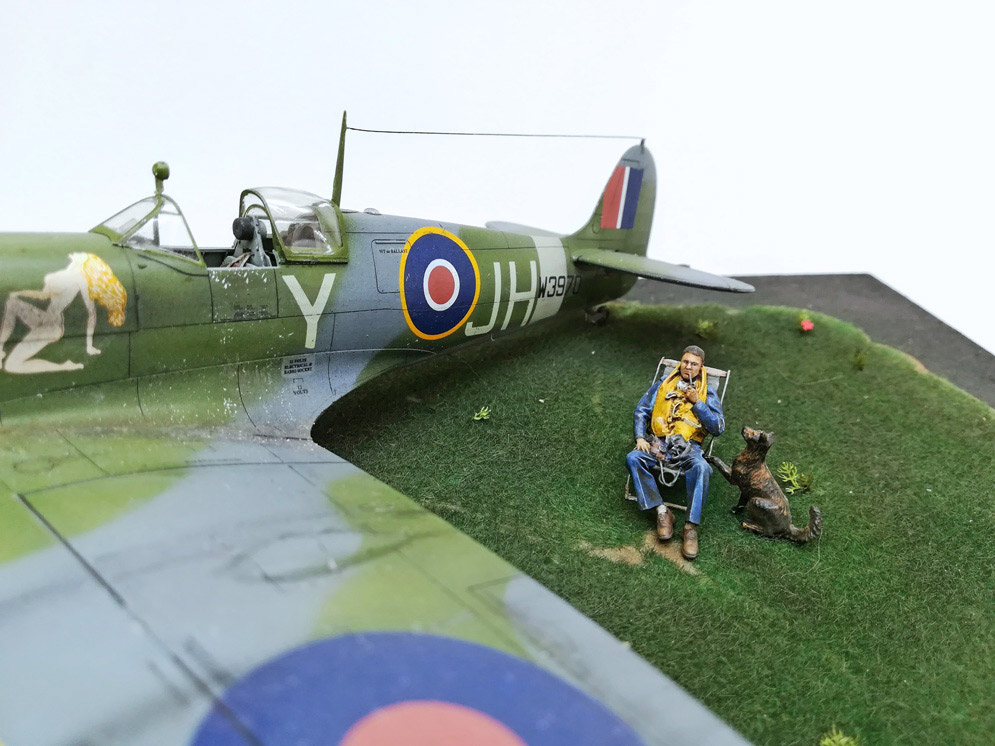

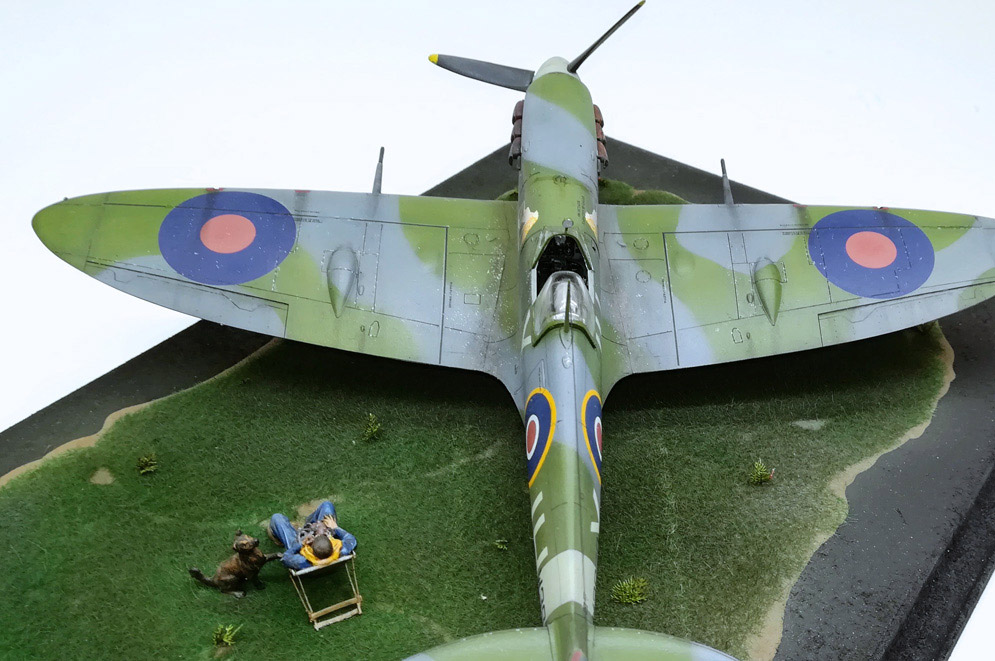
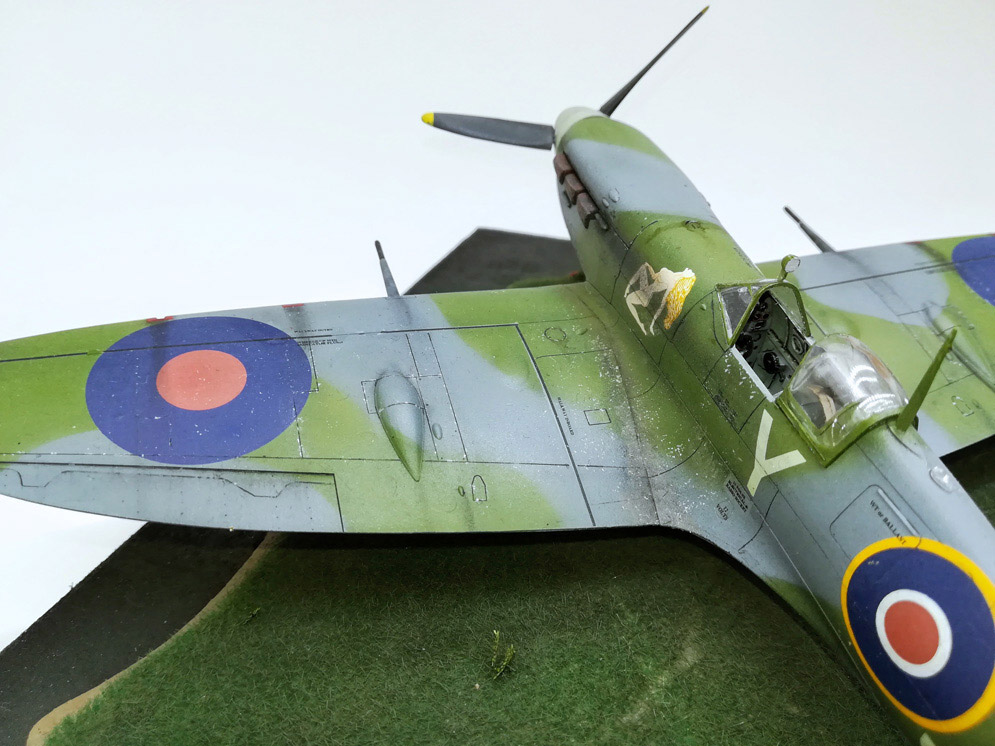
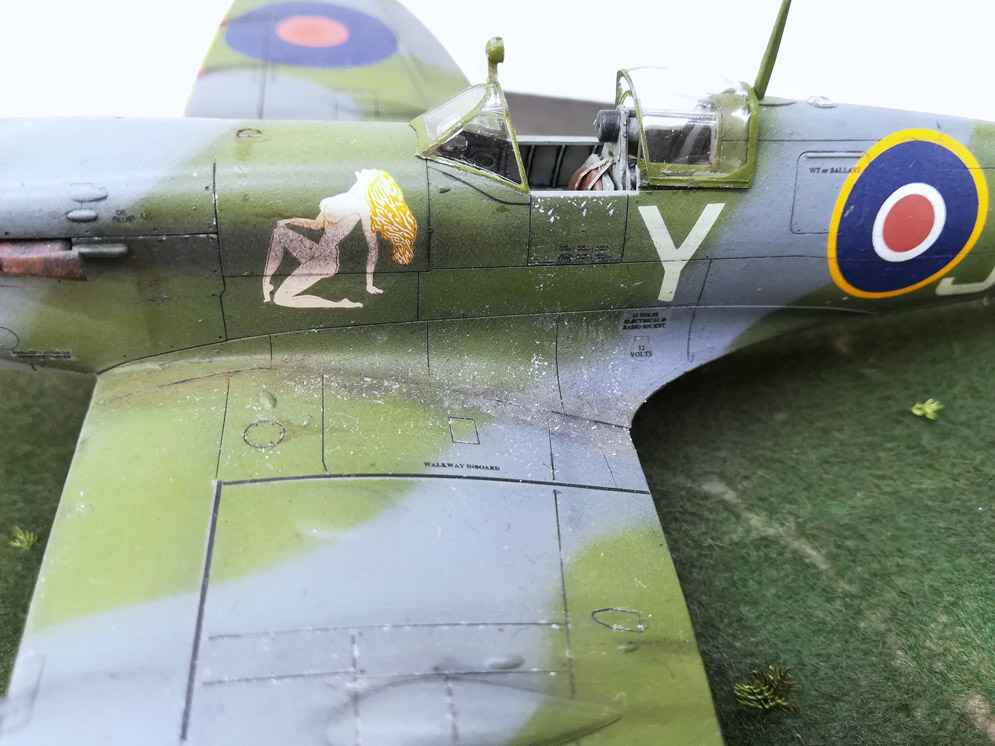
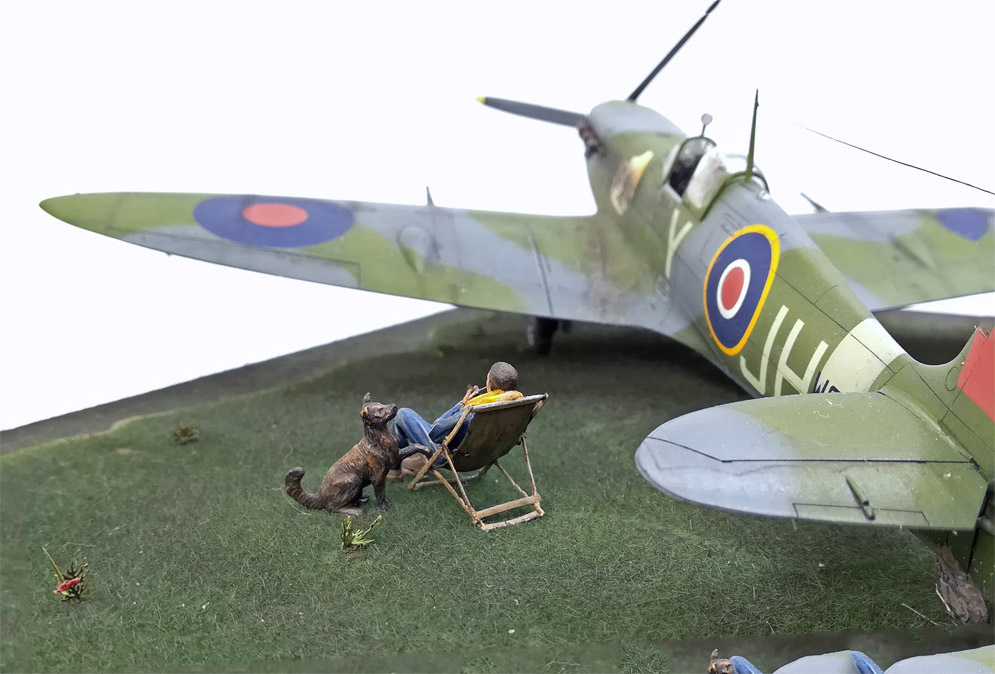
This is the Hasegawa 1:48, it dates from the 90s, but builds without any worries.
I wanted to represent a simple scene, a moment of relaxation before leaving to do his duty.
The black primer as well as the acrylic paints come from Ammo by MIG Jimenez.
After the basic painting was finished, I applied a black wash, only in the recesses. Then some ageing and change of hue is made using dry pastels. Some fine chipping made with brush 3×000.
The figurine comes from Reedoak and is also painted with acrylic.
Yours truly…
Christophe W.
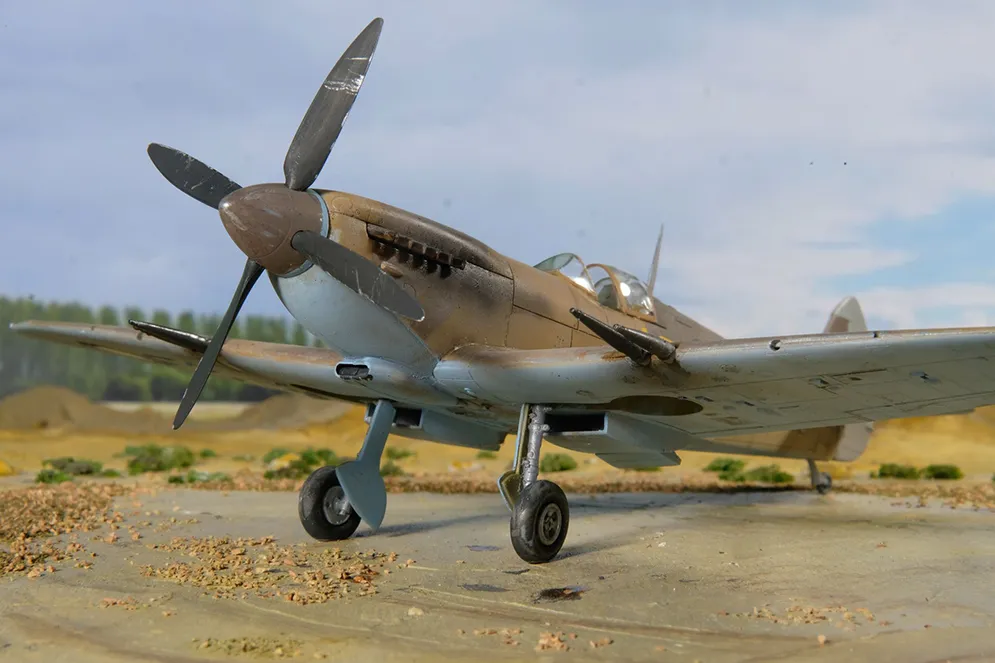
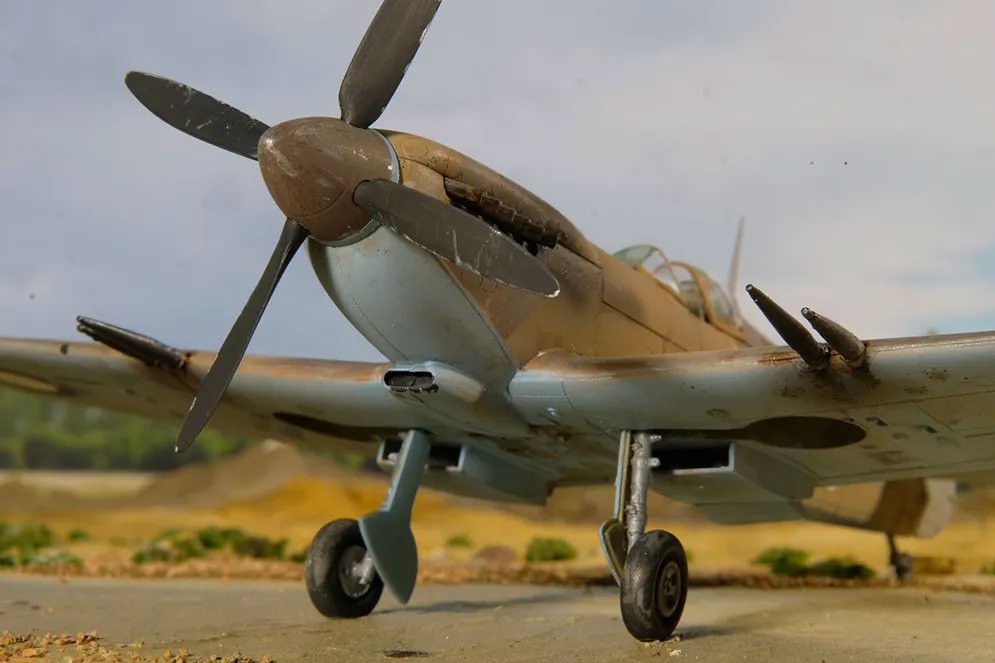
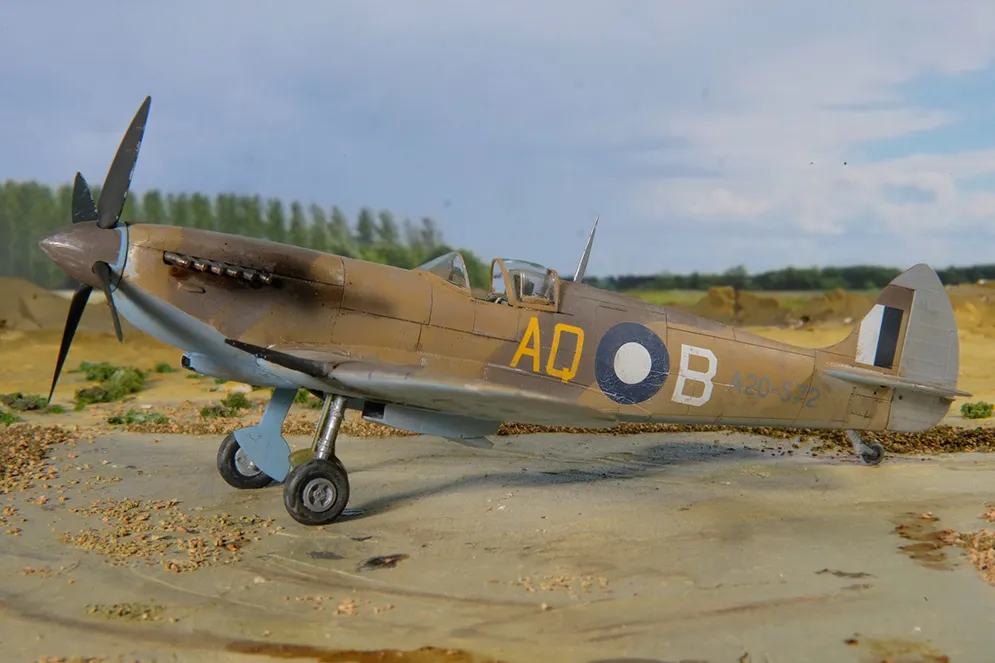
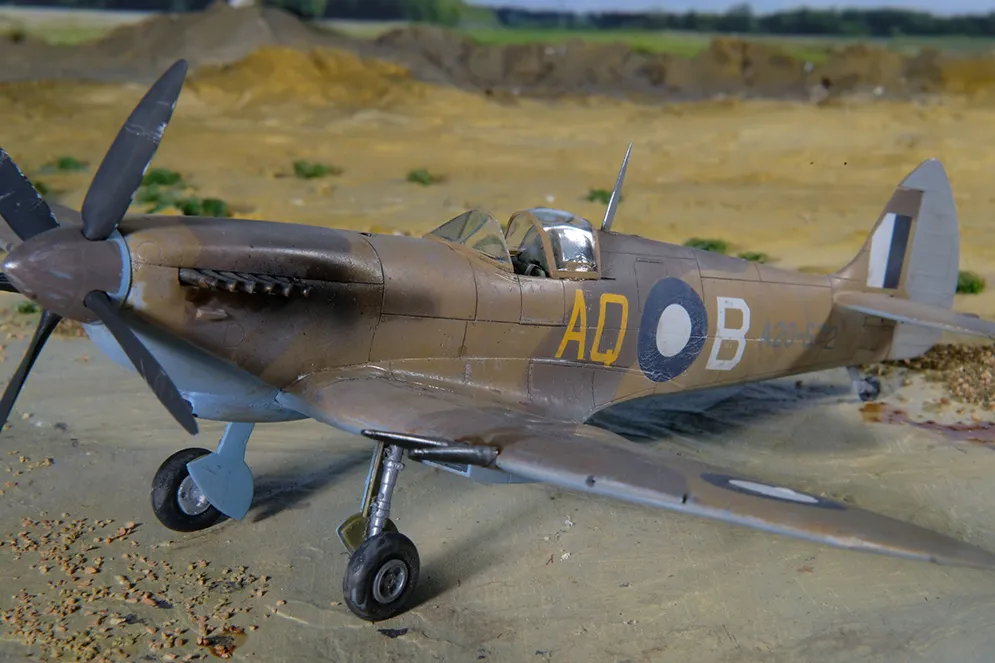
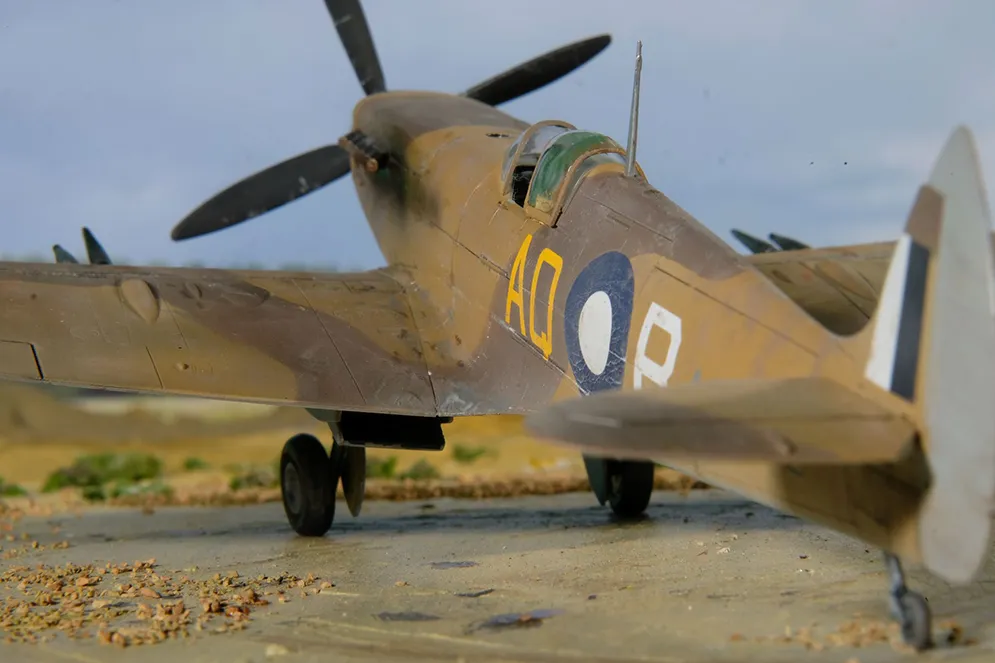
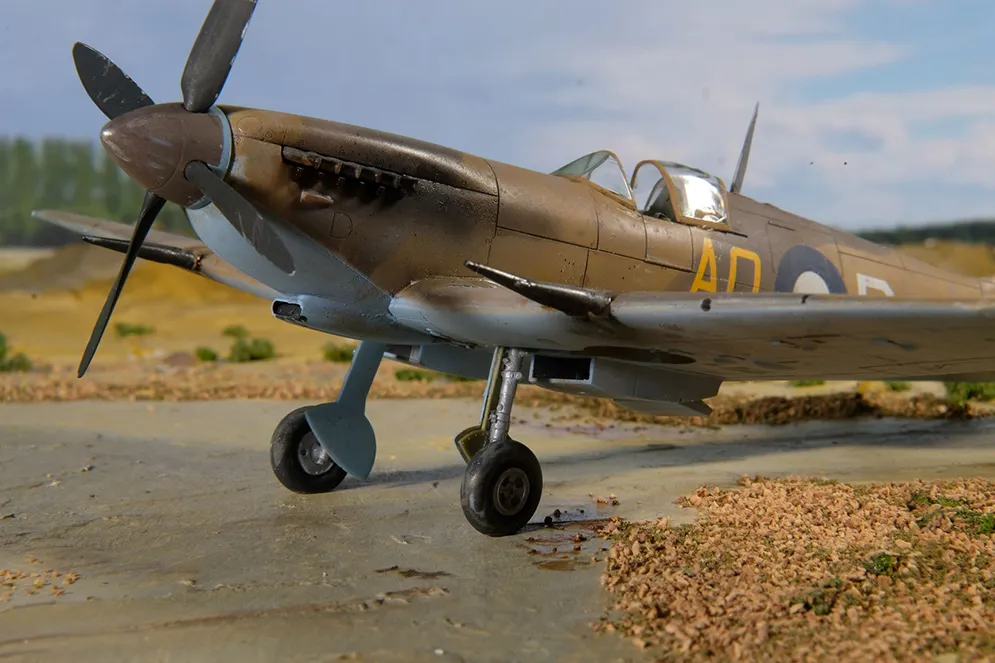
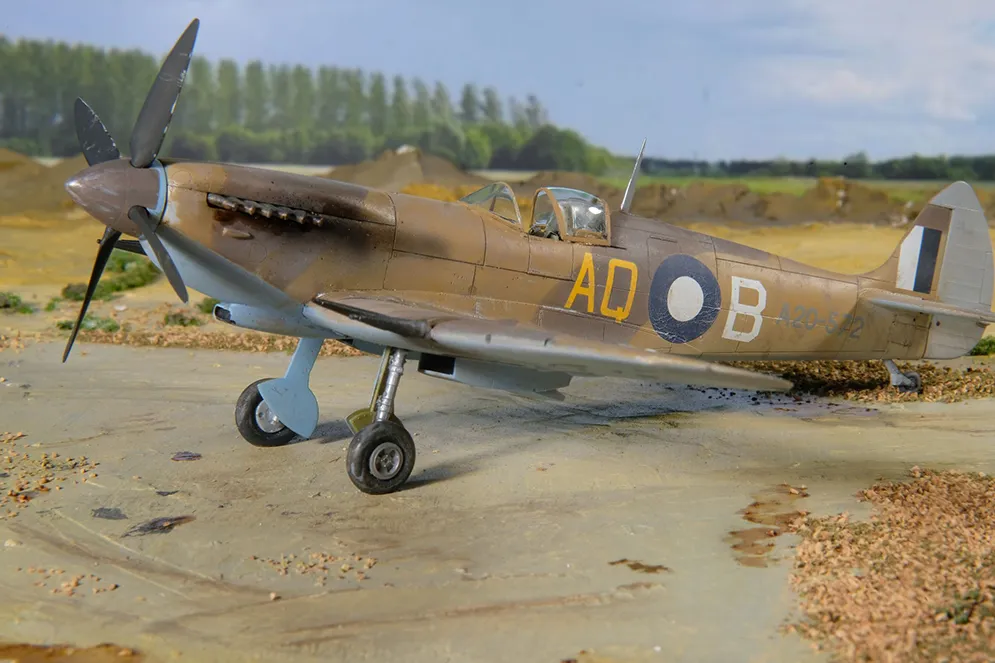
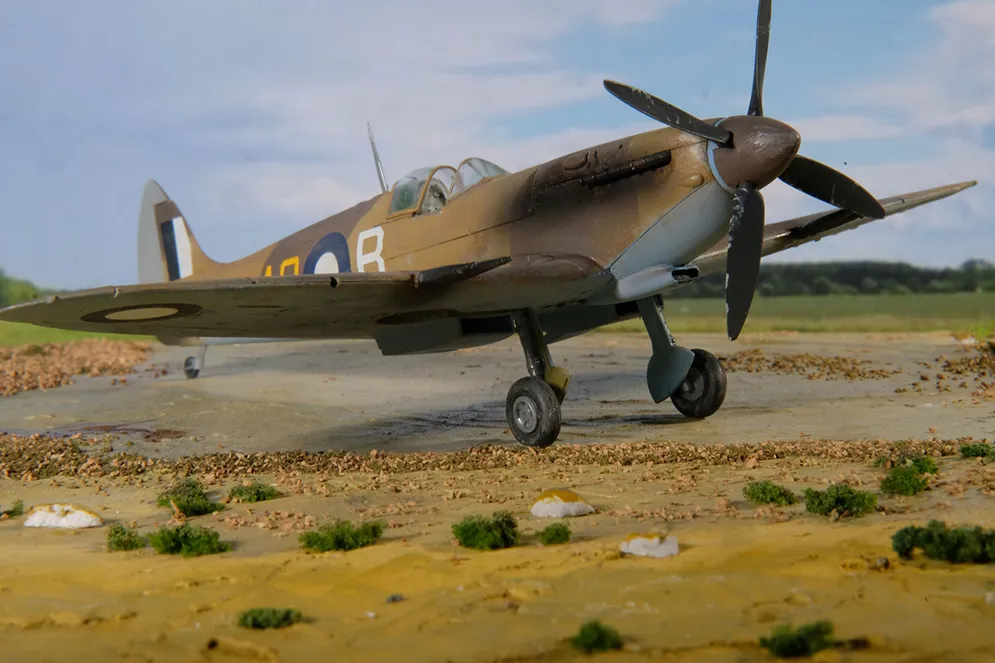
I was casting around for a different finish for this Spitfire which had been languishing in my stash for a while. Truth be told, I never exactly intended to build it, but had bought it for my ATC squadron cadets to attempt…… then I moved house and had to leave the squadron.
I came across this version online, and had got up to speed with, and enjoyed, finishing aircraft in South East Command colours as well as RAAF or RNZAF schemes. So this RAAF middle stone and dark earth over azure undersides scheme looked pretty attractive!
Historical note: the middle stone aspect of the scheme was later overpainted with the more suitable for the climate Foliage green.
I have placed the aircraft on a ‘desert’ scene on the premise that it may well have been operational in such topography. I’m aware that this just might not be exactly the right mark of Spit used down under, but I reckoned it was pretty much near enough.
Thanks,
David Muscroft
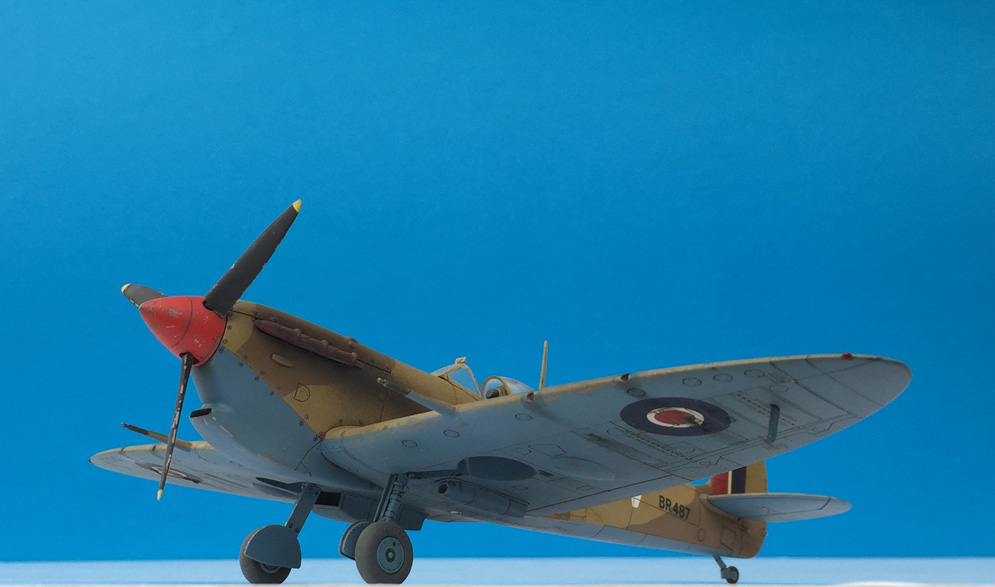
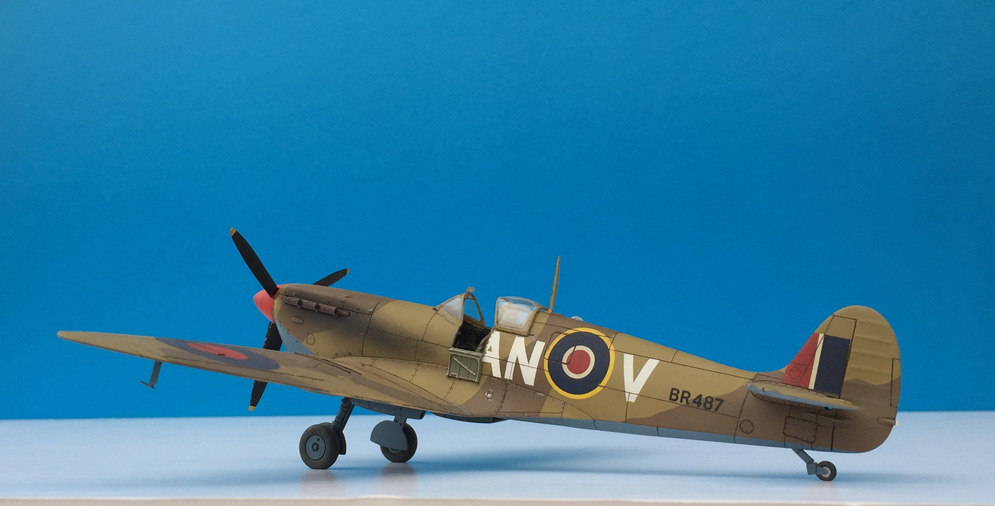
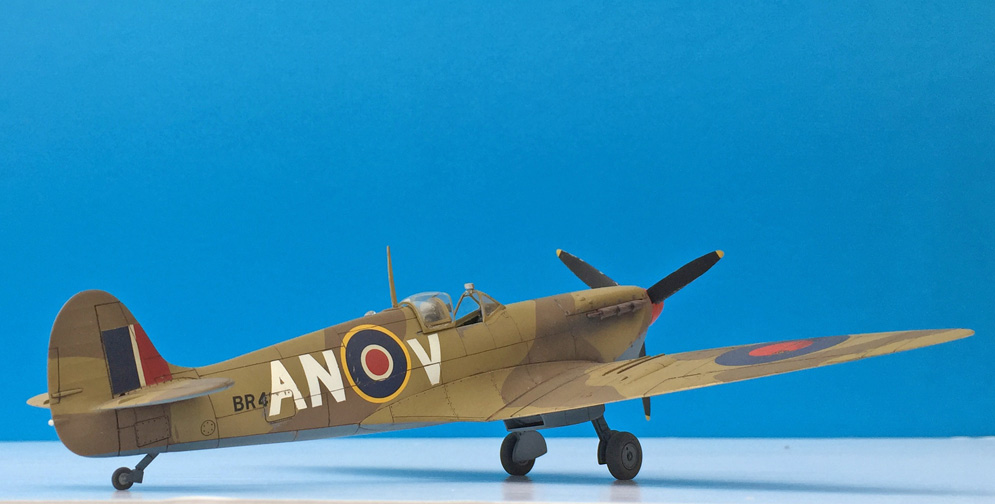
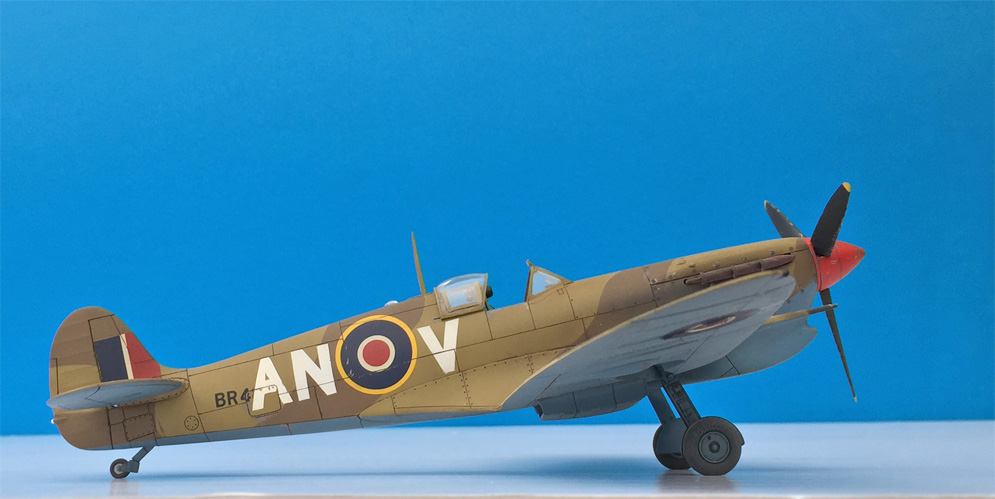
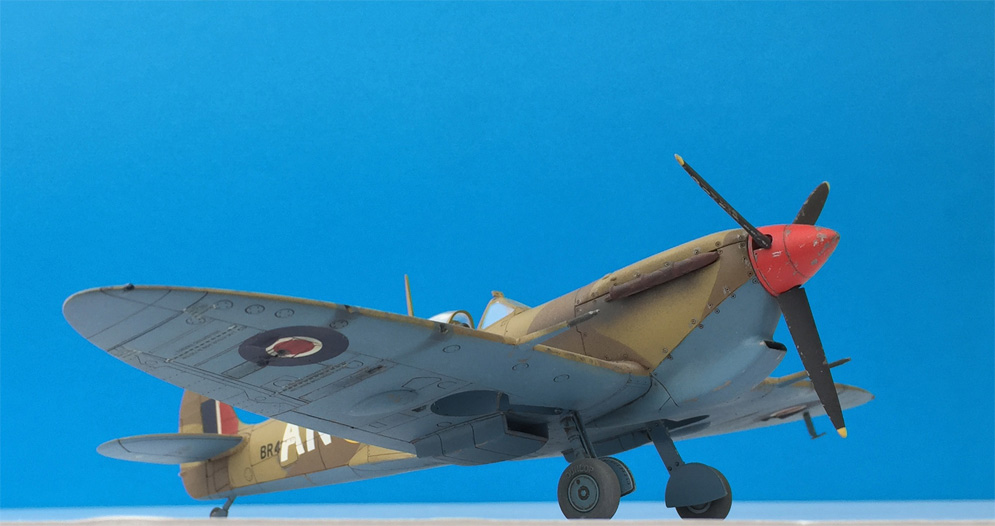
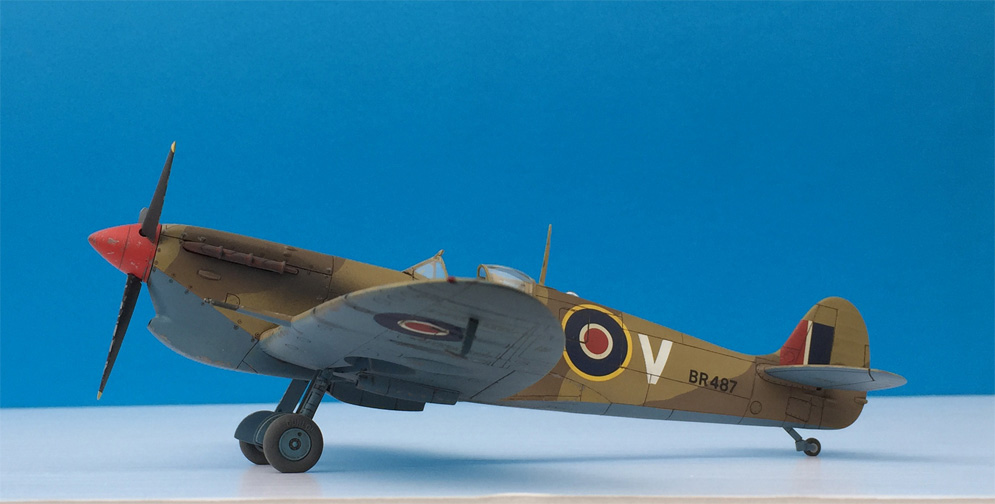
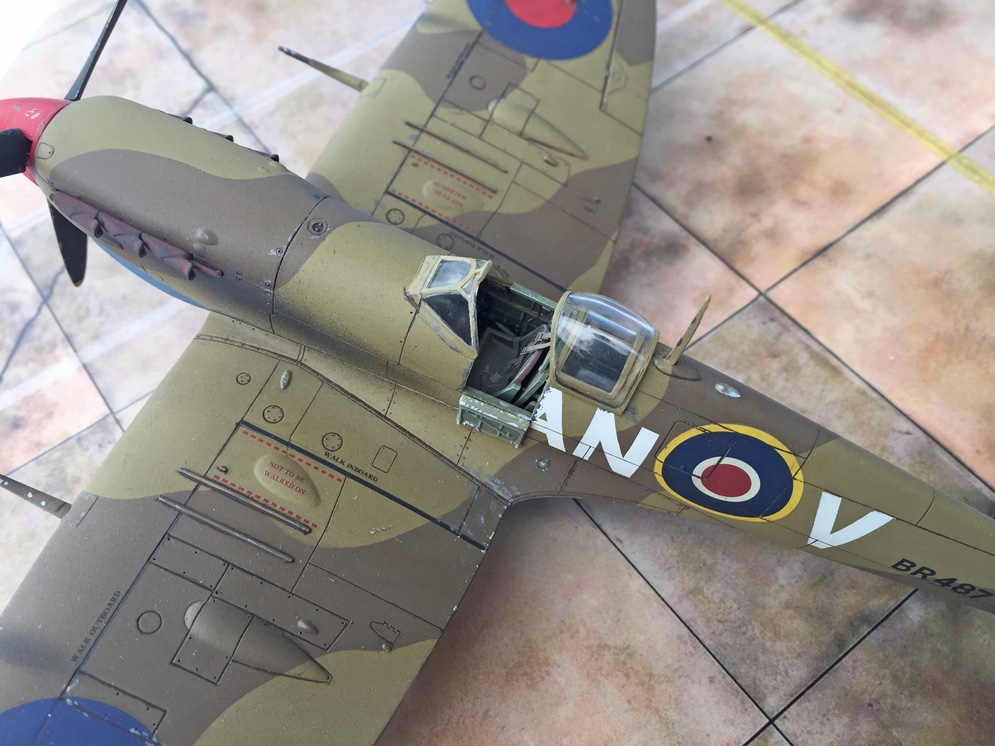
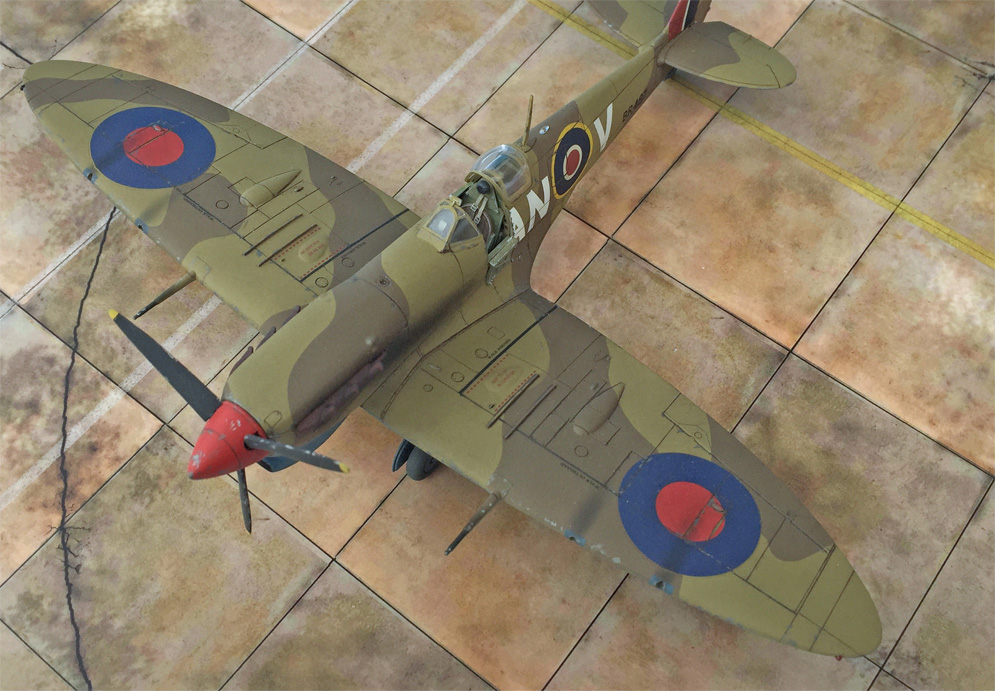
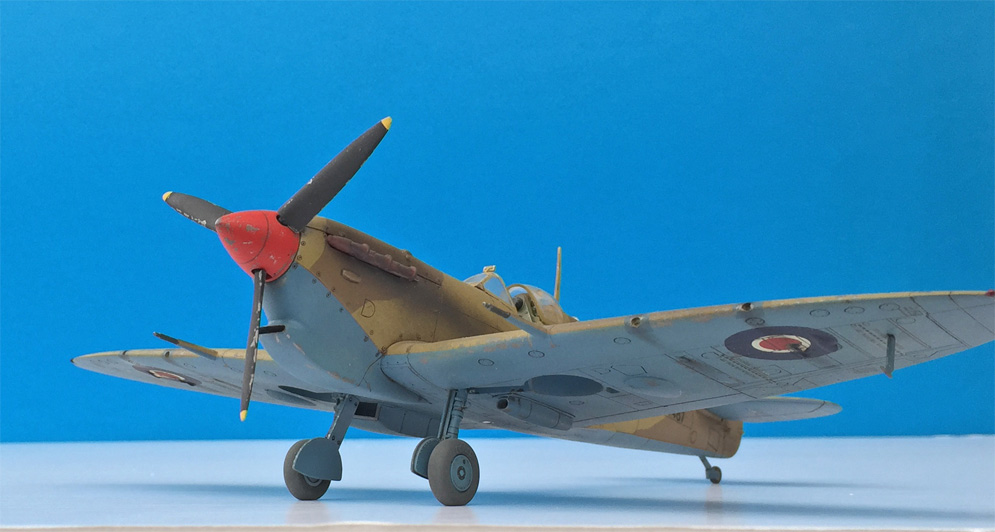
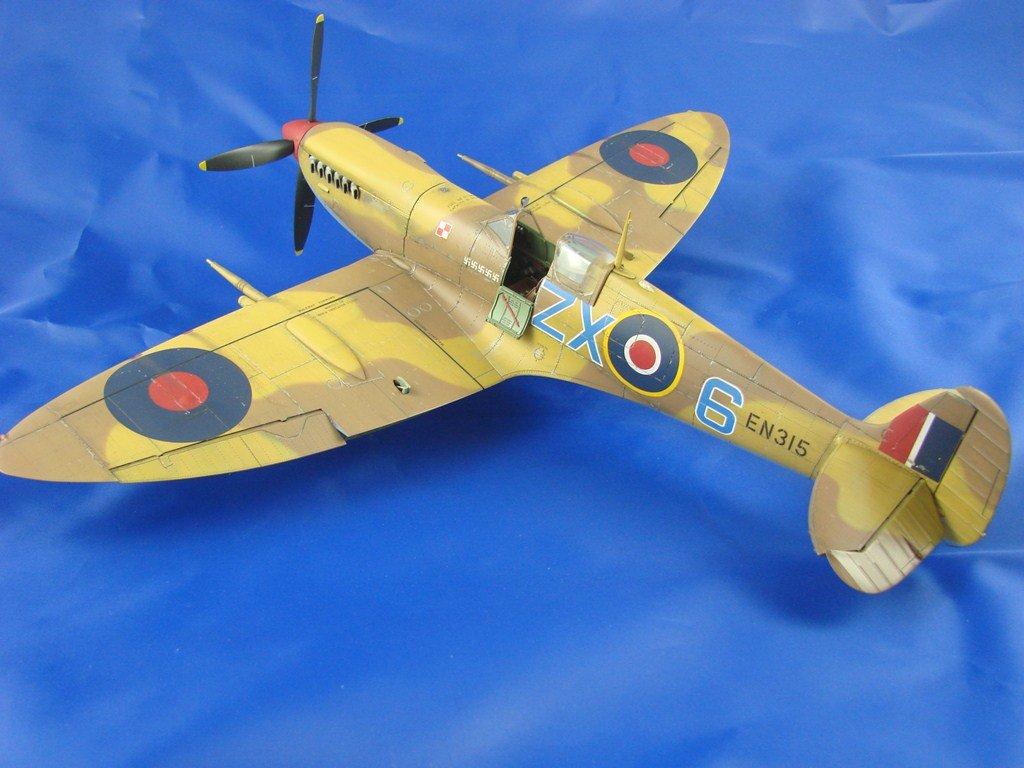
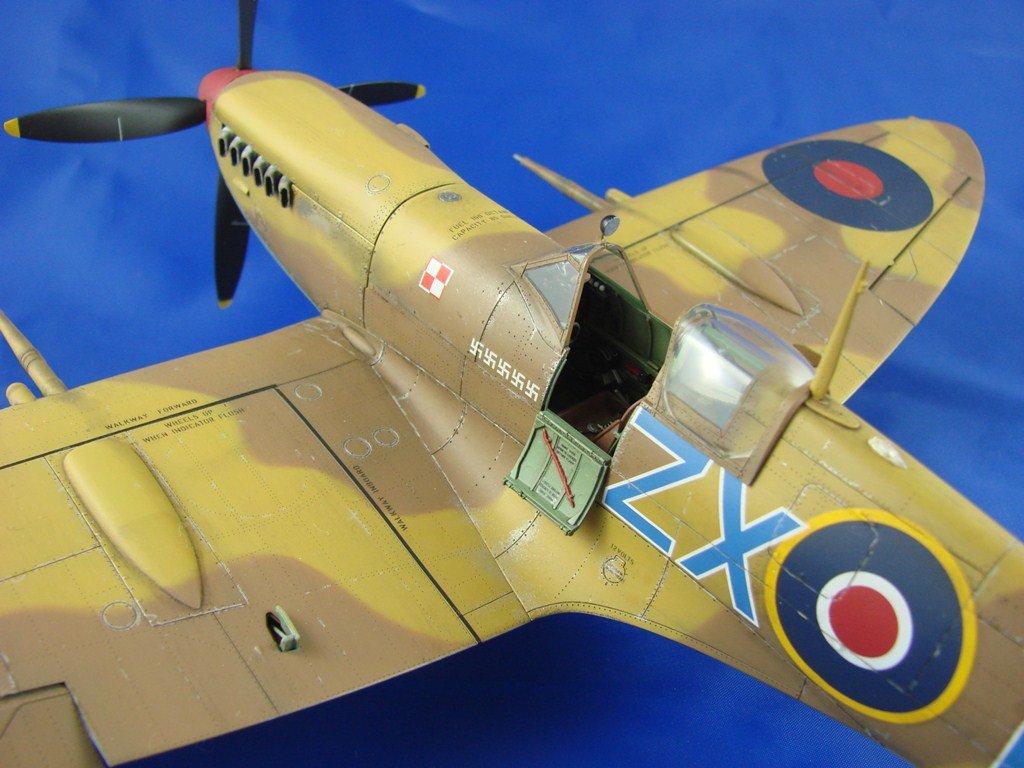
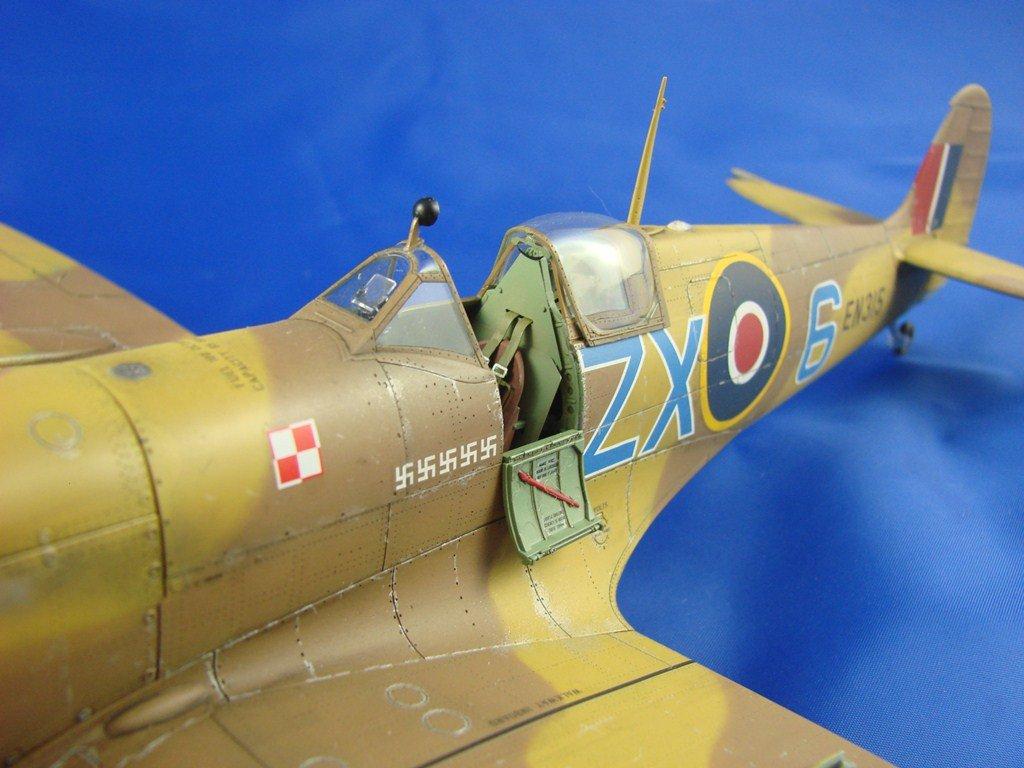
Another one from a while back and I always loved this build – it typifies Tamiya 1:48 fighter aircraft in their range: beautifully engineered, good levels of detail, easy to build and accurate representations of the type.
The belts are scratched on this one with the white codes being sprayed over cut masks made from clear self-adhesive film.
Simple weathering and some basic chipping – needed really for trying to create a model that reasonably represents an aircraft that operated in harsh, fester-like conditions in North Africa.
Hope you like it…
Geoff C.
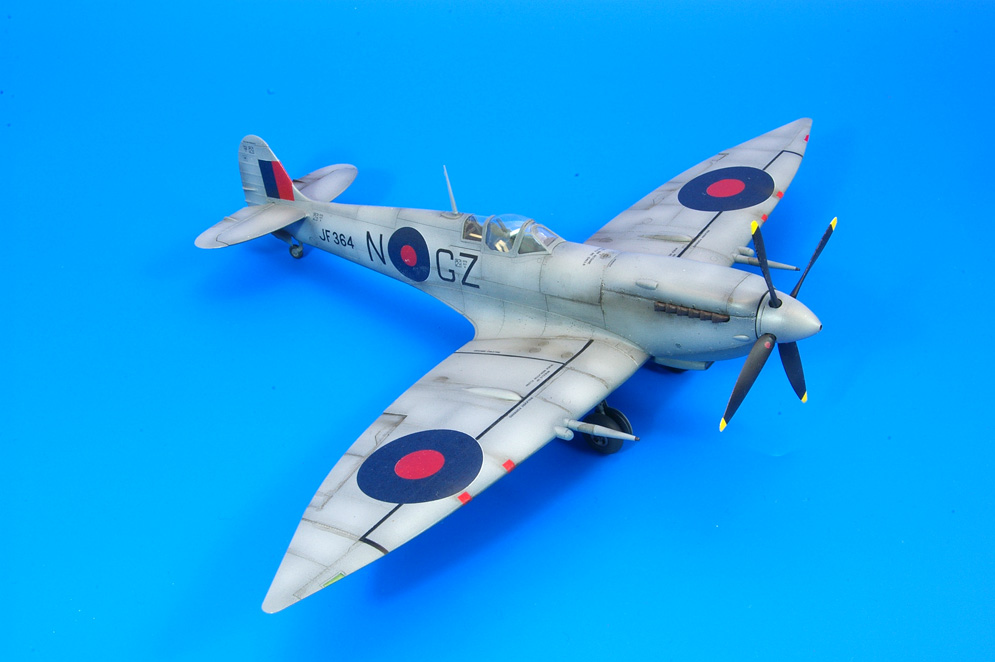
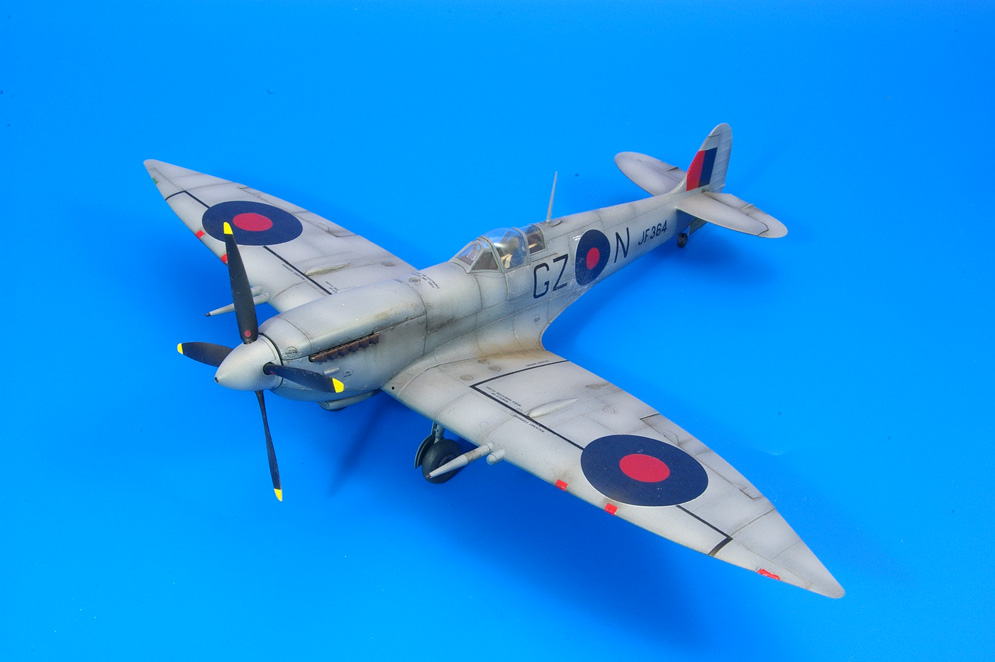
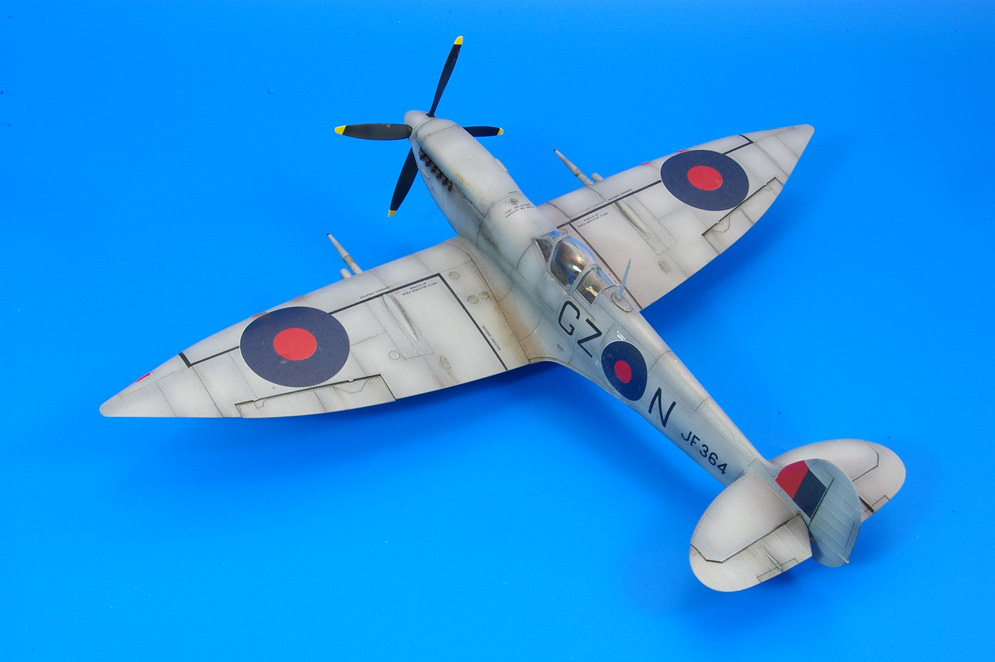
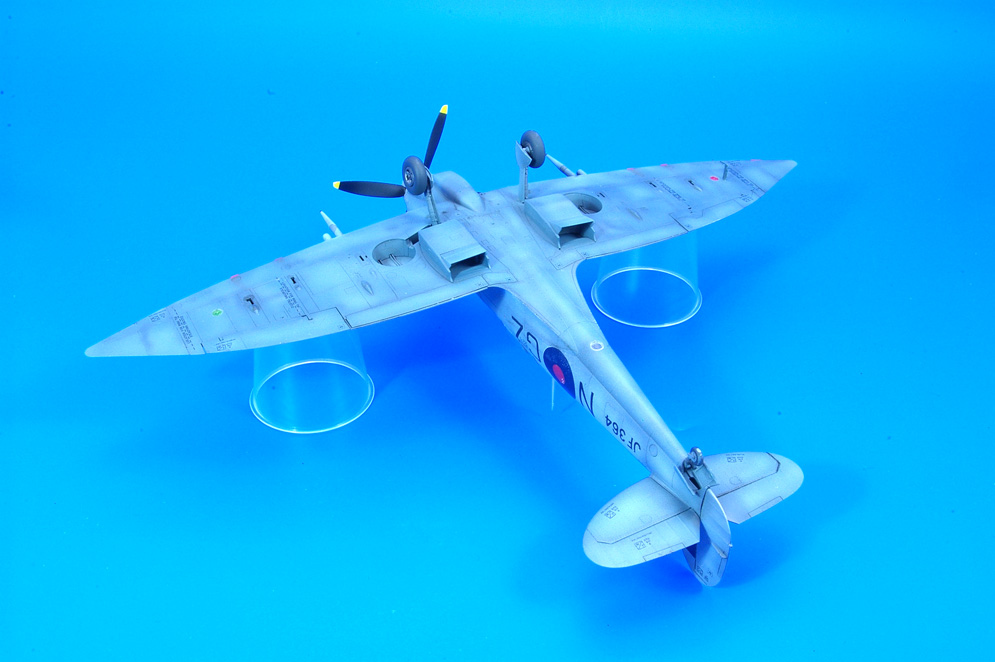
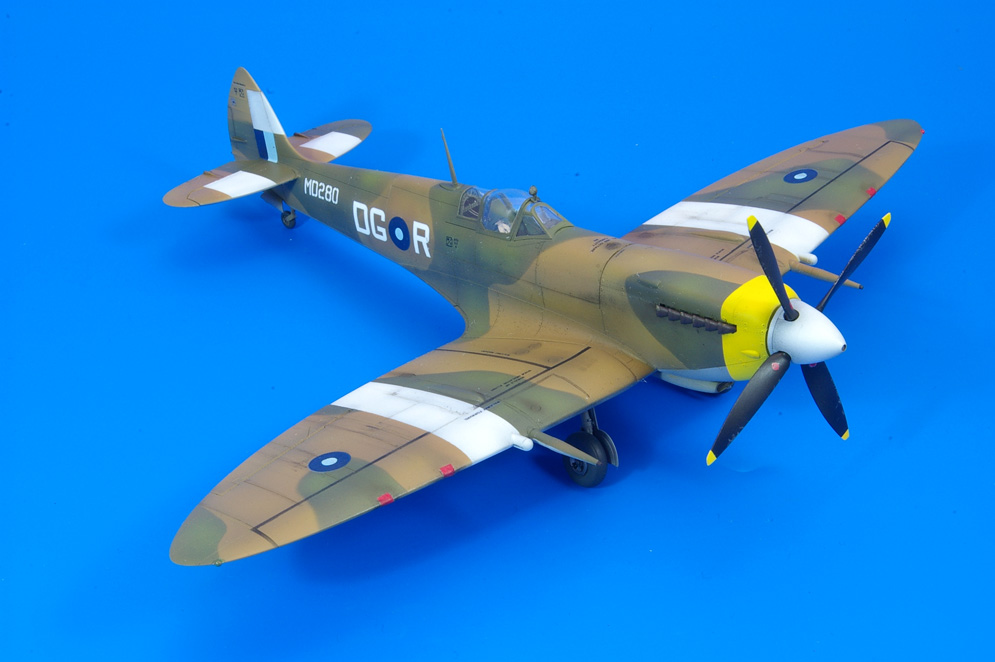
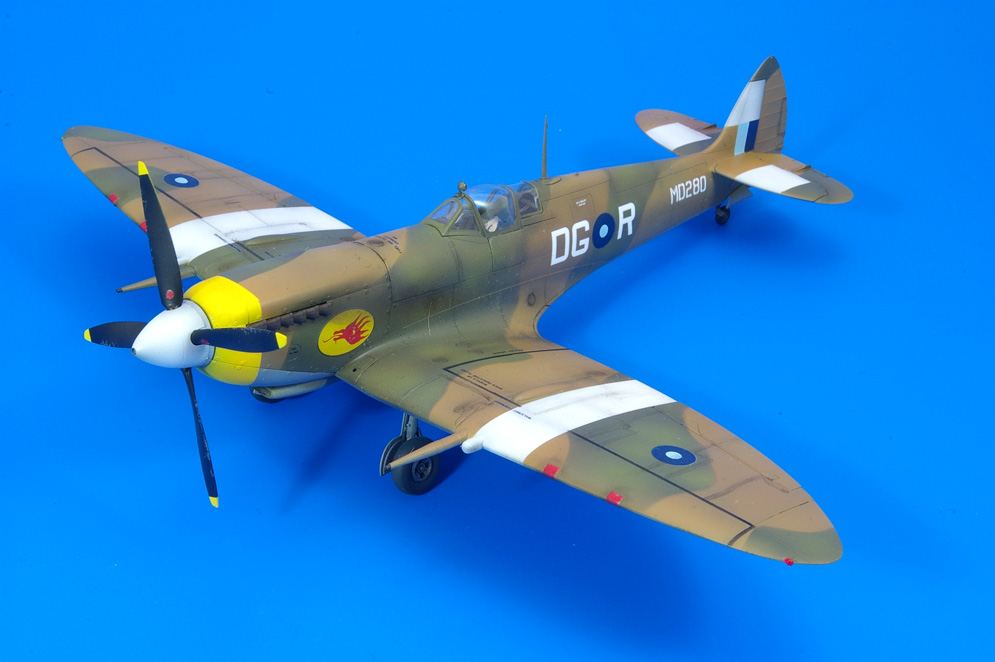
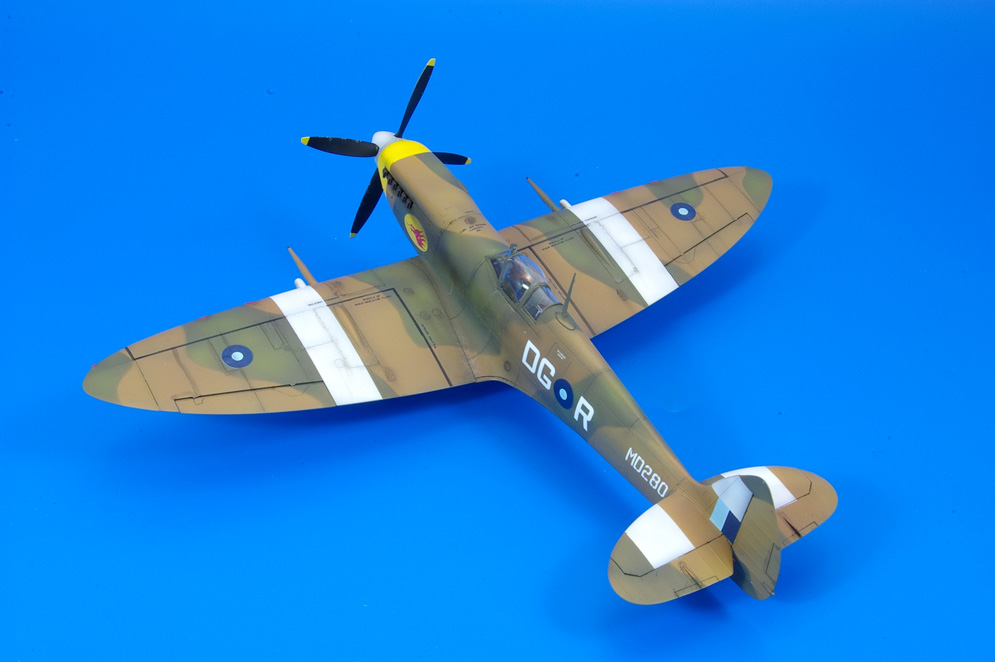
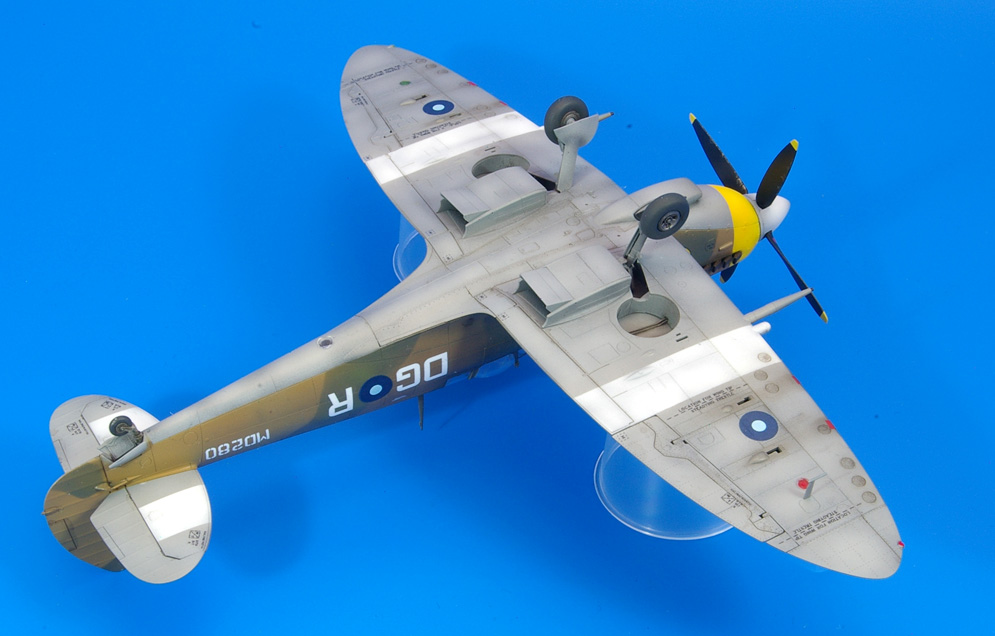
It’s not often that I build more than one example of a kit, but I have made an exception with eduard’s Spitfire kits as I think that they are possibly the best 1:48 Spitfire kits available these days.
The plastic parts have excellent detail with some very impressive rivet detail on the fuselage and wings. The parts fit very well and the kits are very easy to build. The only issues that I had with these kits were the two-piece covers over the engines and the transfers.
Joining the two halves of the engine cover will inevitably result in a rather noticeable joint down the centre which requires some filling and sanding. This damaged some of the fine surface detail which I had to reinstate using a pounce wheel and some gentle scribing – not really a major problem. I believe that there are now resin replacements from some after-market manufacturers if you don’t fancy the scribing job.
The transfers are very thin and so are very delicate and easily damaged if care is not taken when applying them to the model. They have to be placed very close to their final positions as they do not react well to being moved. On the plus side, being so thin, they conform very easily to the surface detail on the model and I found that no setting solution was required as it might have been with transfers from some other manufacturers.
All in all, these kits were highly enjoyable projects and I’ll probably be building a couple more of these in the future as there are lots of colourful camouflage schemes to choose from and let’s face it, I don’t think there is any such thing as too many Spitfires!
Dai W.
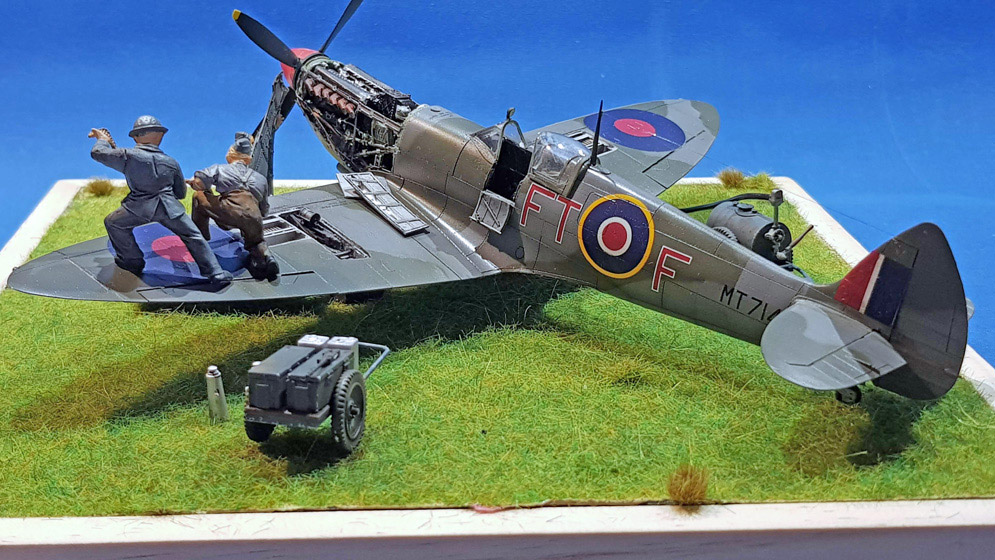
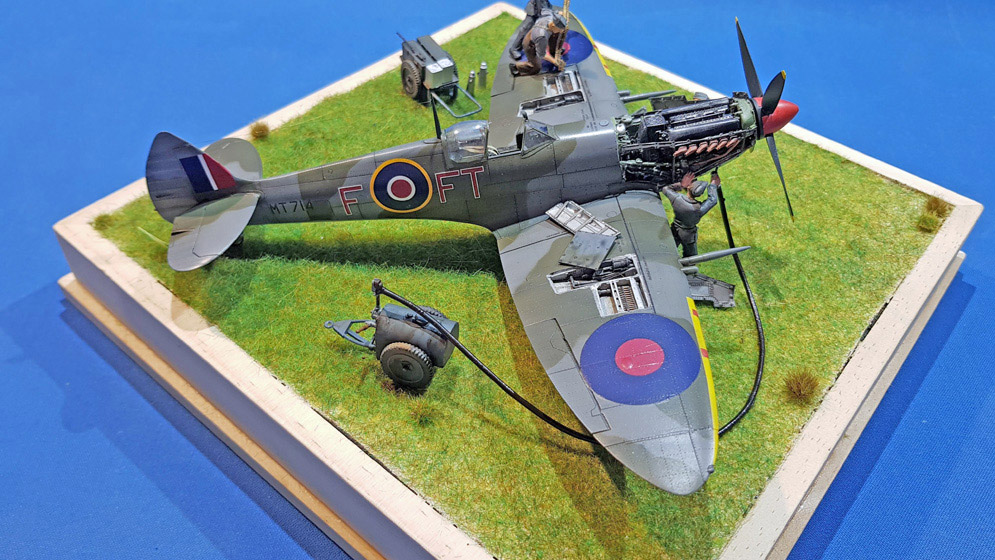
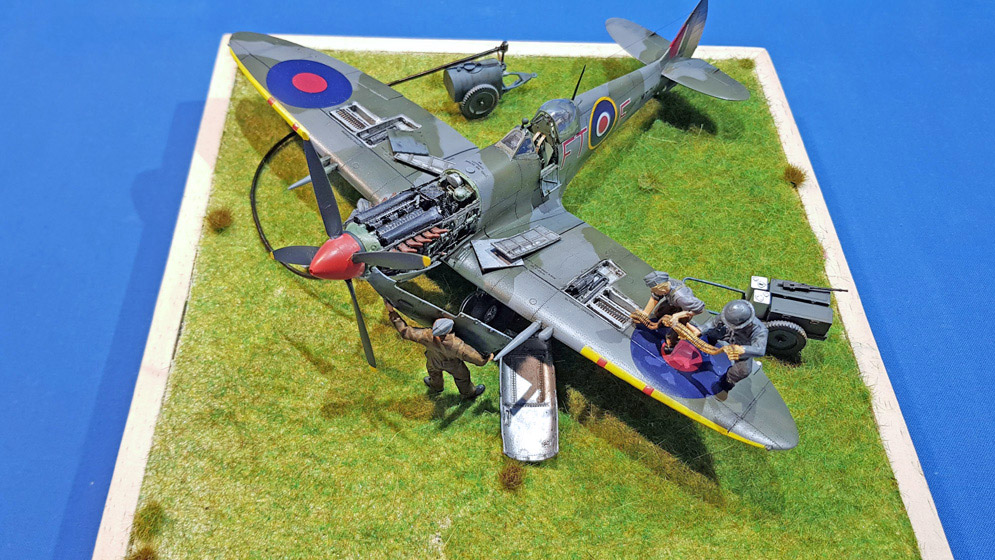
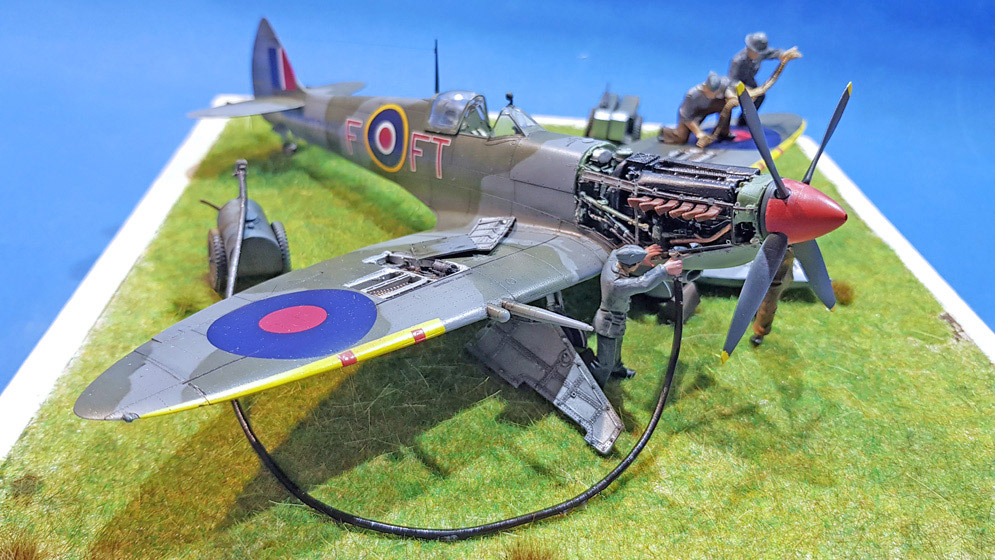
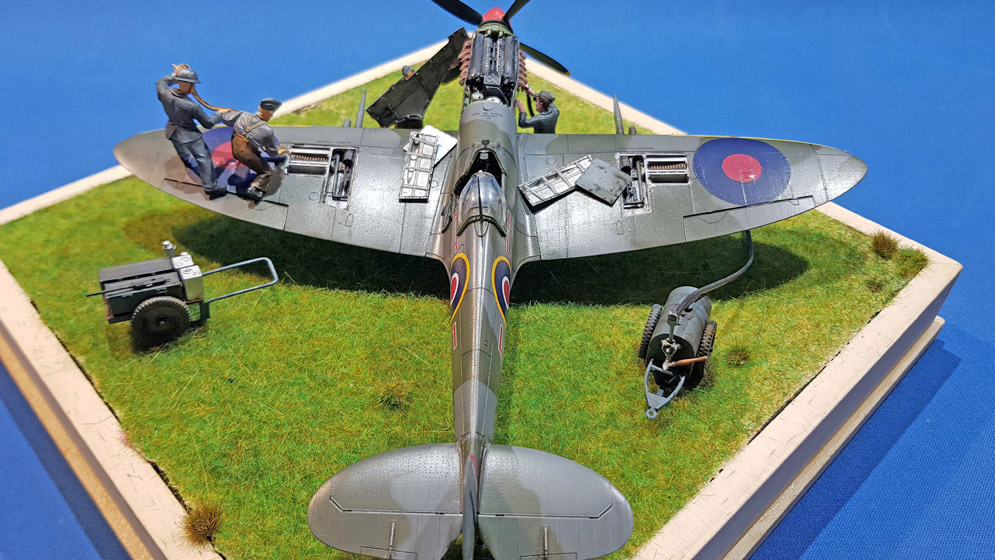
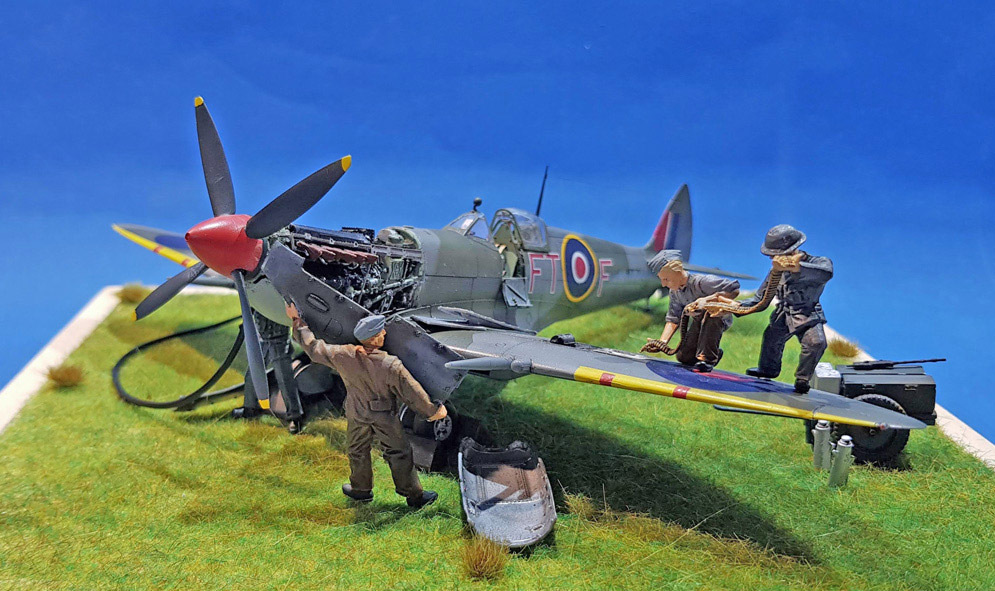
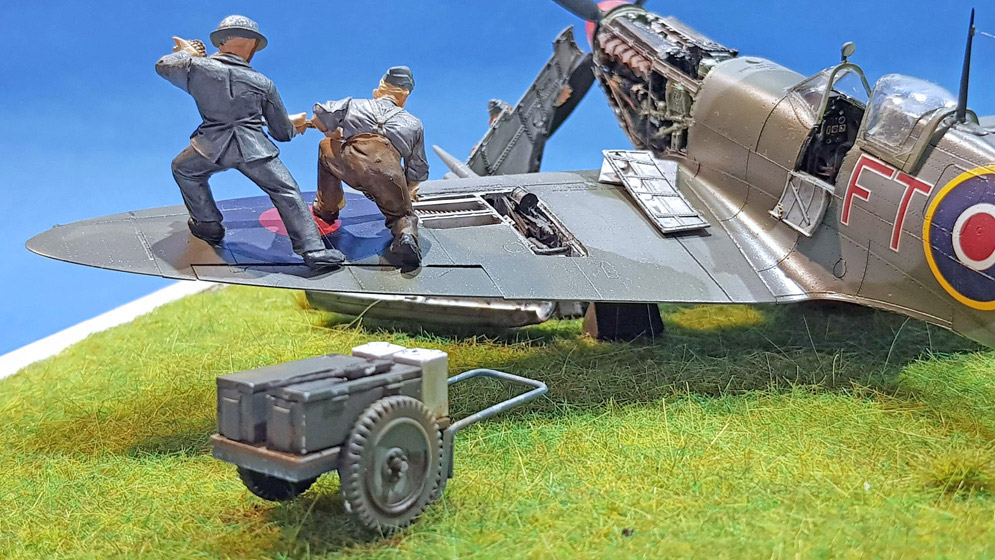
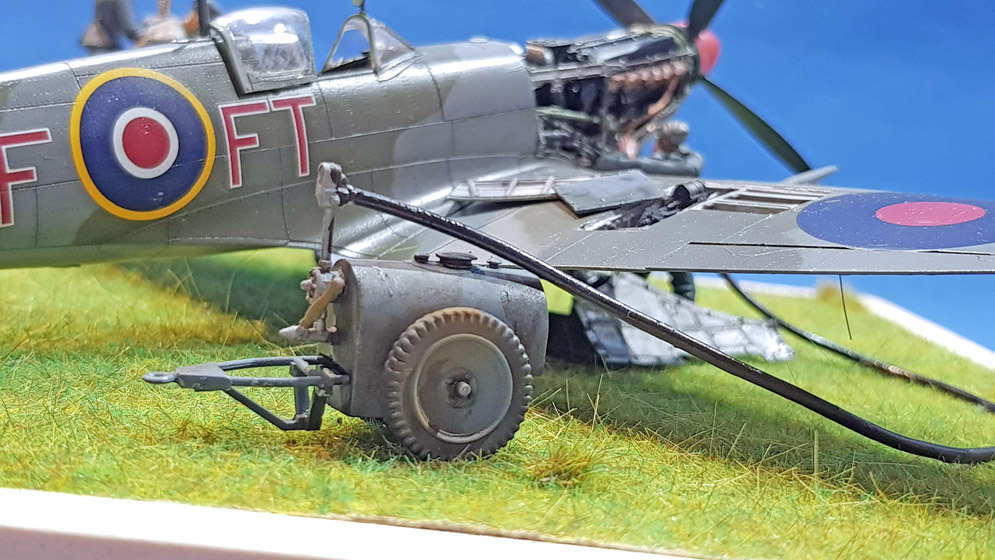
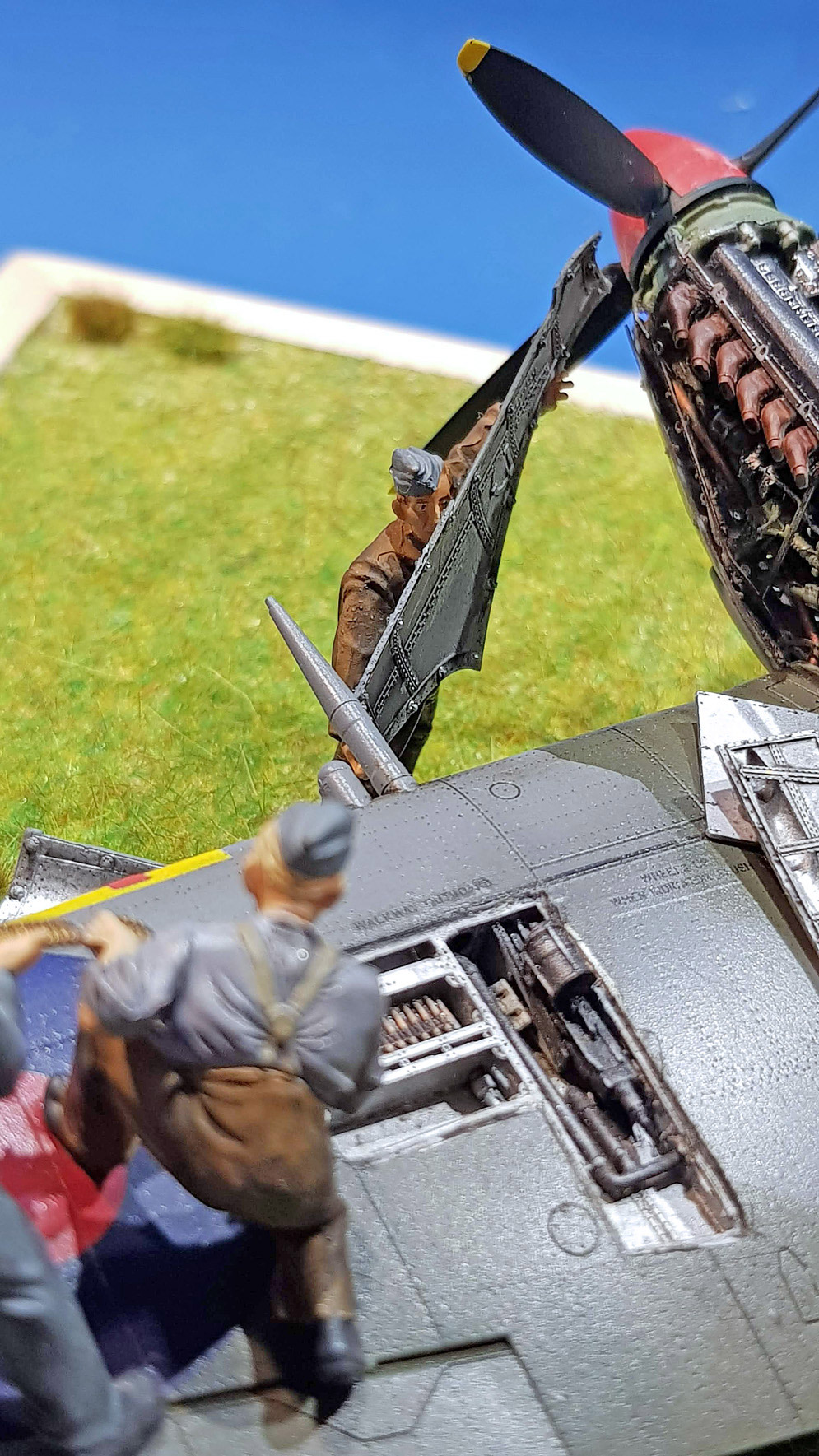
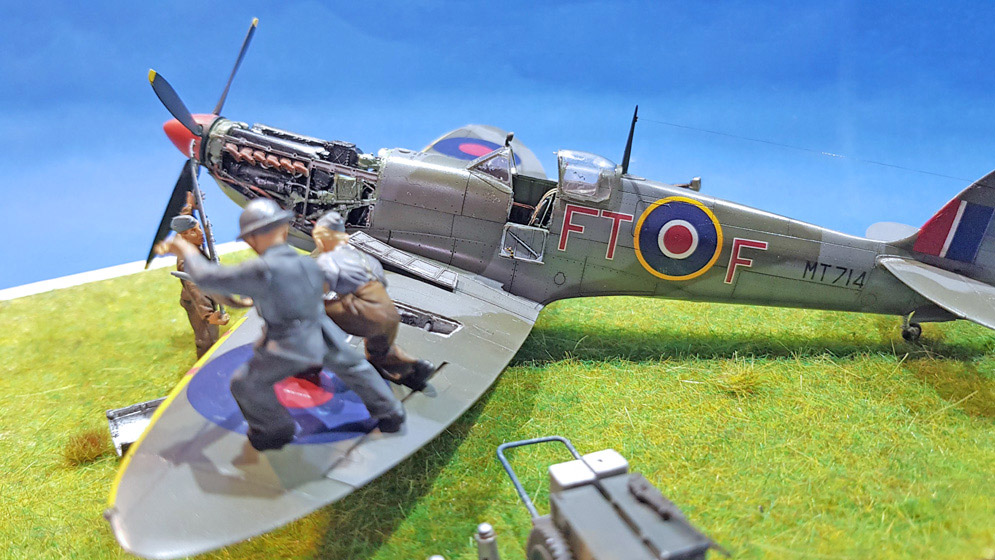
This is my 1:48 Eduard ‘Profi Pack’ Spitfire Mk.VIII with Eduard Brassin engine and gun bays. Also added was the Airfix 1:48 ground crew figure set.
I found the engine a rather difficult upgrade to use due to some very delicate and fiddly parts but hopefully it turned out okay? The gun bays were a slightly easier fit but are still not simple and took a little work but all issues with both parts may well all be down to me!
The kit was painted with Mr. Color and the figures with a mix of Vallejo and Revell Aqua Color.
Daniel B.
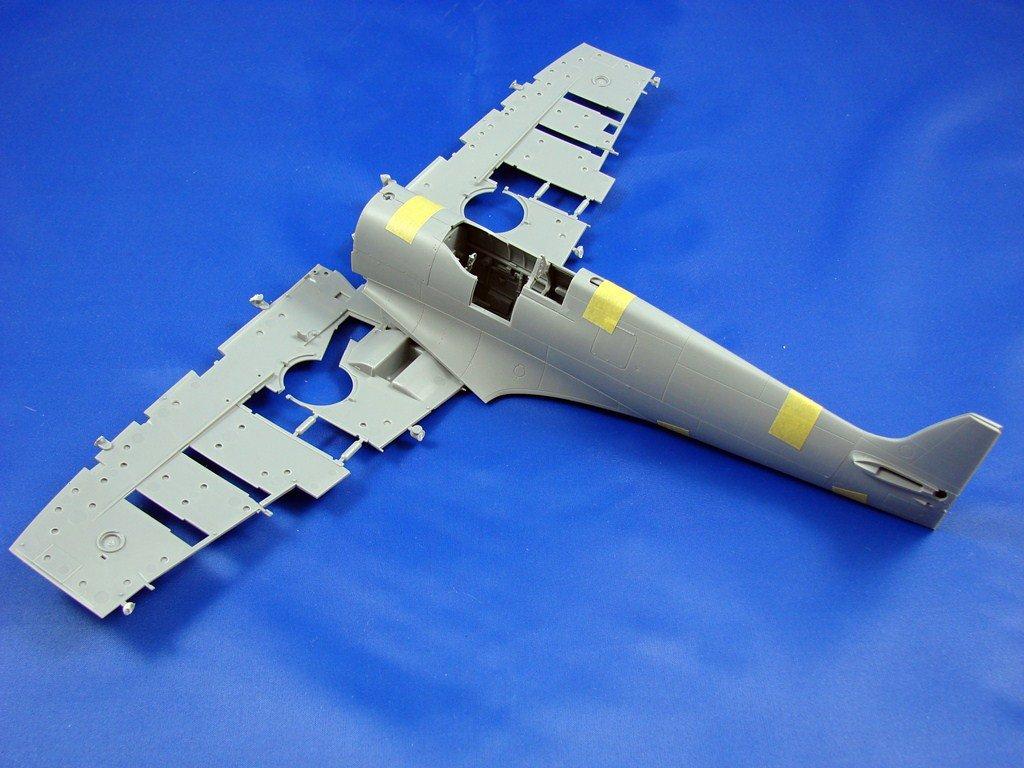
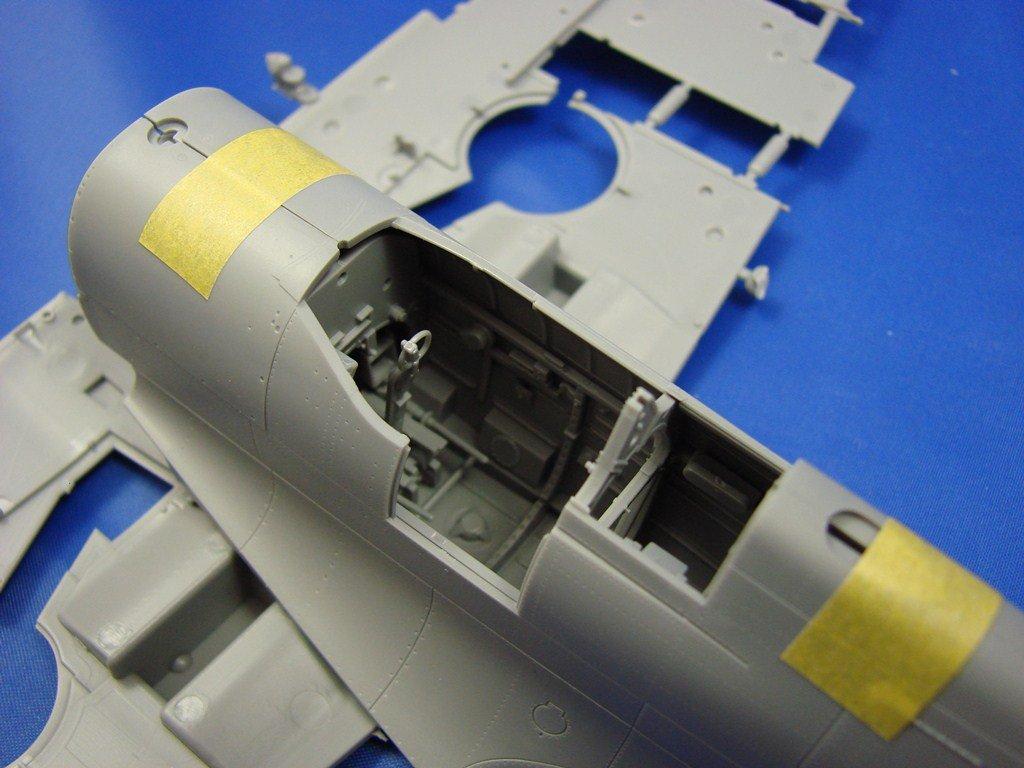
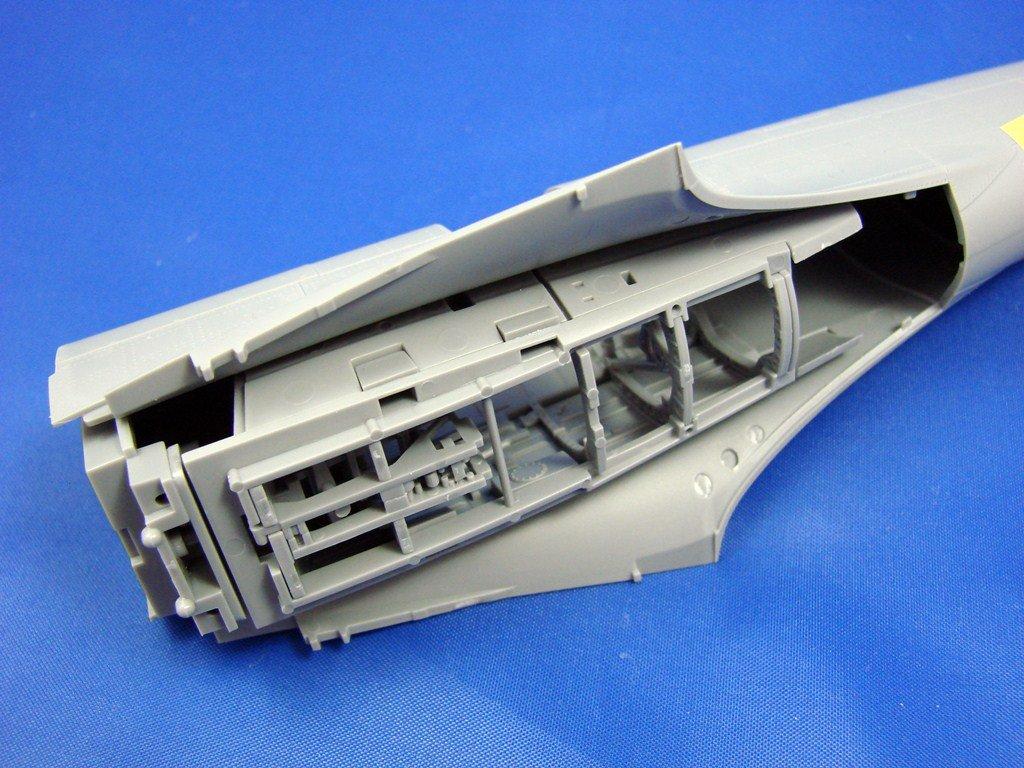
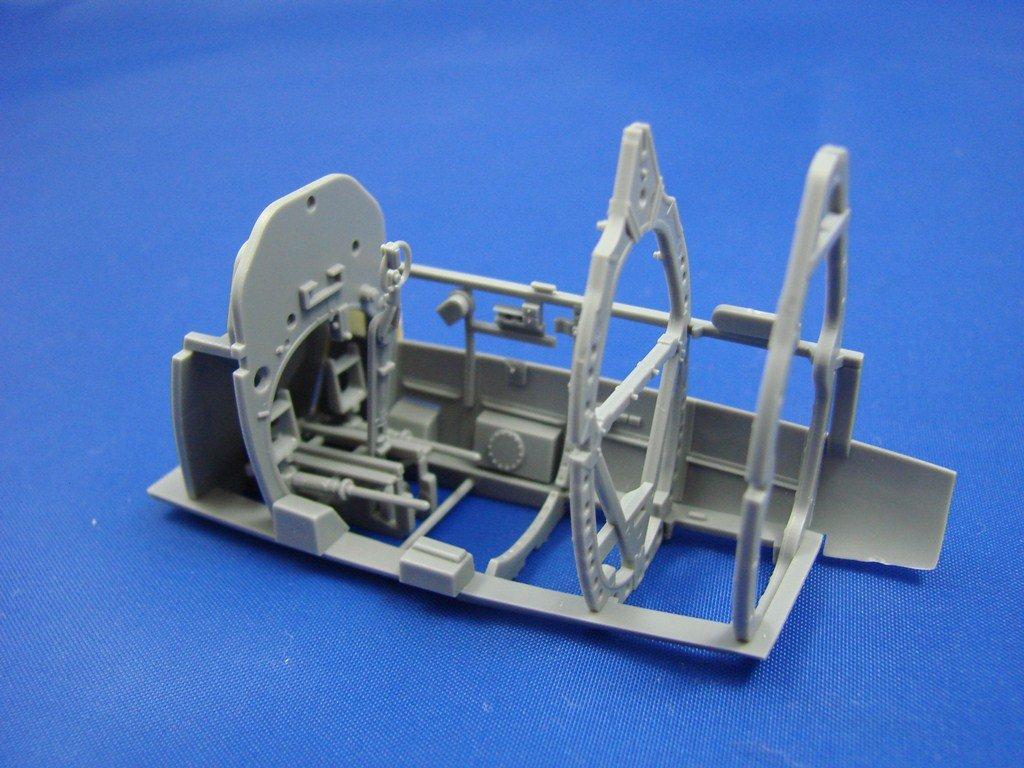
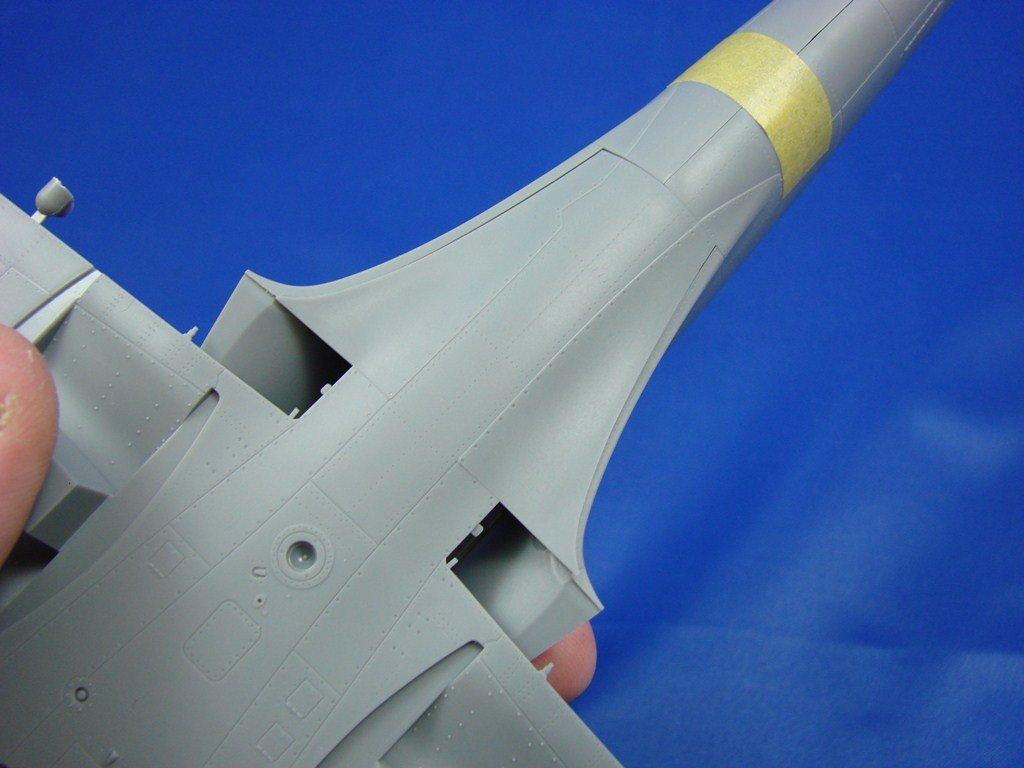
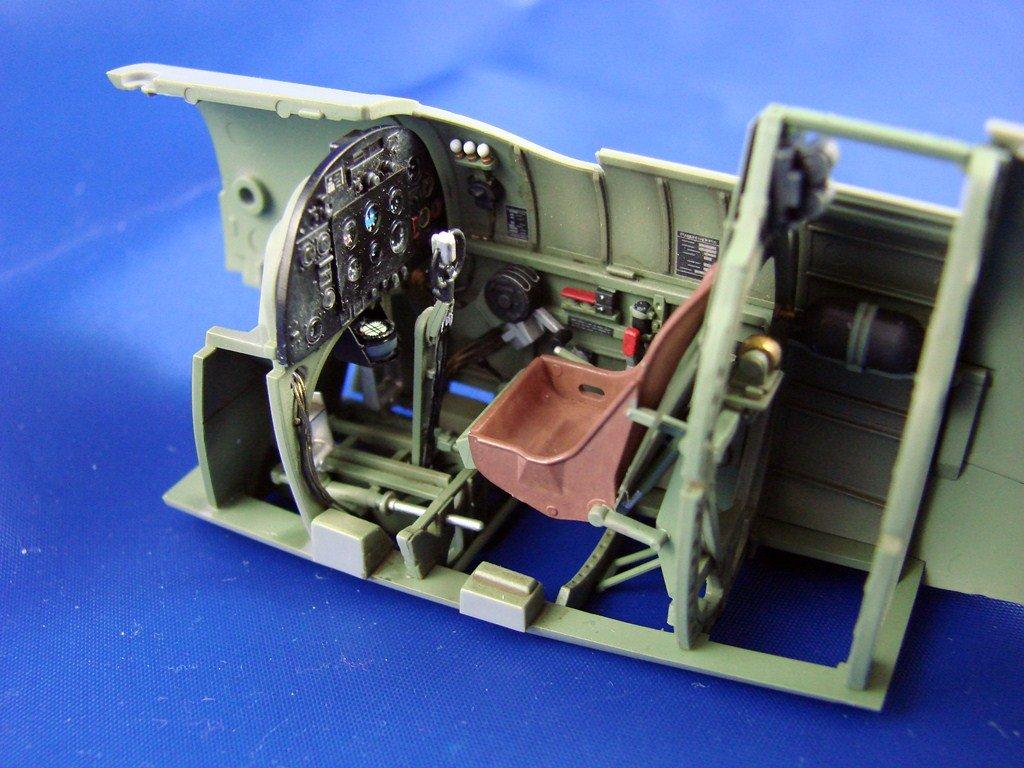
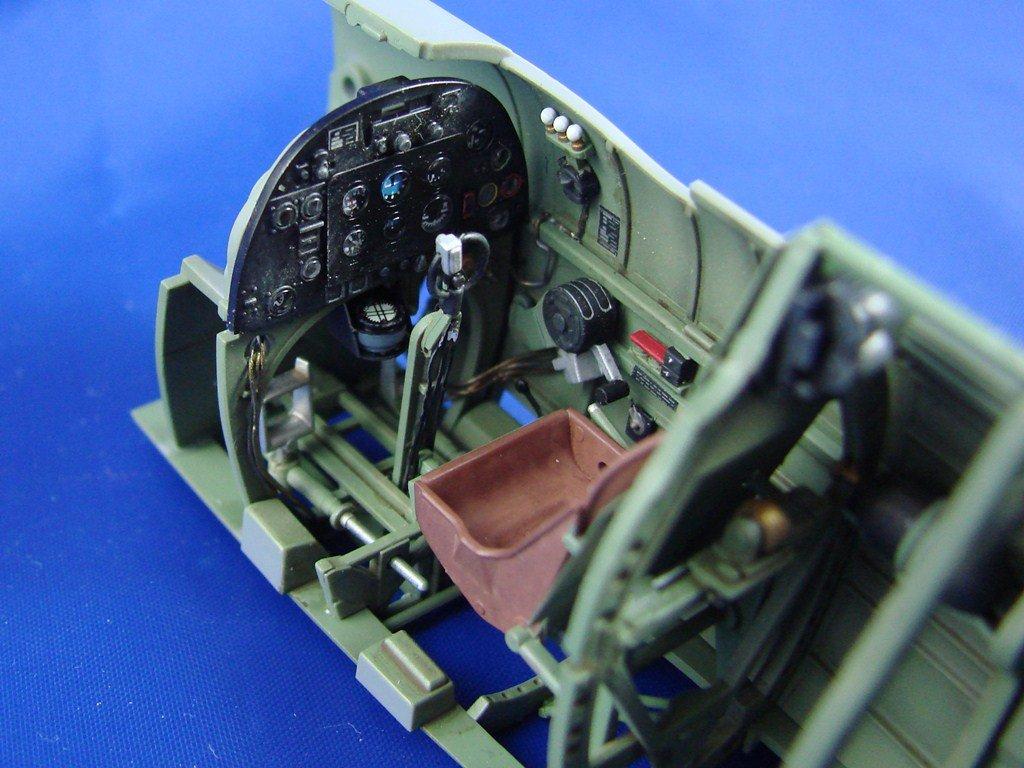
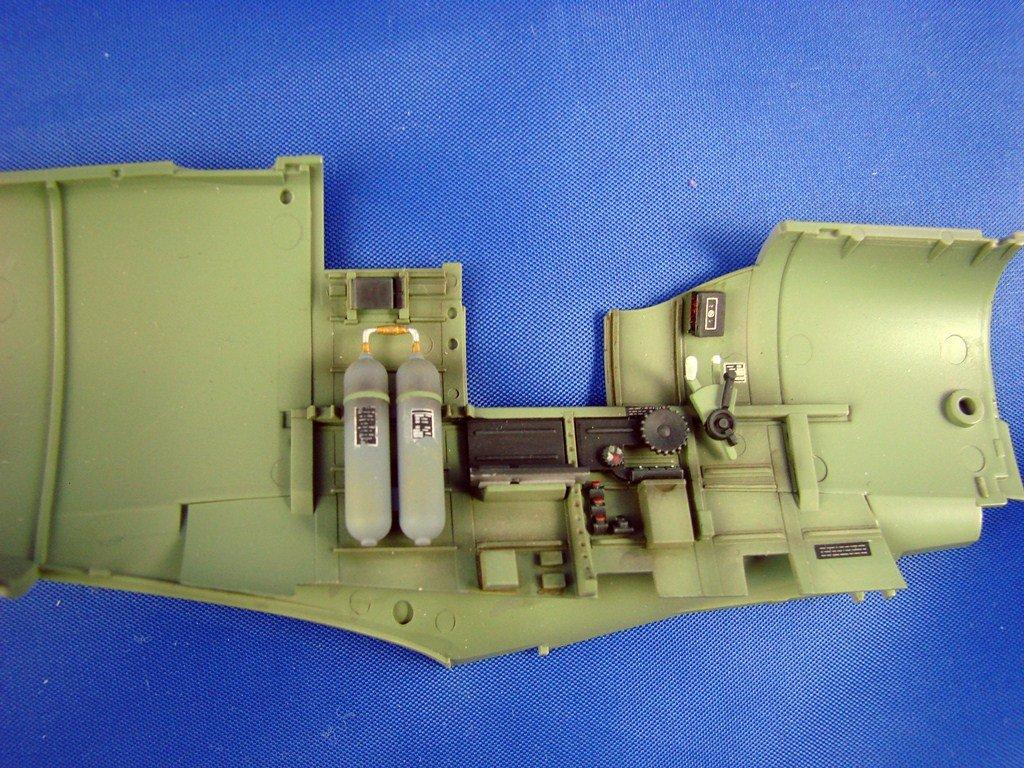
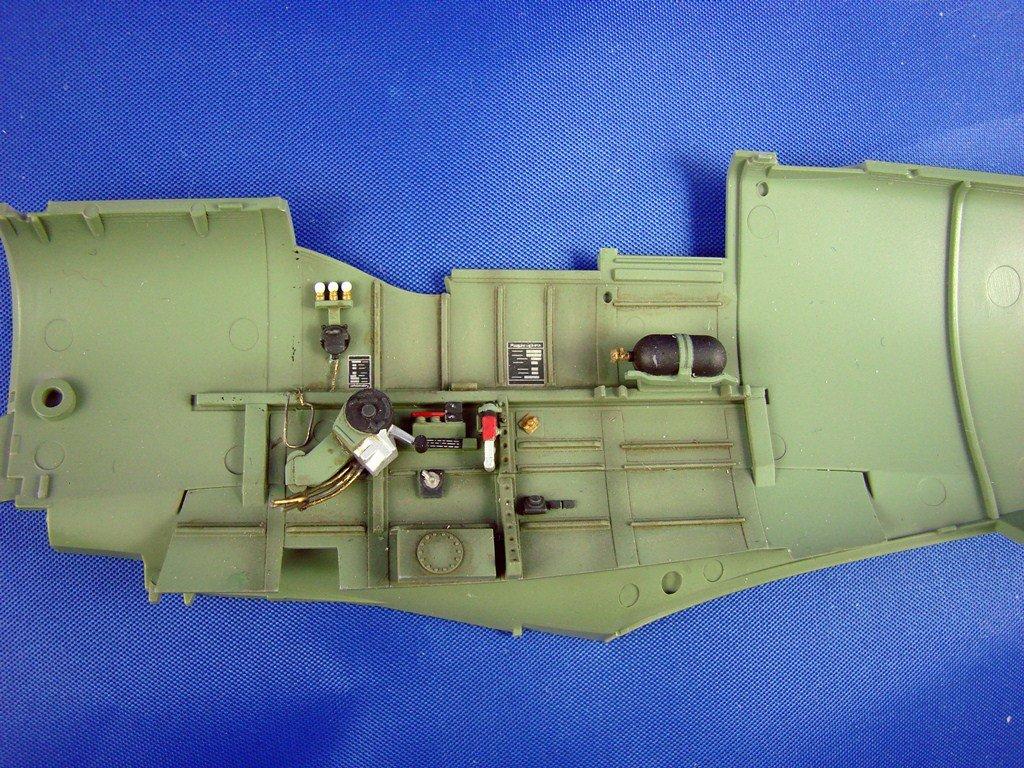
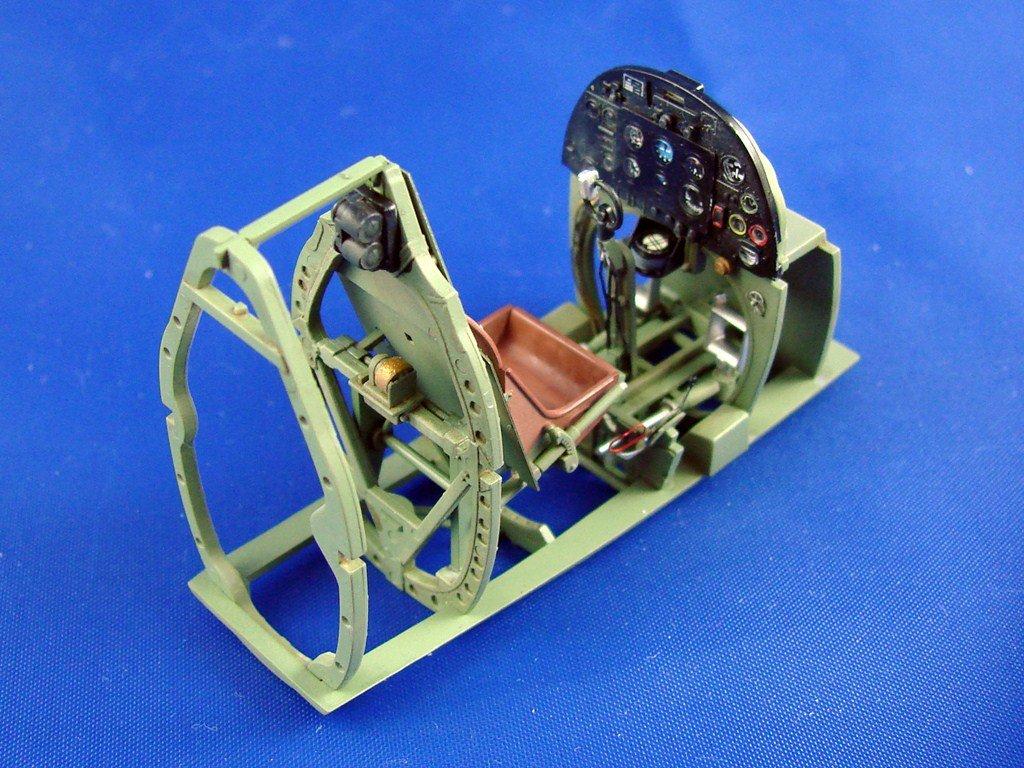
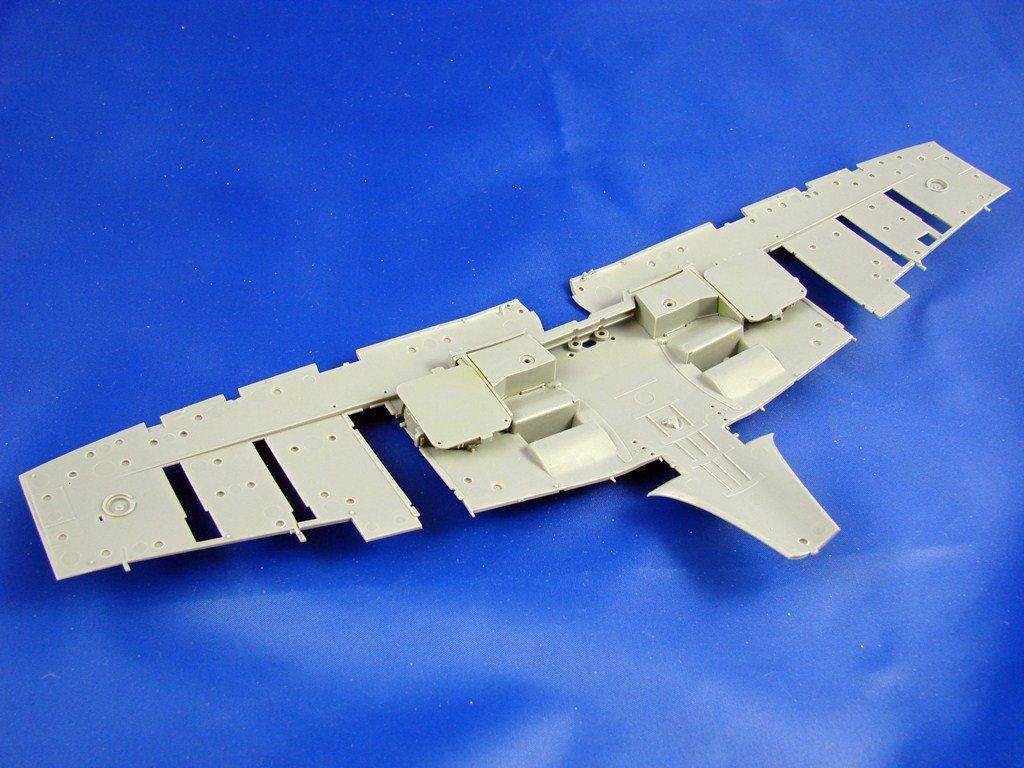
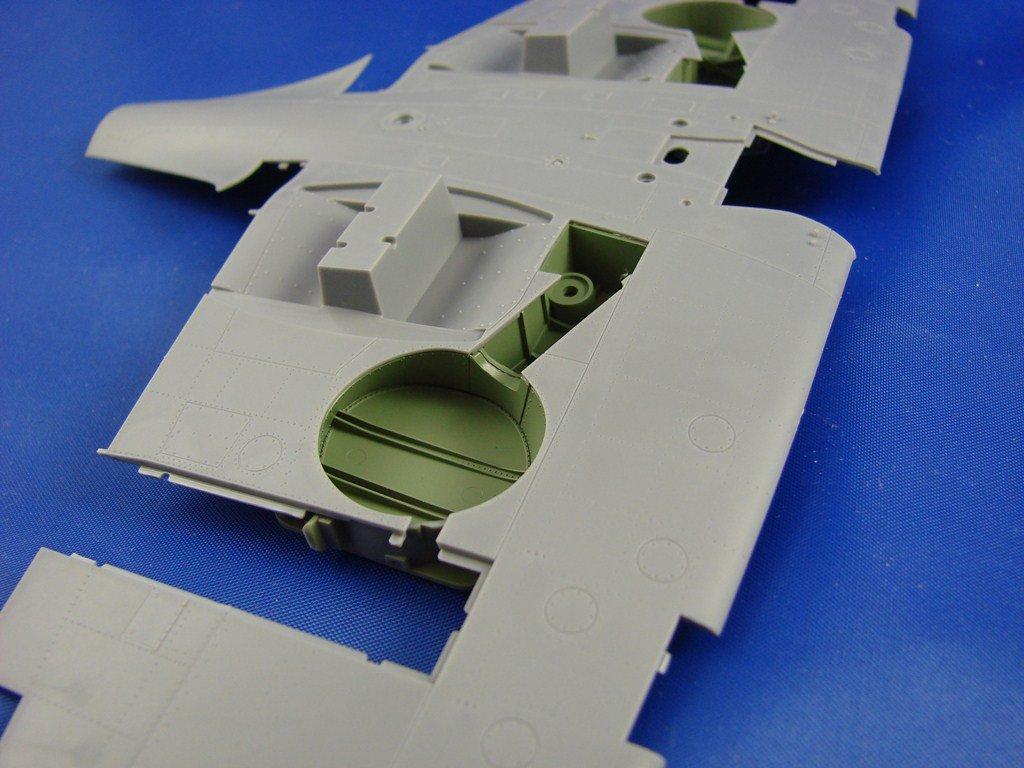
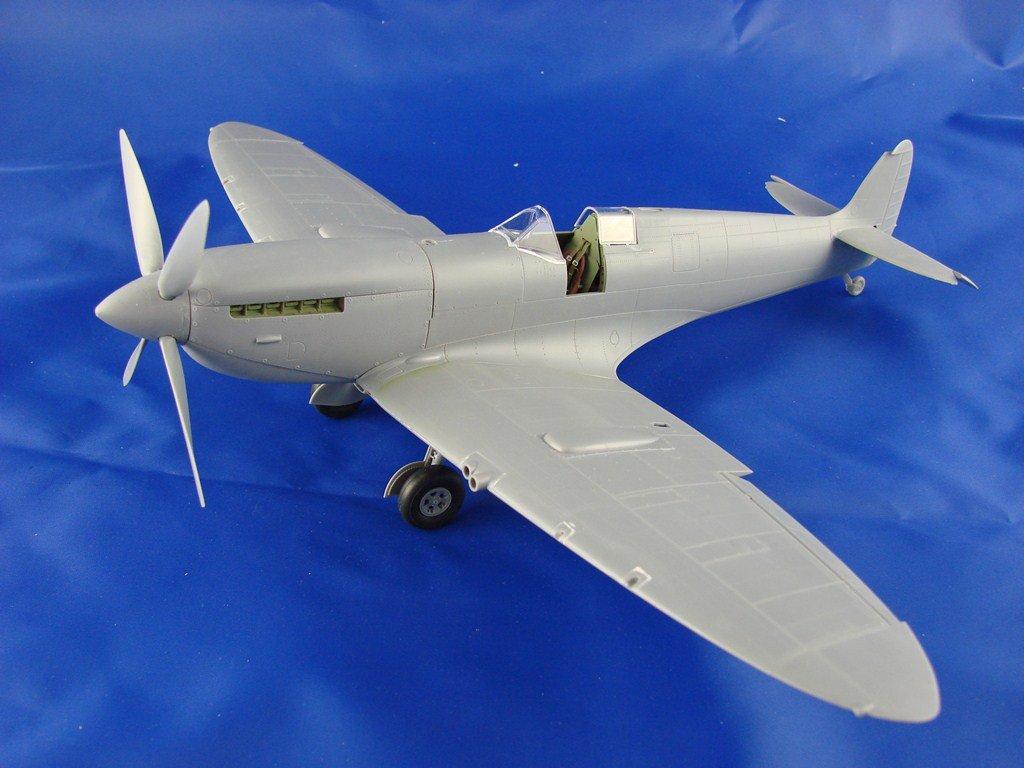
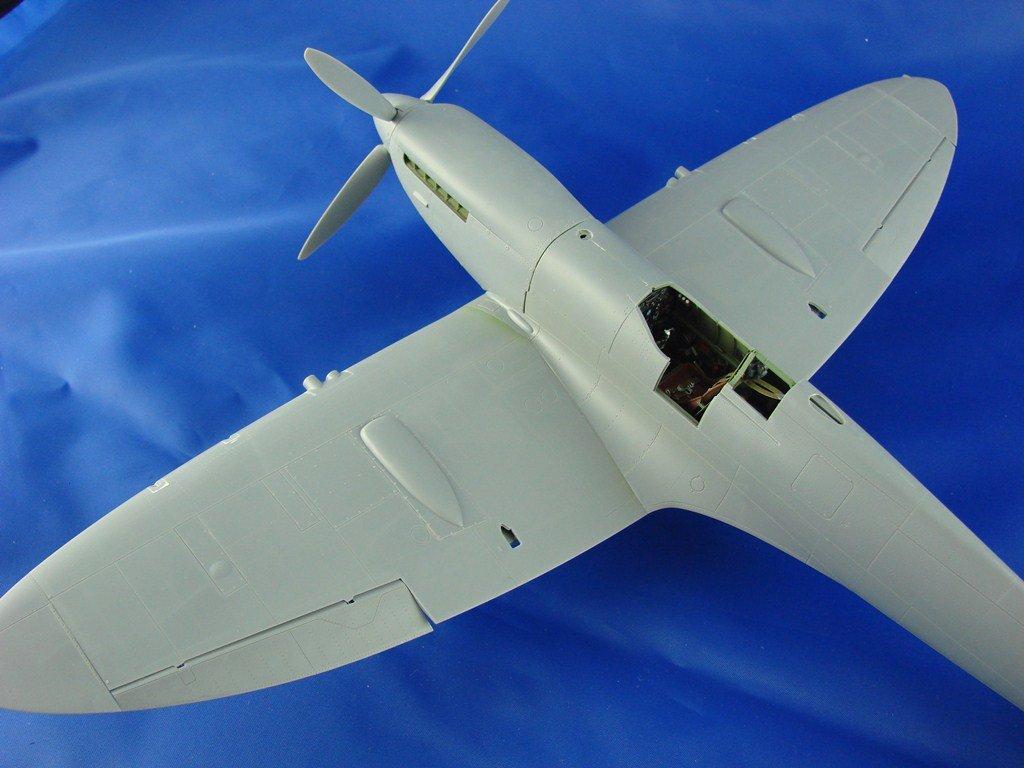
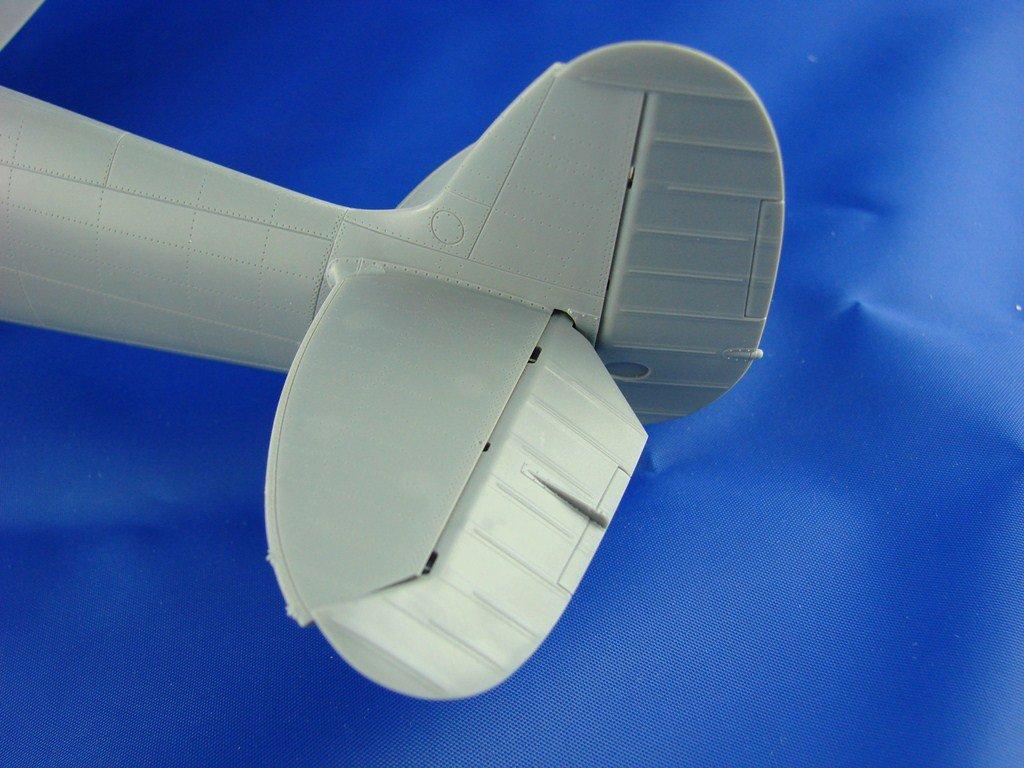
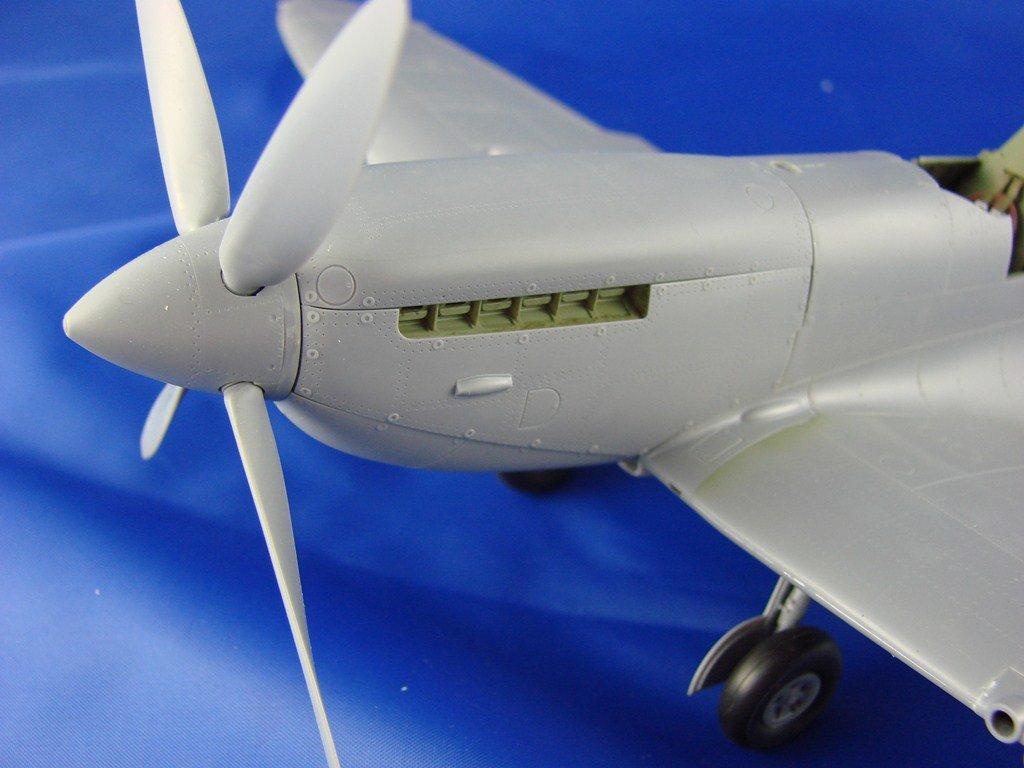
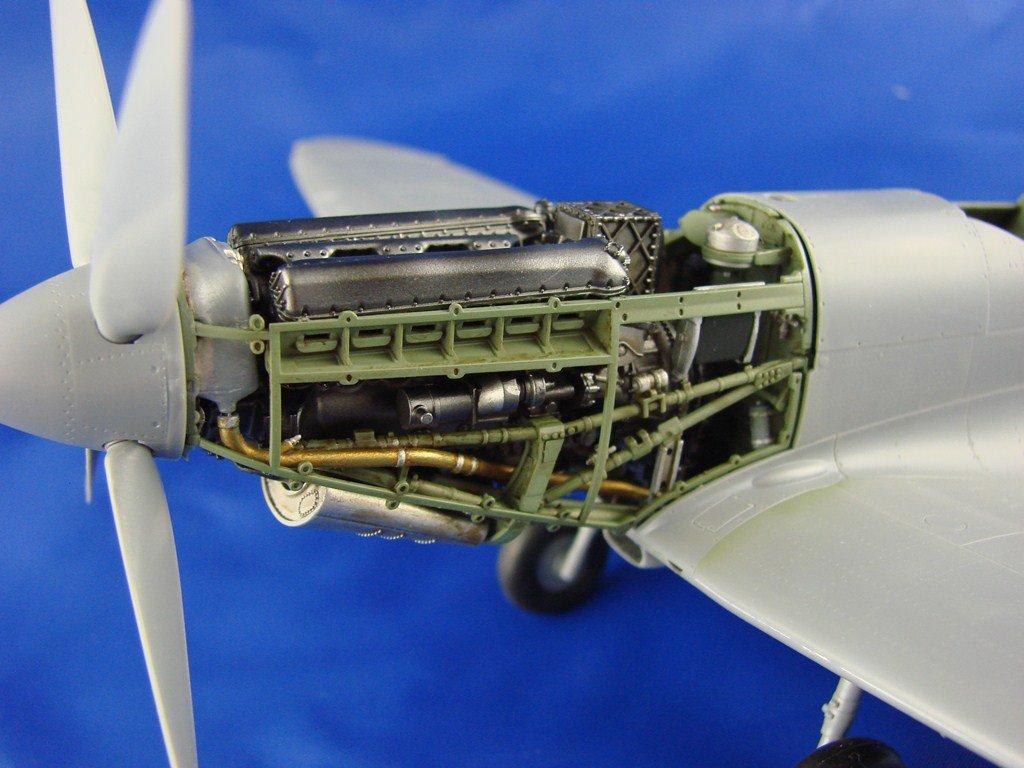
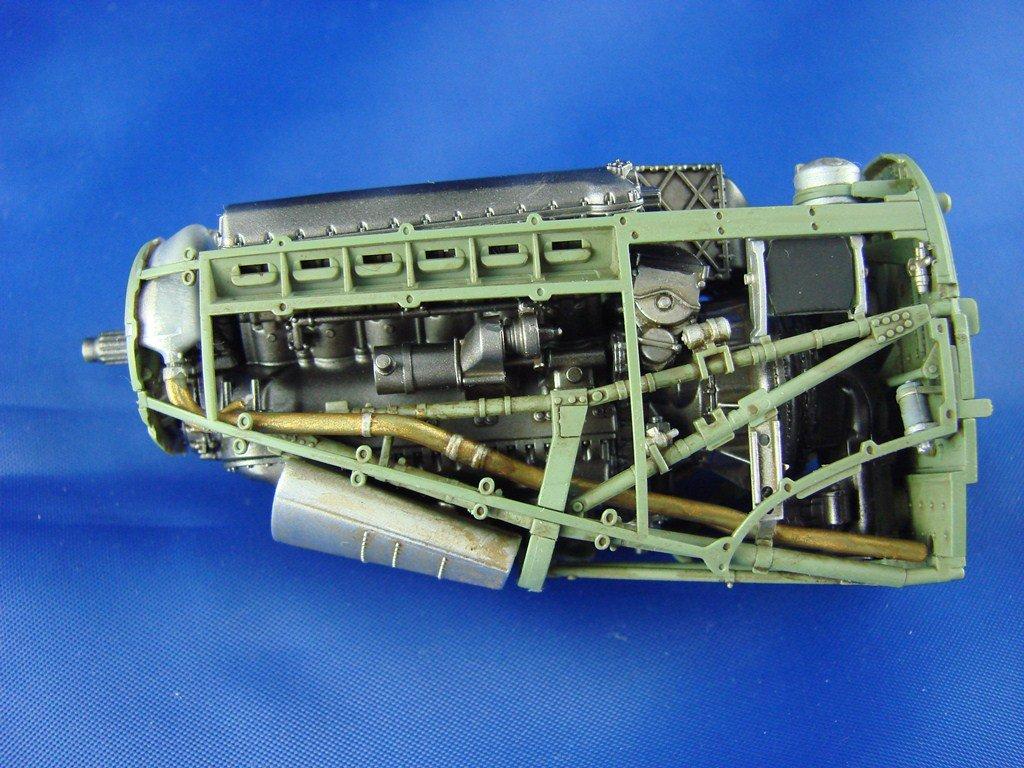
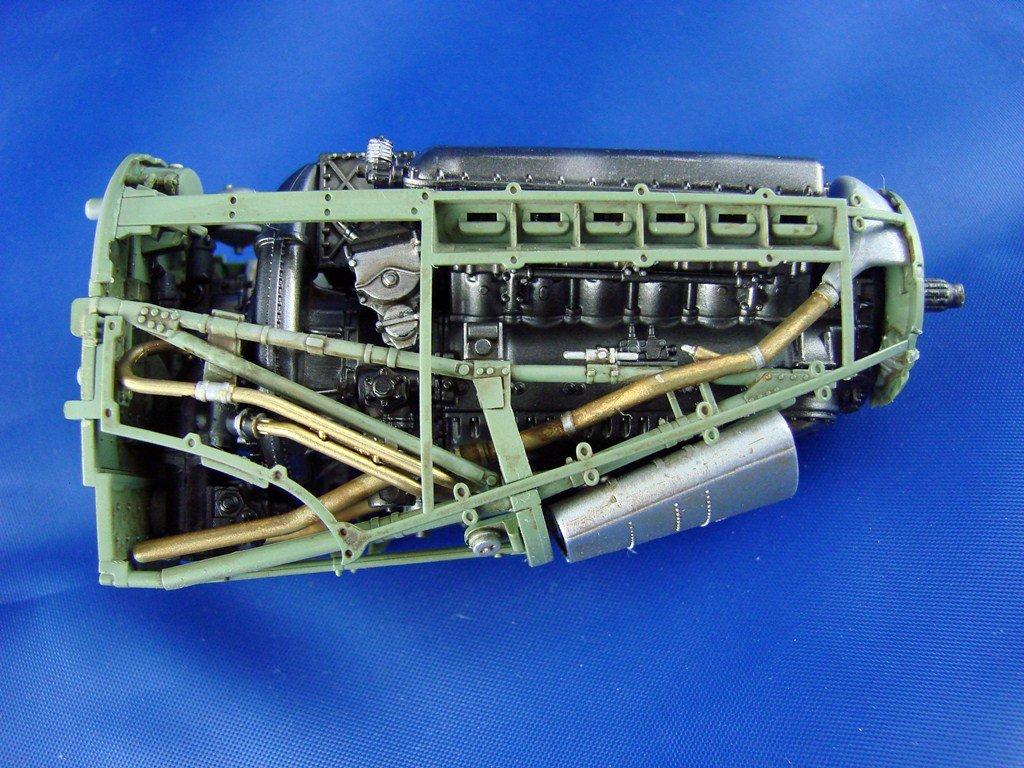
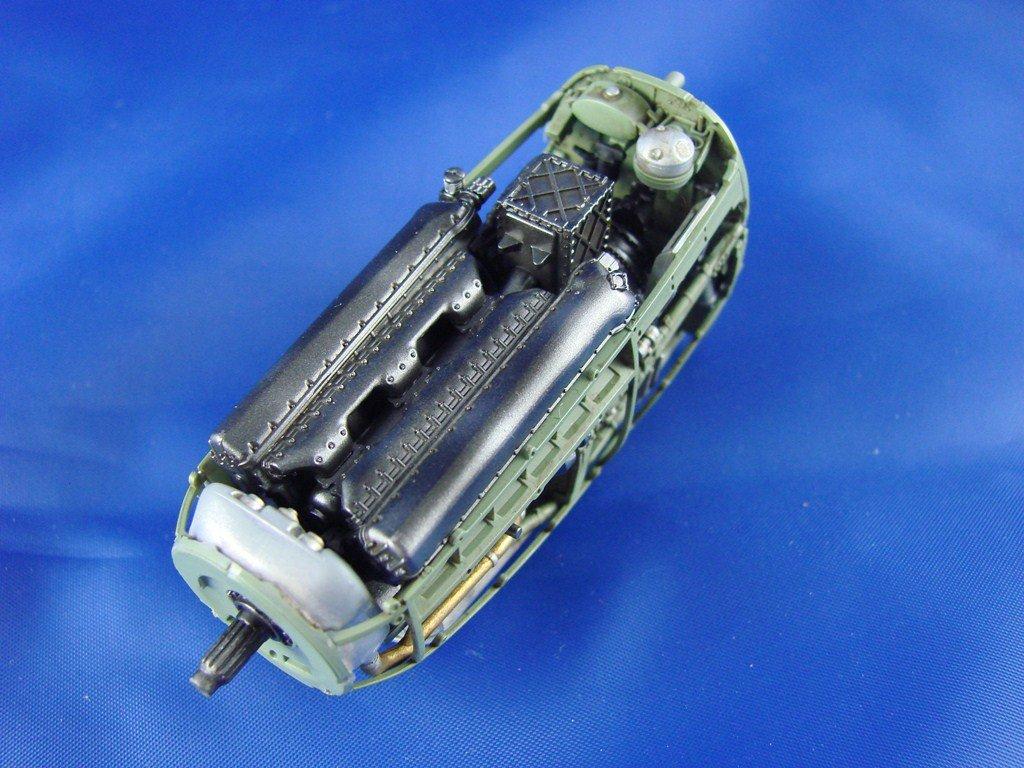
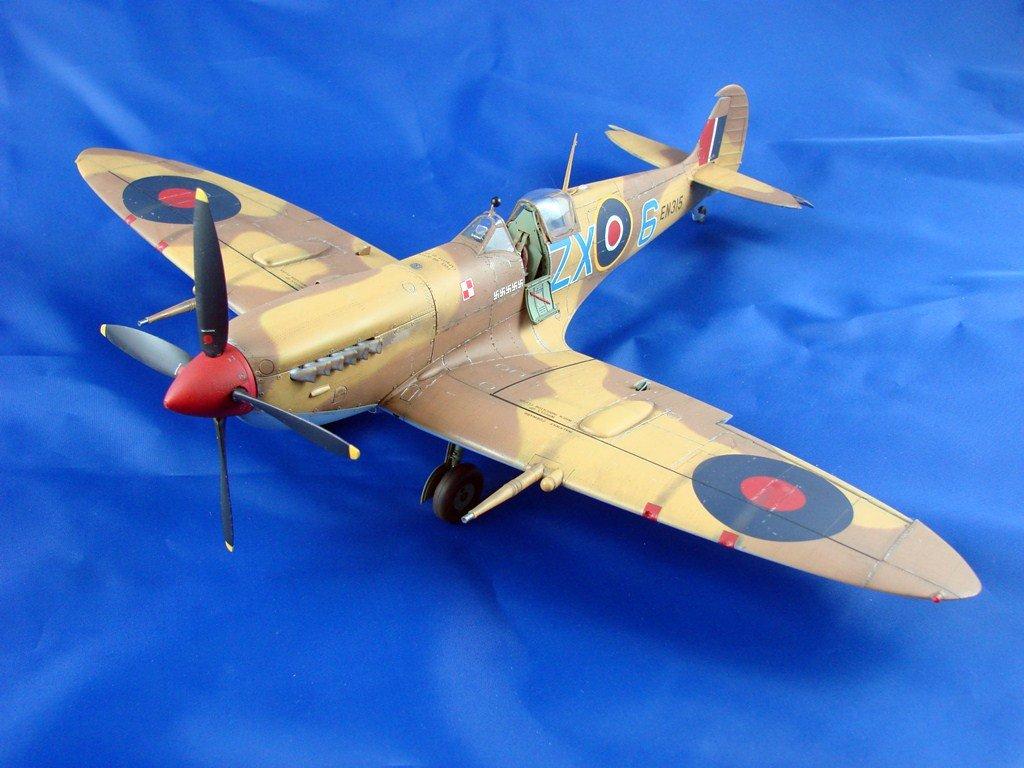
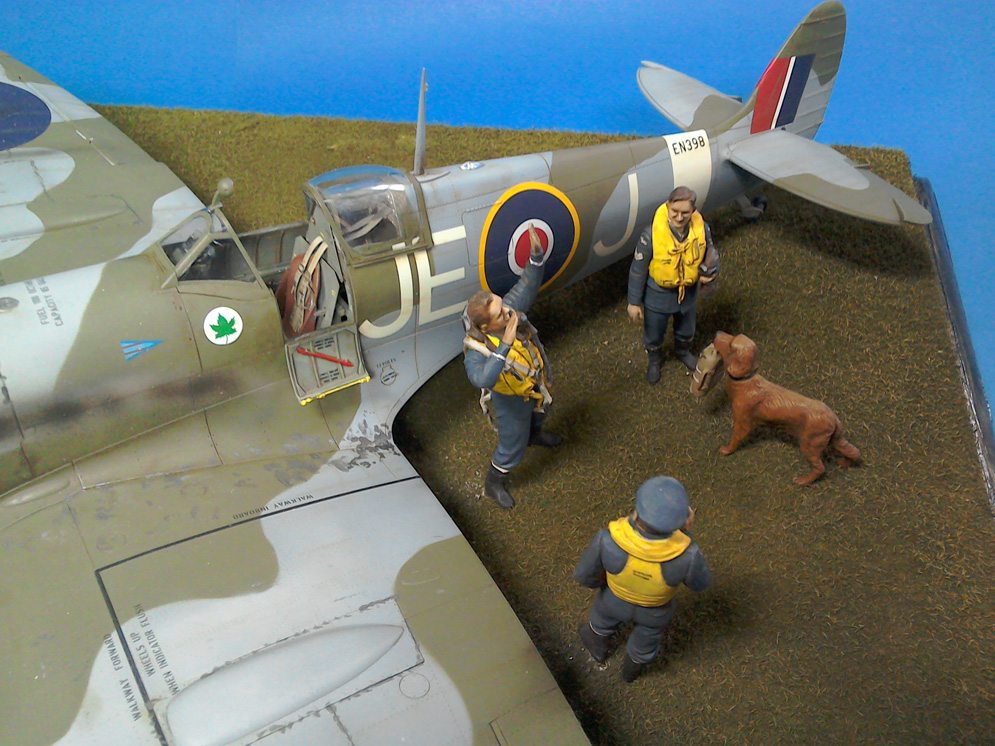
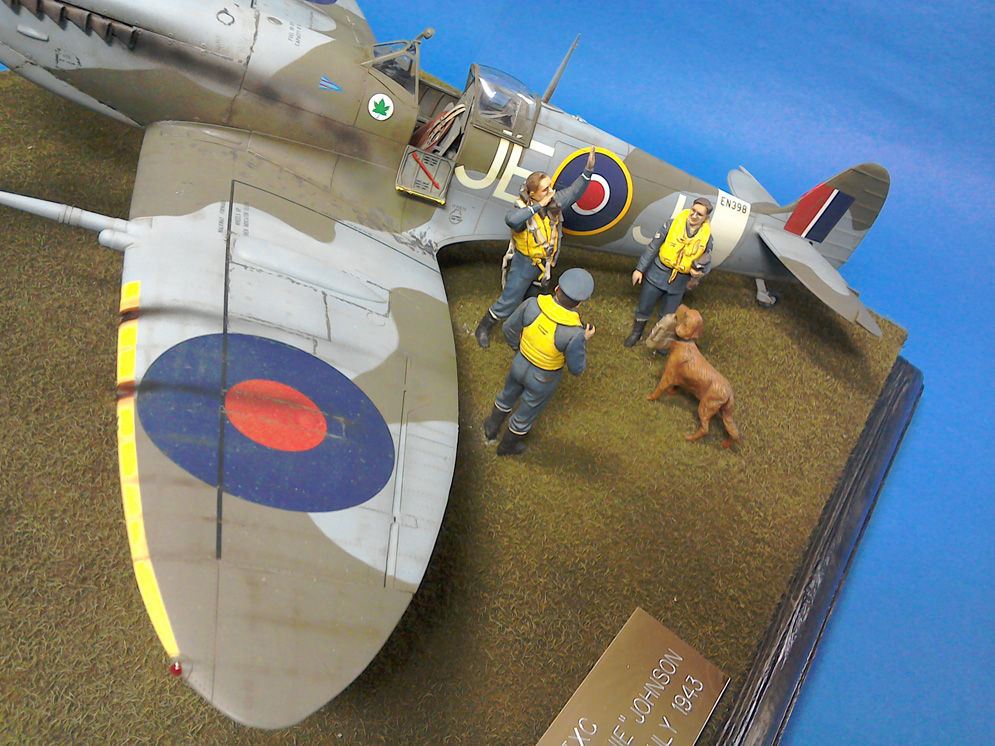
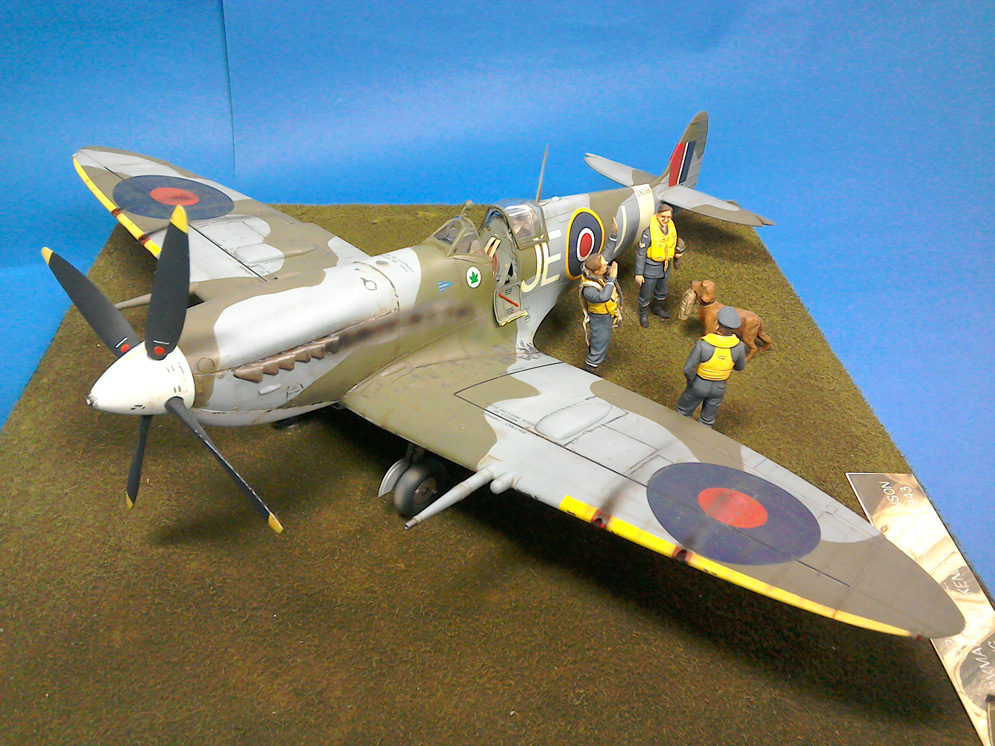
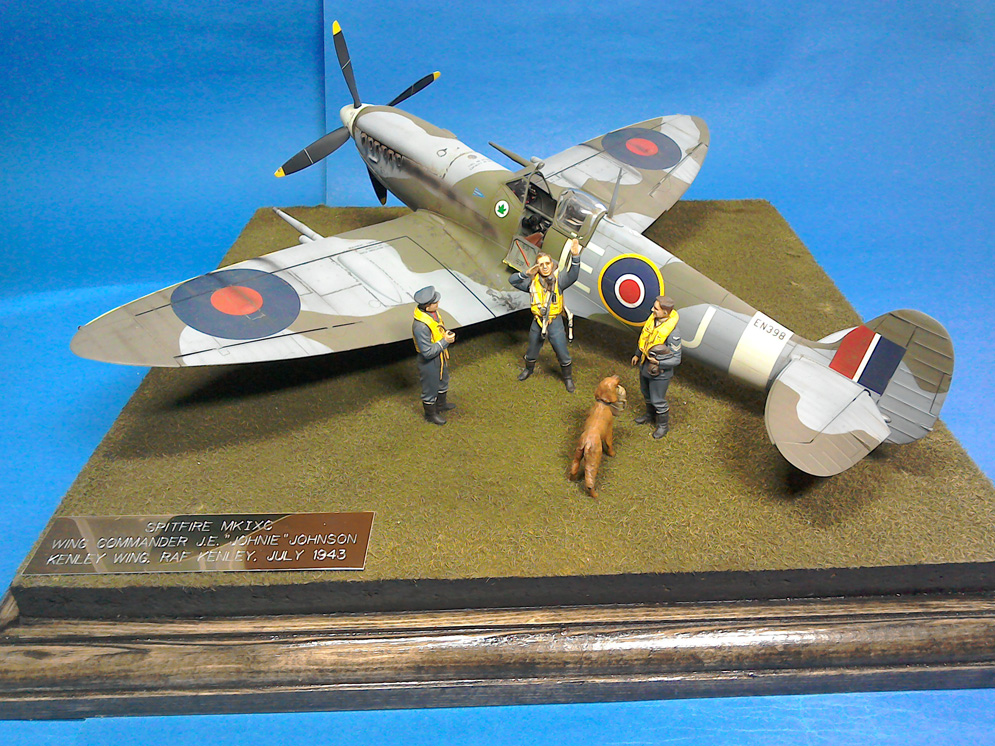
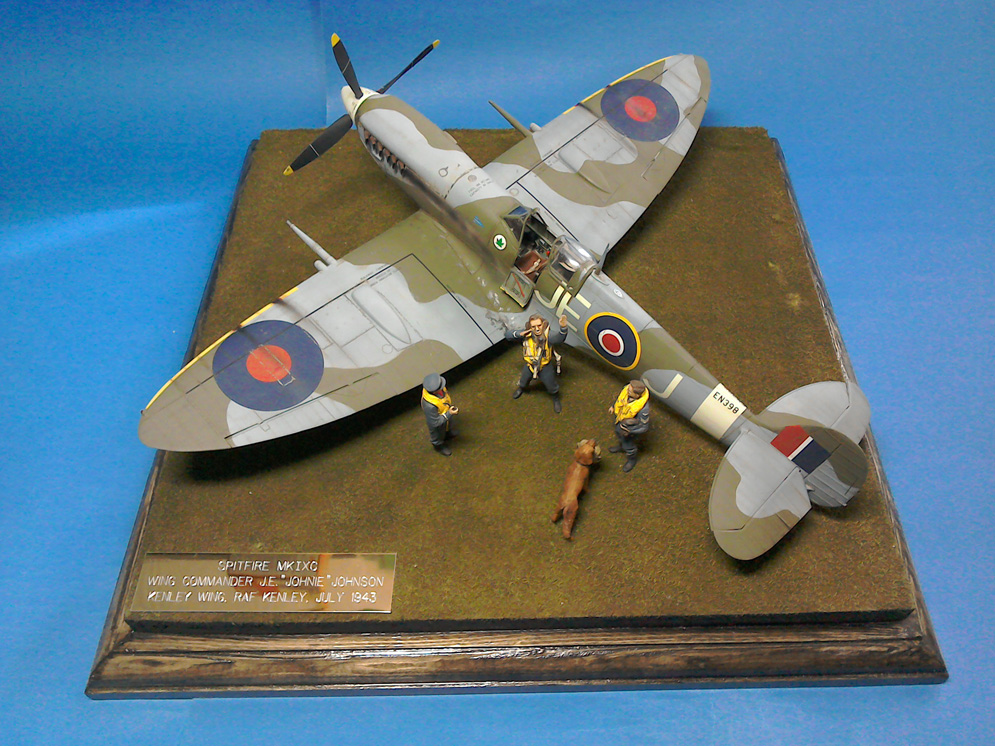
The model was built as a commission and completed in markings of Johnnie Johnson . No extra sets were used, only etch and paint masks supplied in kit.
The figures were MB models (I think).
The base is a thin layer of interior Polyfiller, which when dry was coated in PVA glue and static grass applied. Once this was dry it was airbrushed and finally dry-brushed to give the effect you see here.
Ian R.
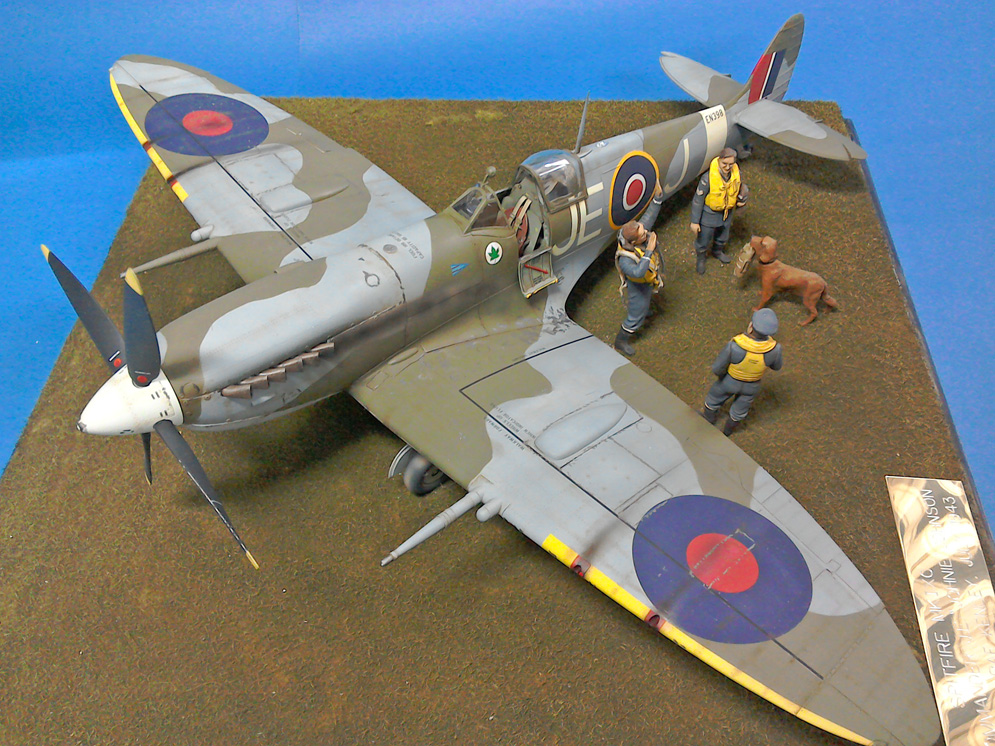
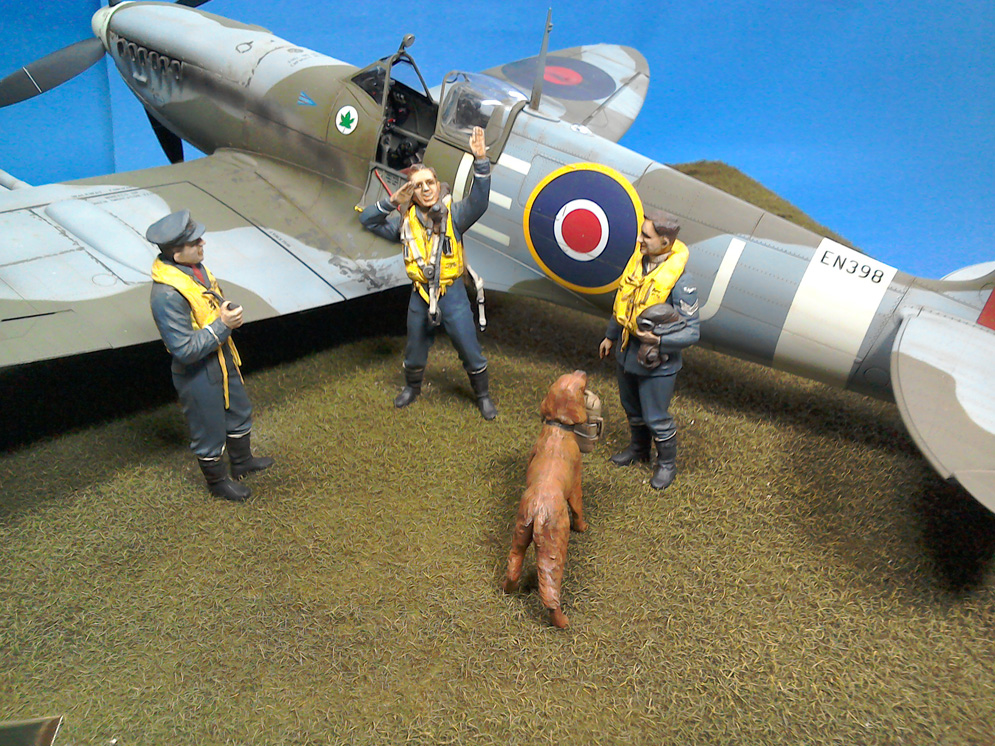
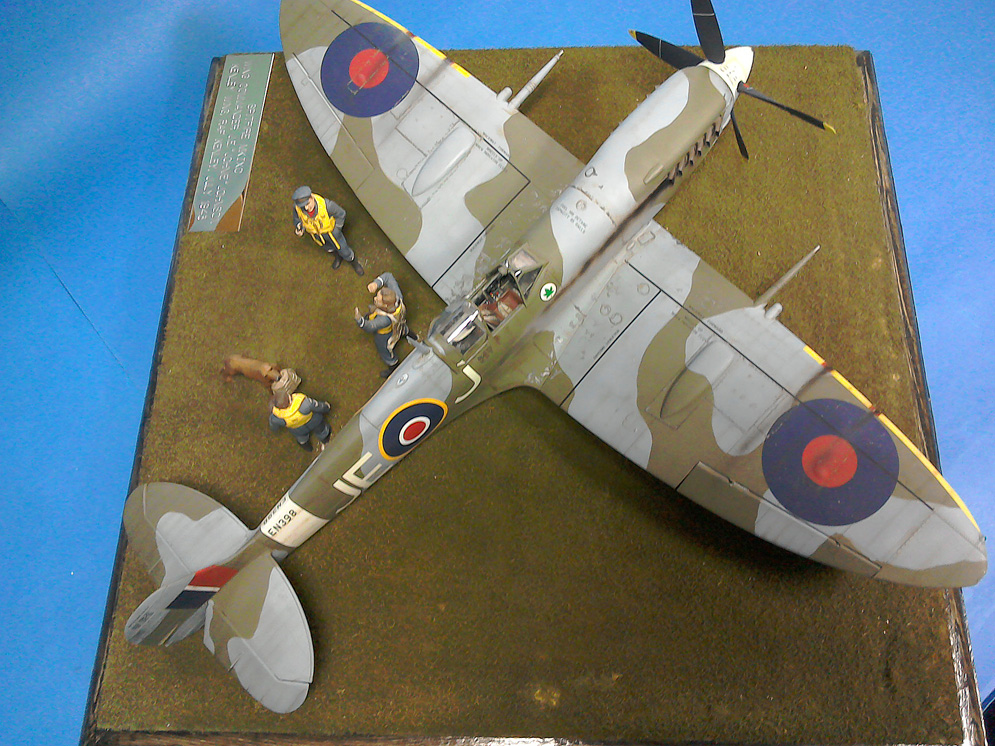
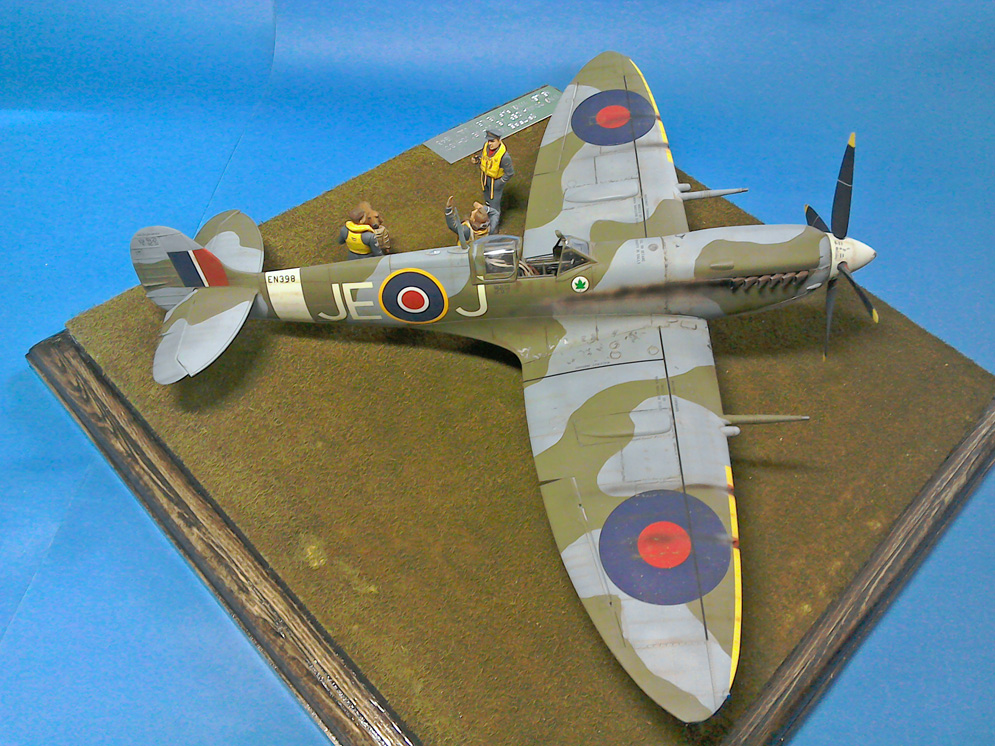
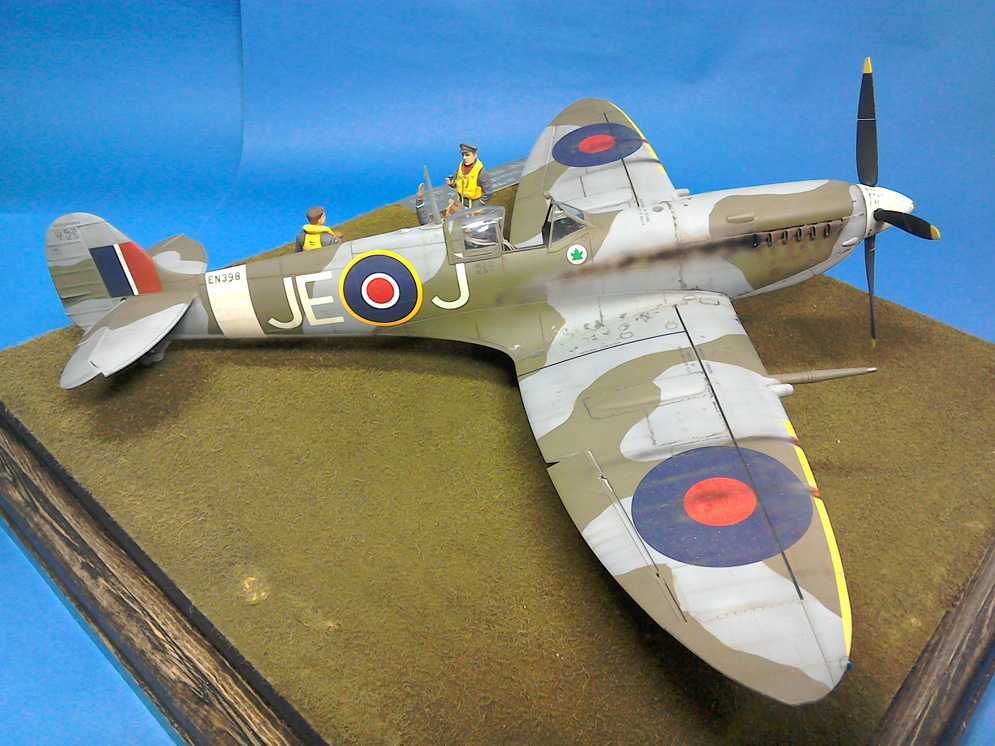
Sqn. Ldr Brian Lane DFC, at the age of 23, was the commander of 19 Squadron, Fowlmere, during the latter stages of the Battle of Britain. He was an Ace, with 5 aircraft destroyed, 1 shared destroyed, 3 probable destroyed and 1 damaged. In September 1942 he commanded 167 Squadron, a Dutch Squadron and during a mission on the 13 December 1942 he was last seen chasing an FW-190 over the North Sea.
He never returned from this mission and was reported as missing in action.
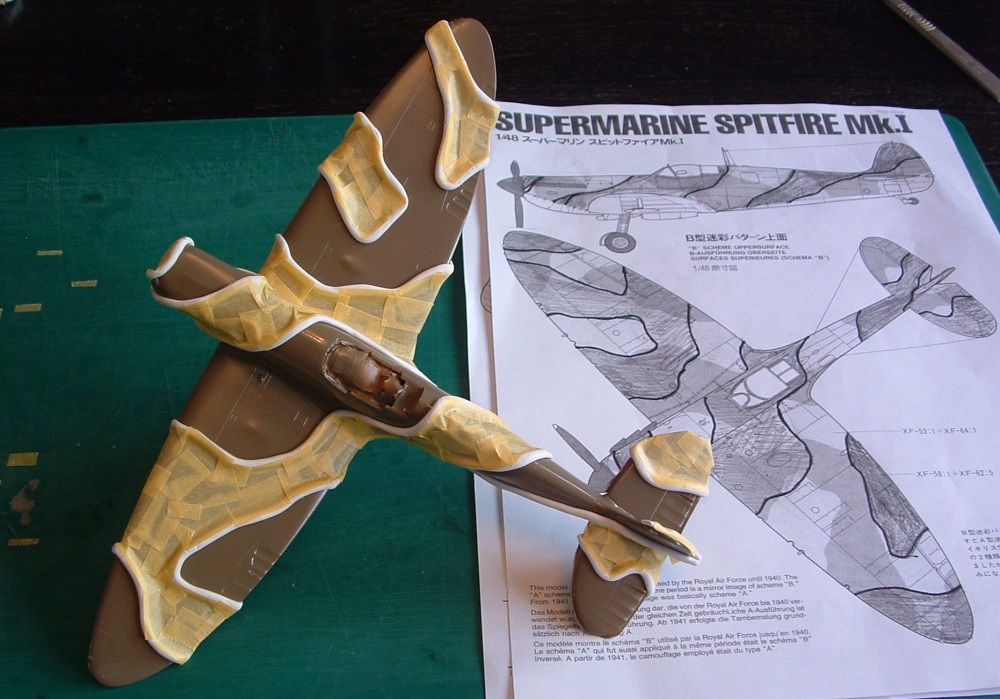
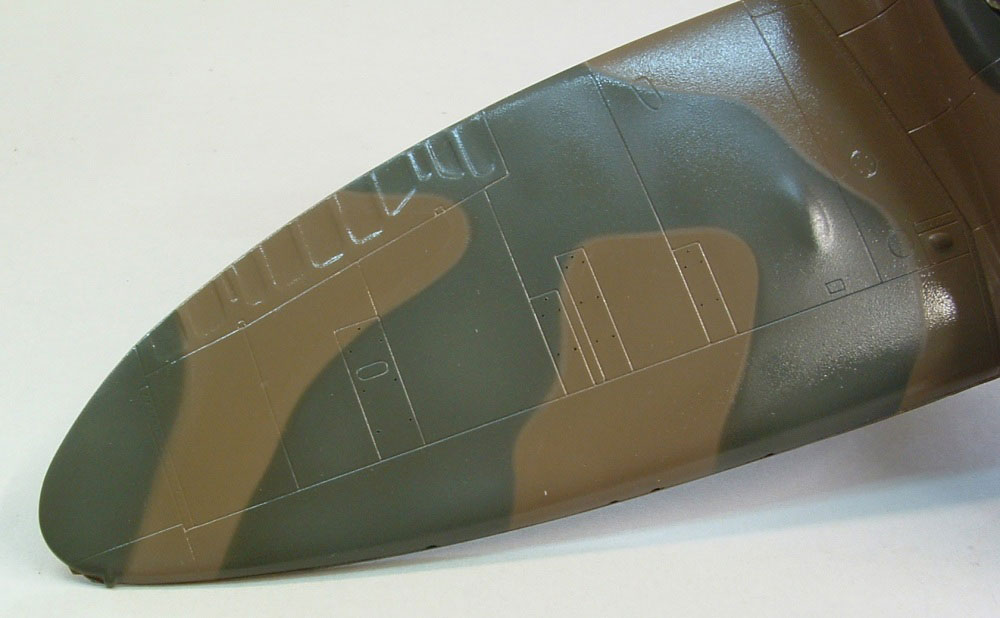
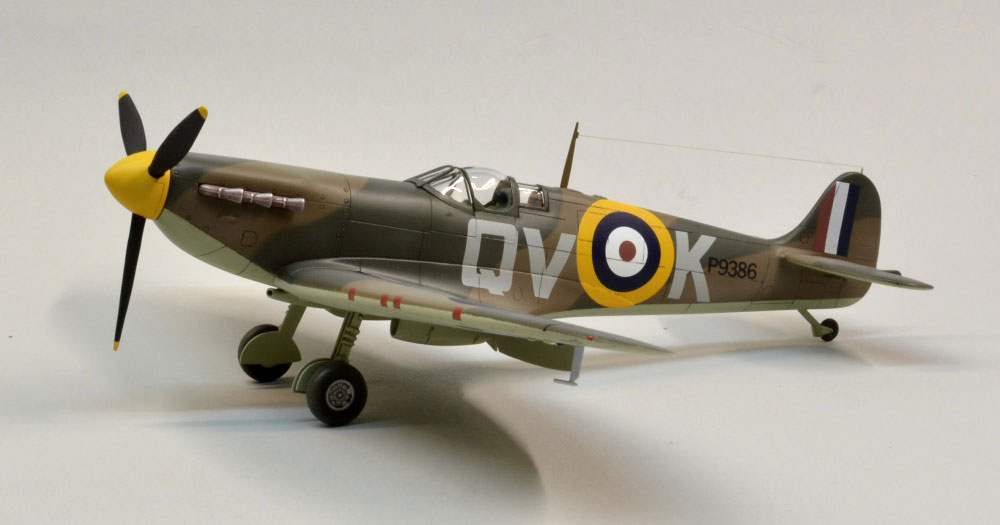
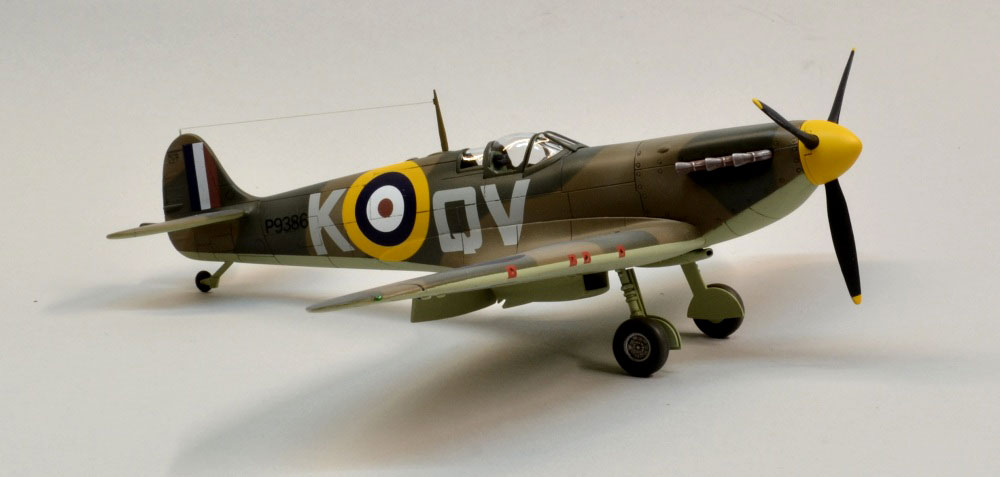
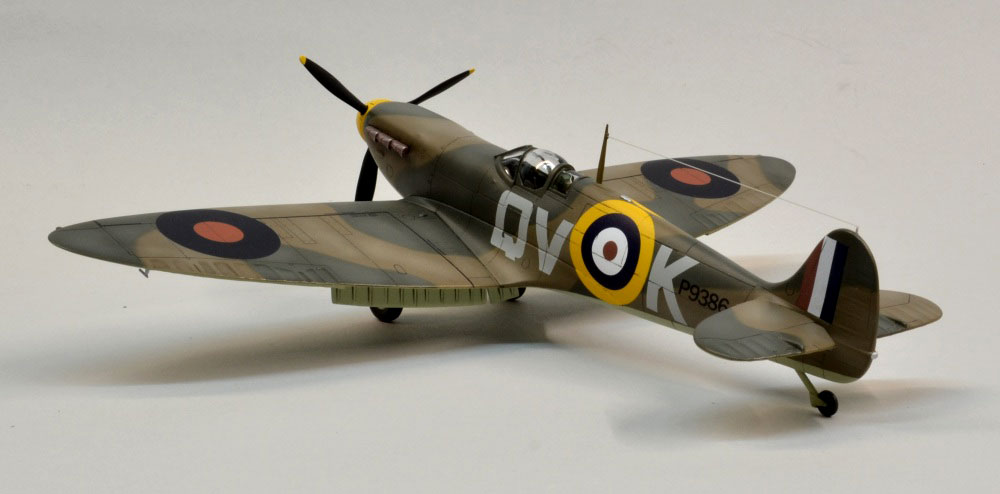
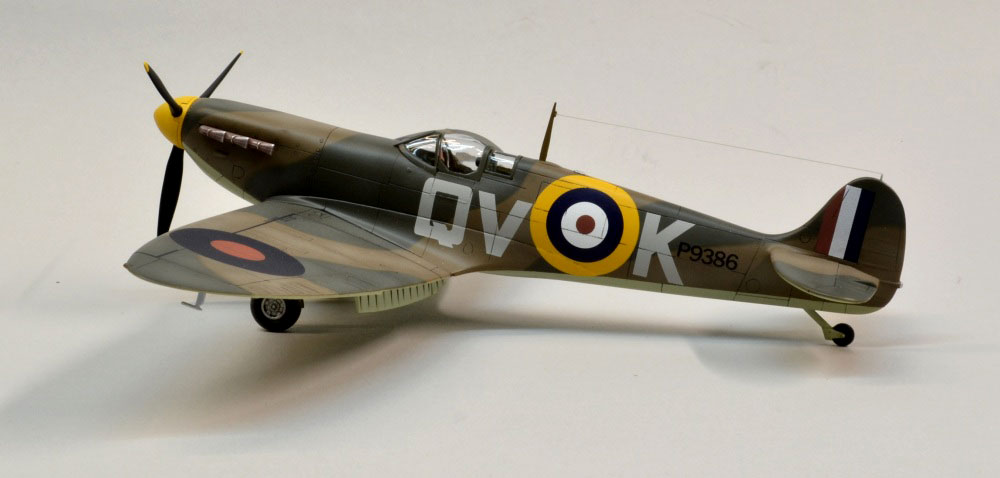
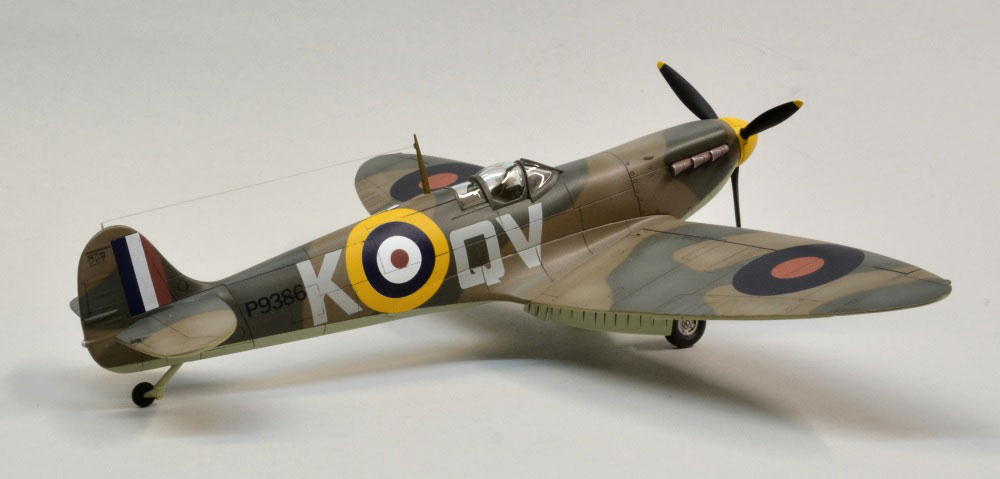
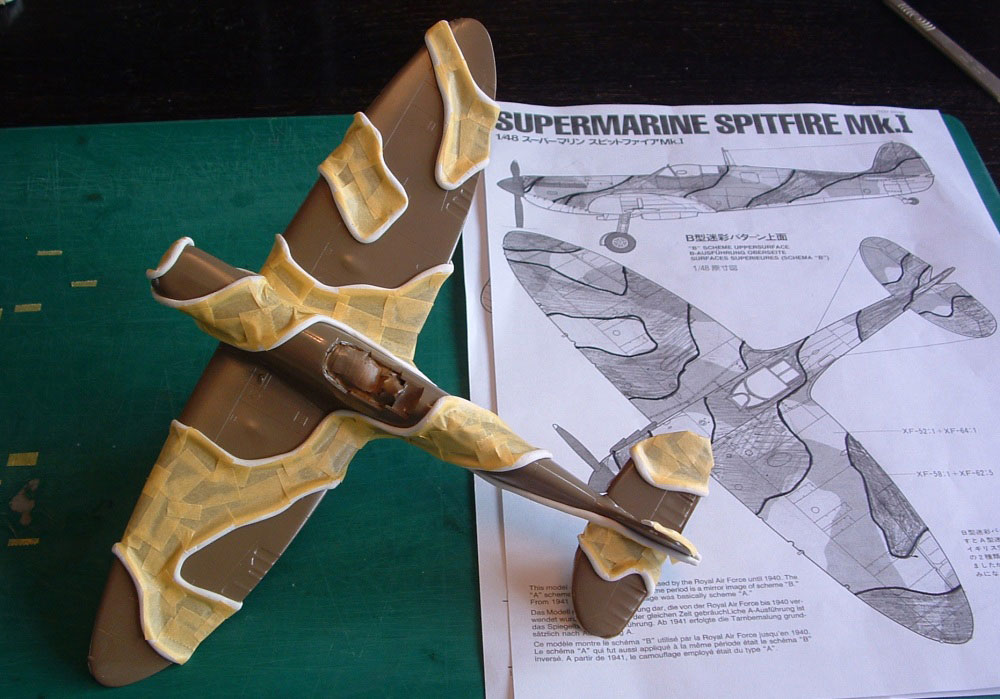
- The kit has been out a few years but is very nice
- I have added seatbelts and used Superscale decals
- I also fitted exhausts from a Tamiya Mk.I Spitfire
- I used the Blu-Tack string method for the camo demarcation and Xtracolor paints
- The model was finished off with a coat of Humbrol Matt Cote.
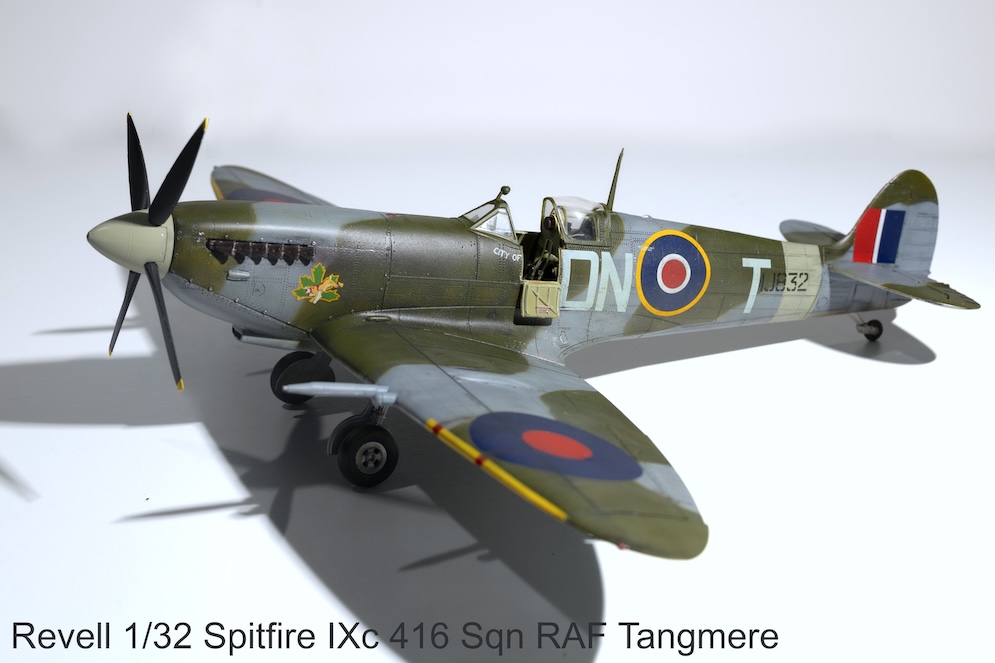
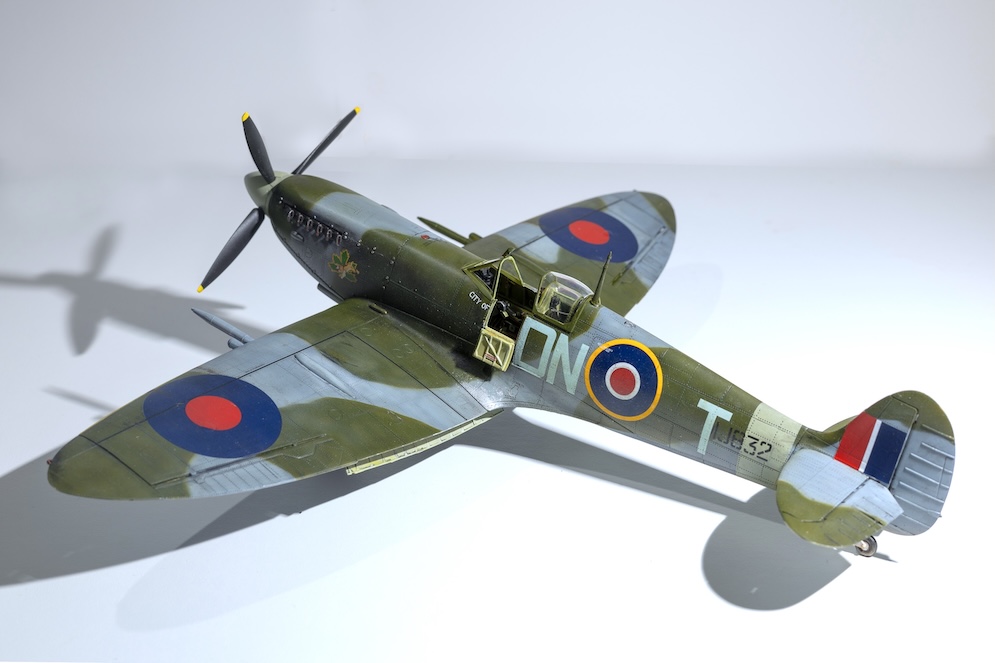
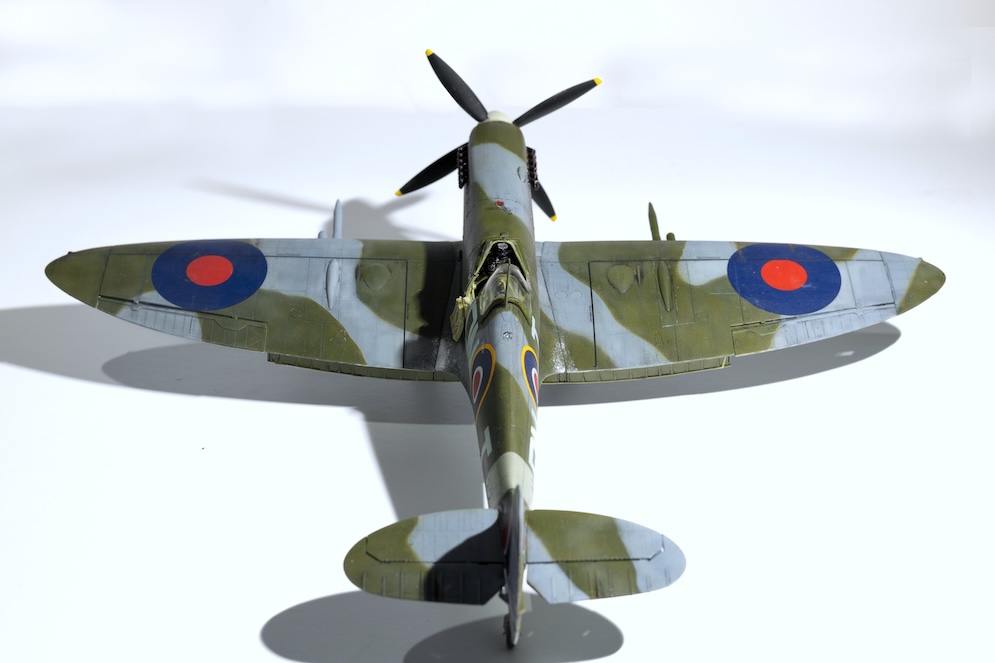
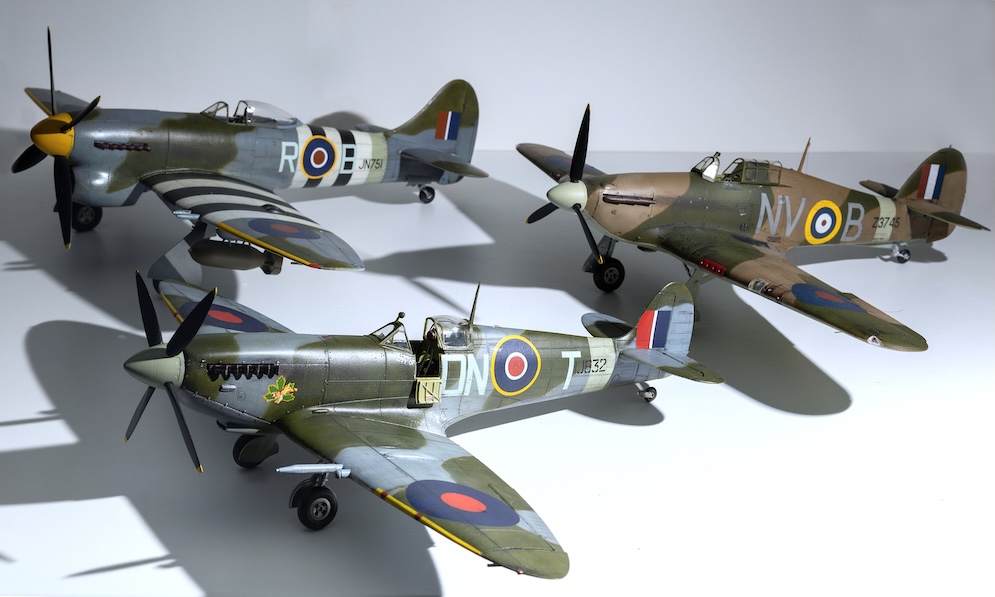
This kit was a bit of an impulse buy – I have in the stash a KoTare 1:32 Spitfire Mk.1a and the 1:24 Spitfire IX Flying Dray, so this Revell kit was intended as a warm up for the two more complex, expensive offerings and practice a few different techniques out. As is happens, I was really impressed with this kit from Revell, the detail is excellent, fit overall really good, and although there are ‘experts’ who challenge the shape, to me it looks like a Spitfire IX.
The kit goes well with my existing 1:32 Revell Hurricane II and Tempest V which again are good kits, although I did have a few issues with the Tempest!
This kit was built straight out of the box, with only extras being Eduard seat belts, which in this scale it really needs. Also some canopy masks from Mondex, which were really good and fitted well.
For the price of this kit, I consider it to be fantastic value for money, and will probably get another at some point to go with the Aluminium finish 601 Sqn option in the kit.
Richard A.
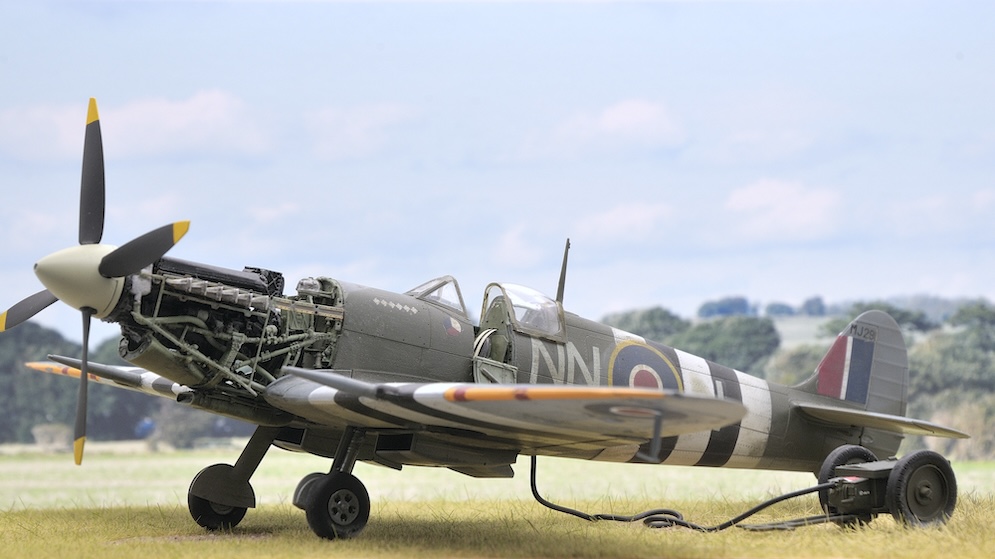
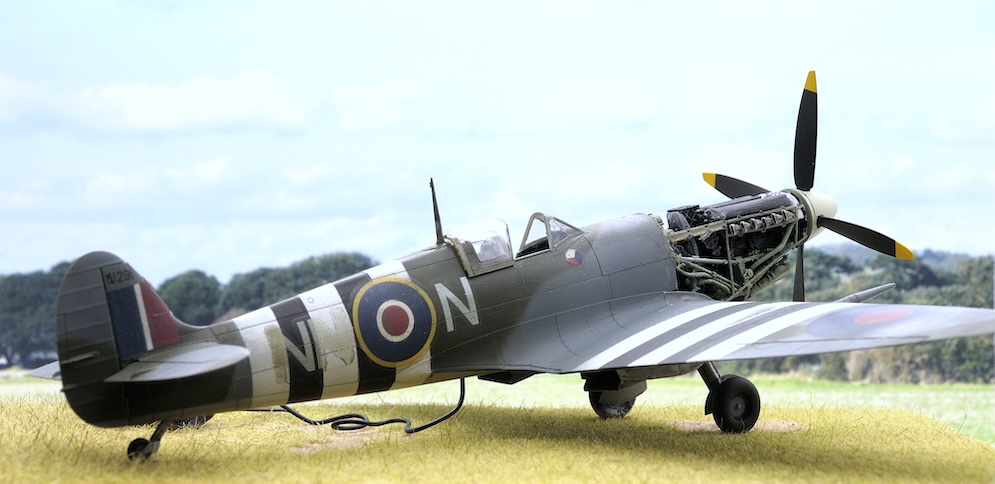
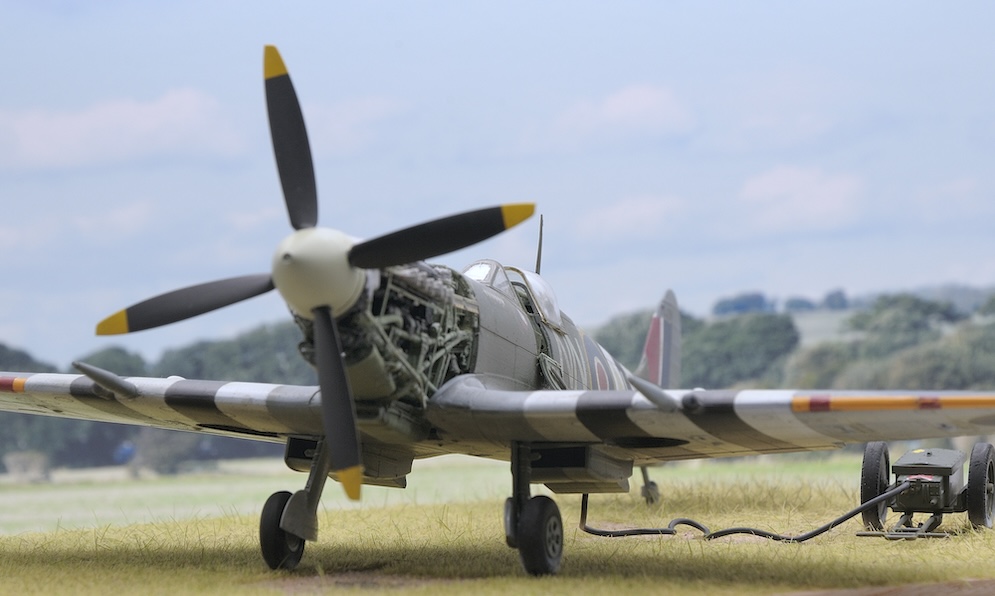
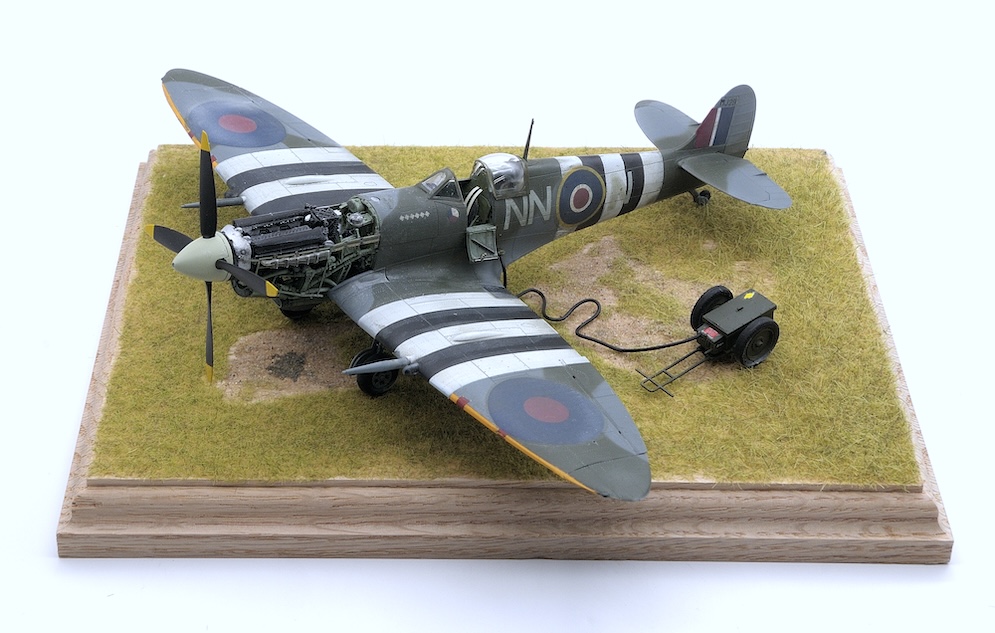
Hi Geoff
This one might interest a few…
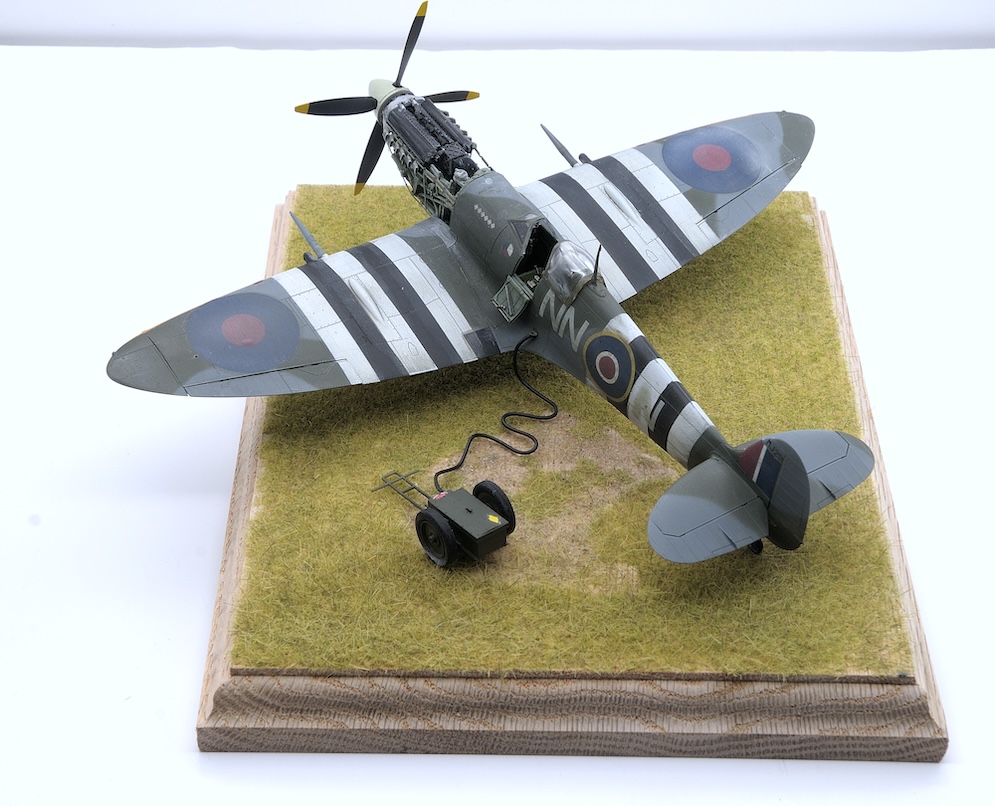
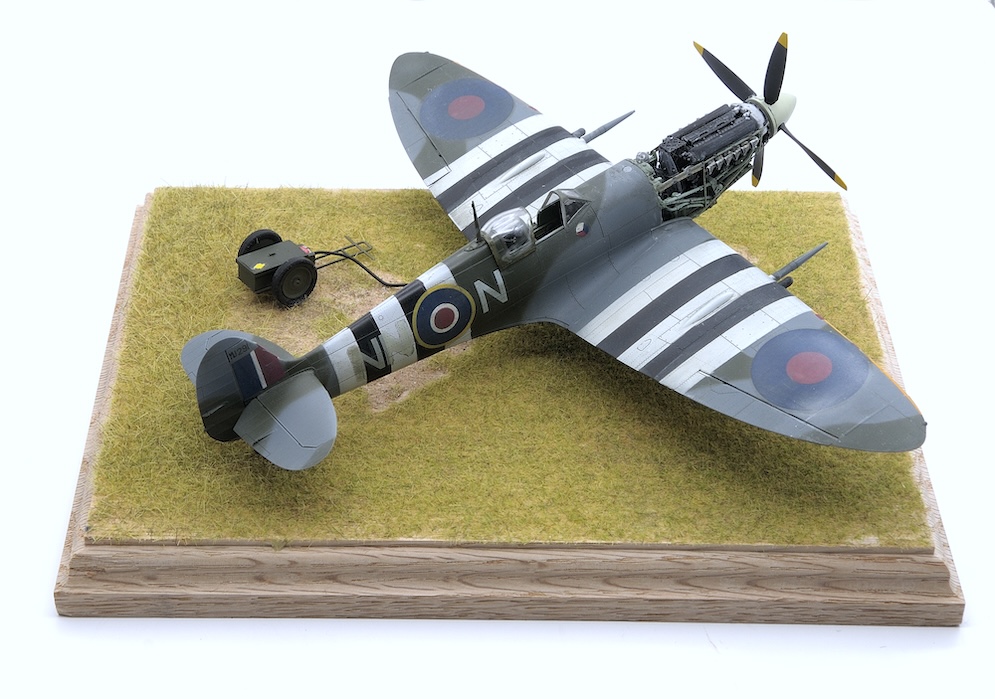
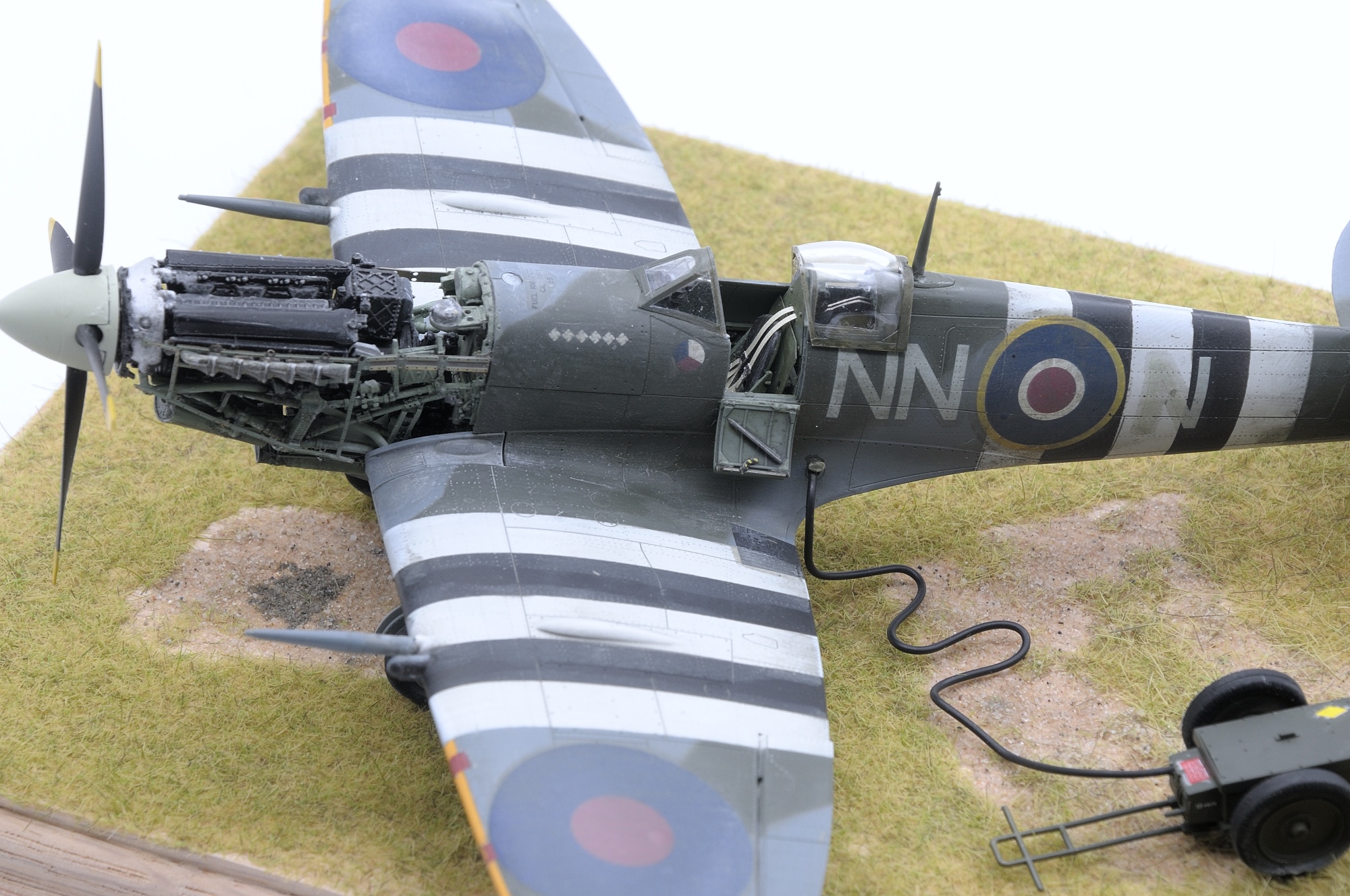
No its not “another Airfix 1:24”, it is an Eduard 1:48 with their now old resin engine. I say that because their new stuff is 3D printed and a lot better. This is on a par with the old Aires resin parts so needs a bit of patience and a lot of dry-fitting. It’s a great help when the model itself is produced by the same people that make the engine.
Paints are all MRP including the D-day stripes
trolly acc is an old Revell part from their discontinued Airfield set
The grass is that static stuff that stands up – the sort that they use on model railways and a bit of a first for me, works well.
Paddy B.

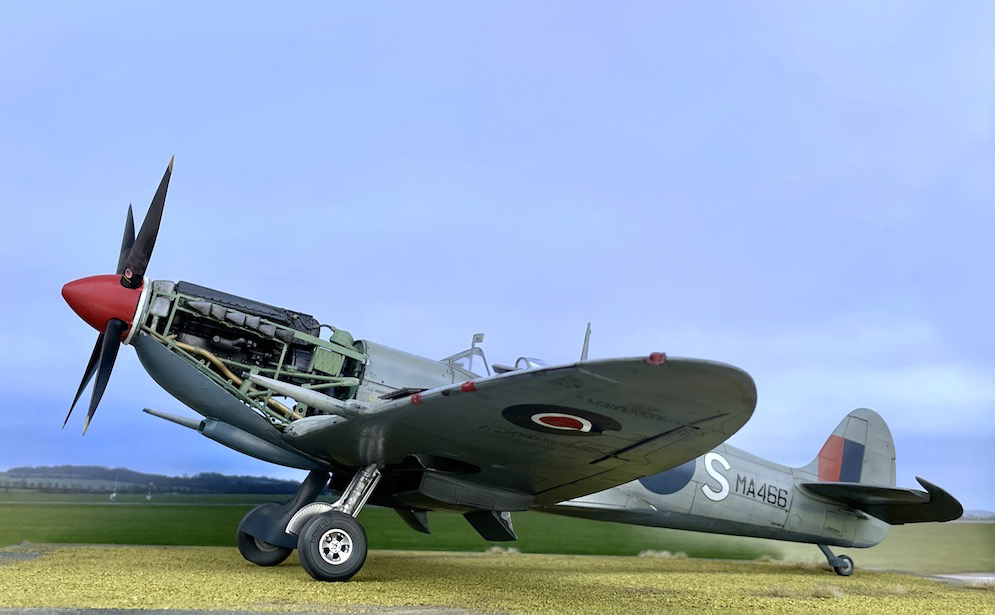
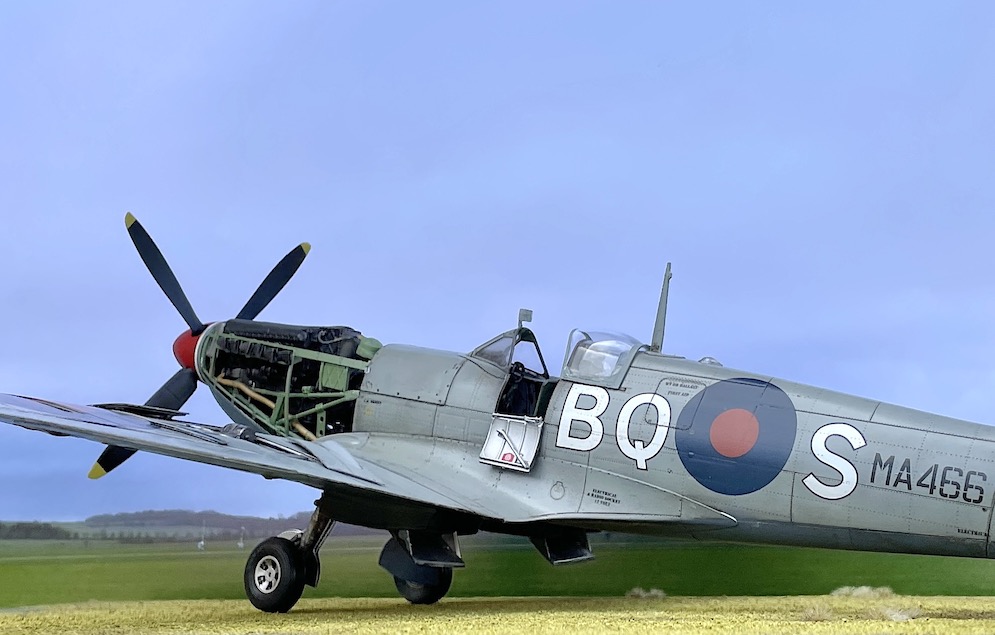
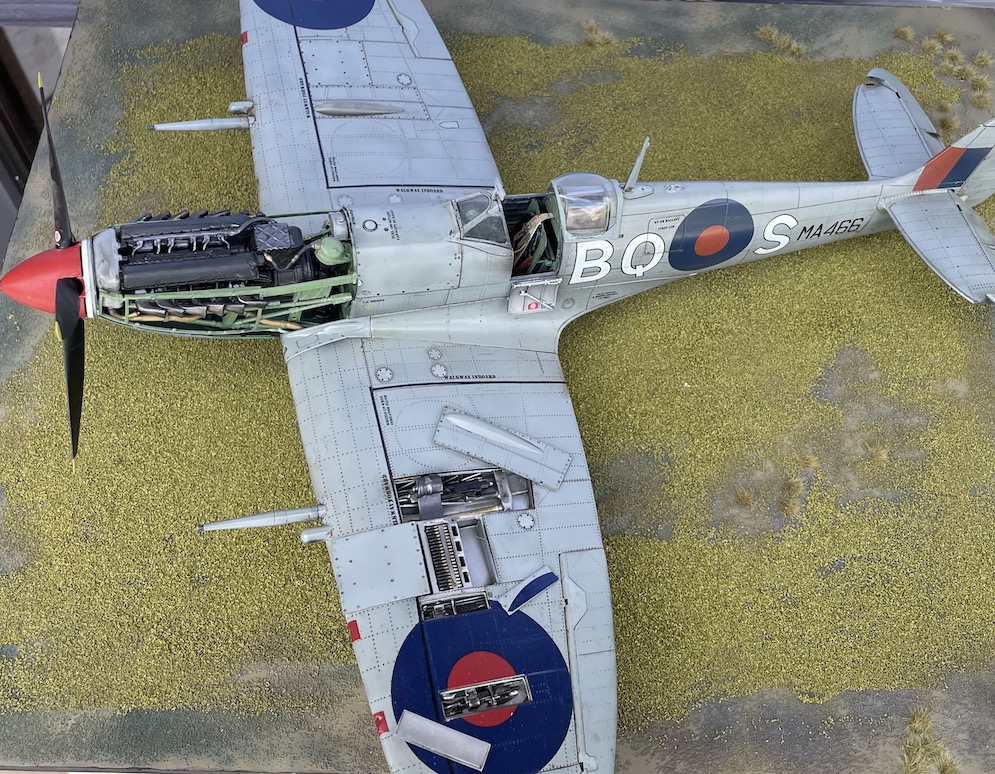
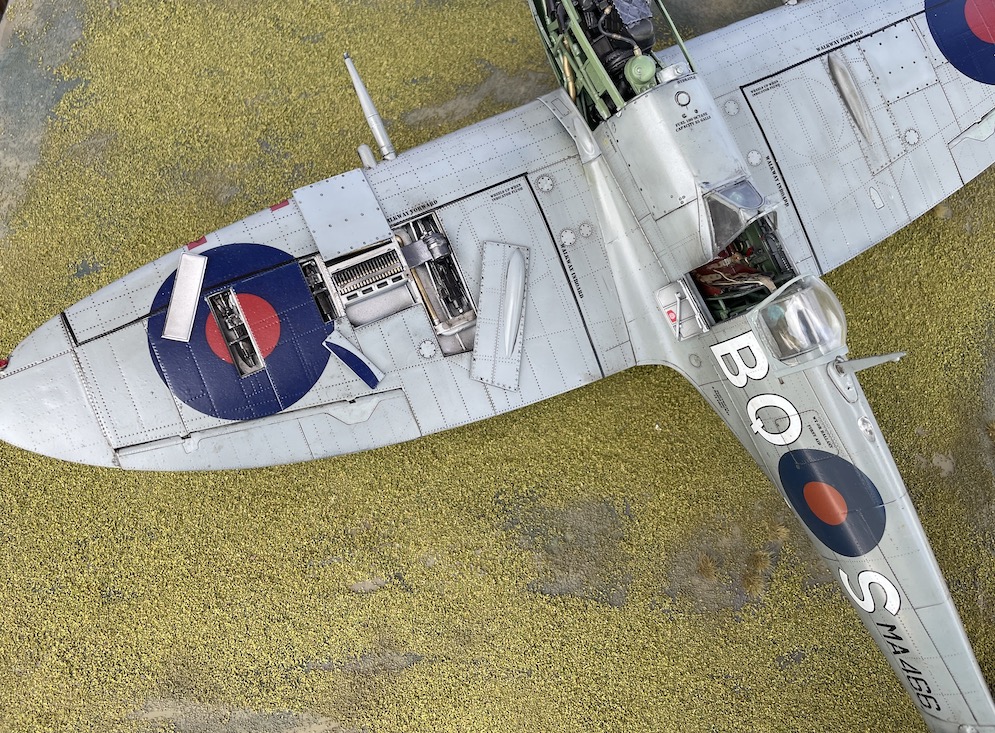
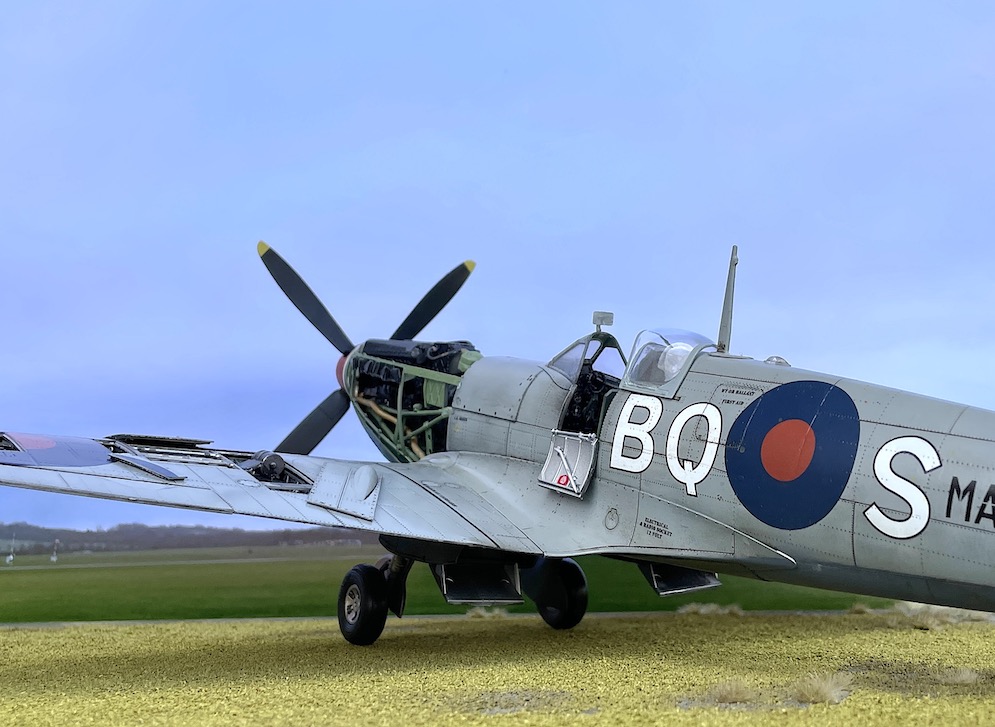
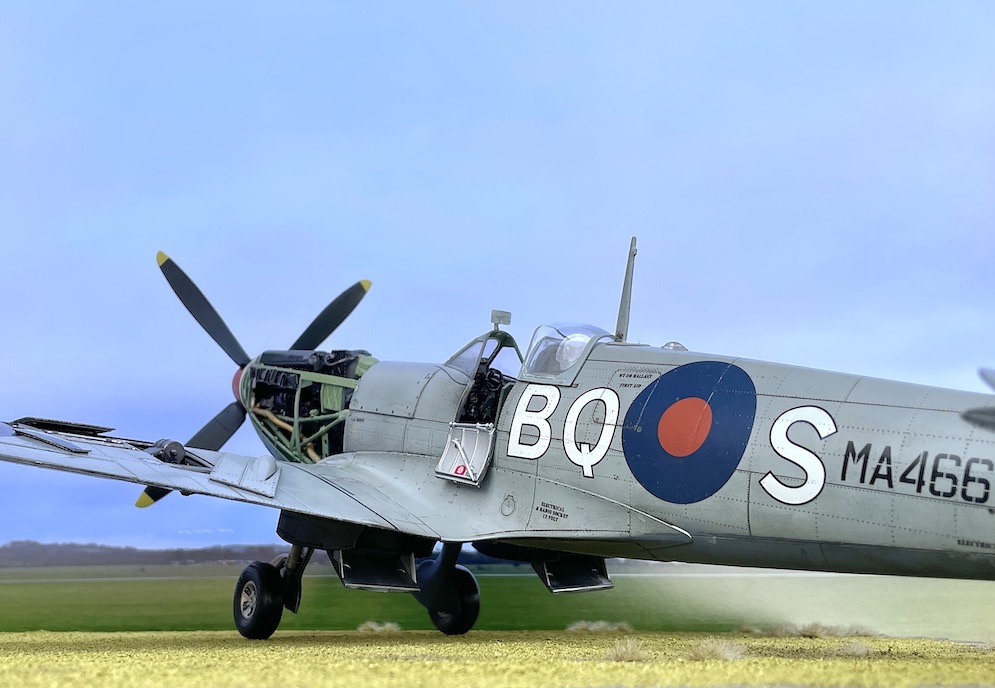
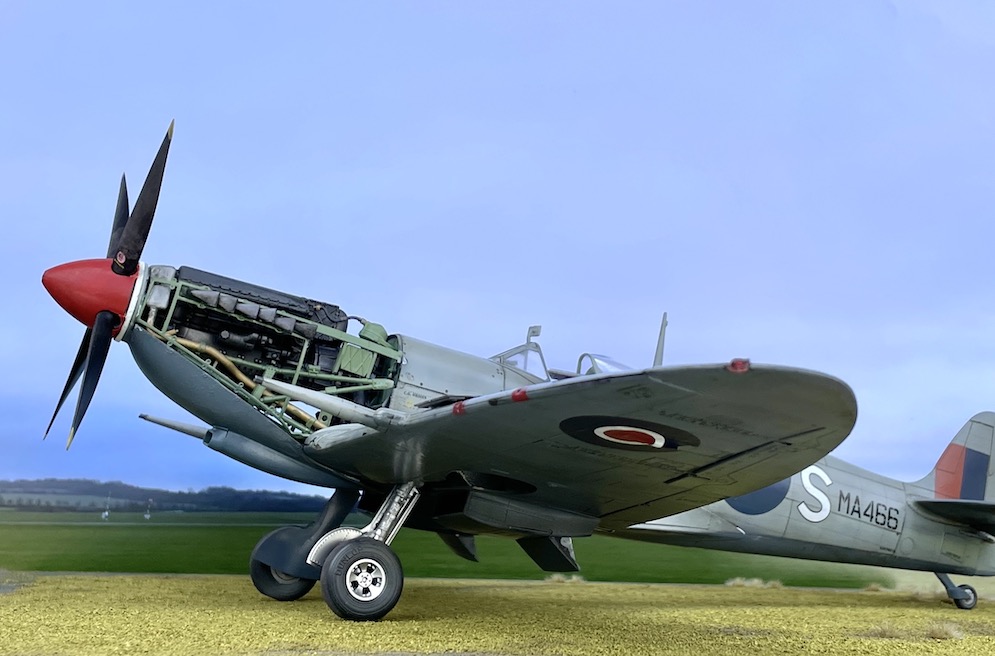
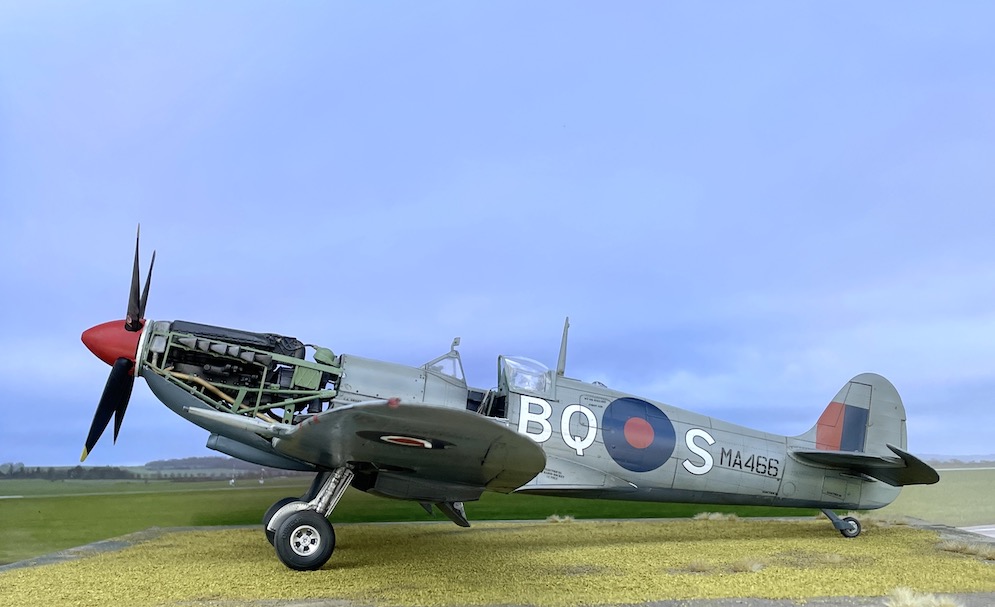
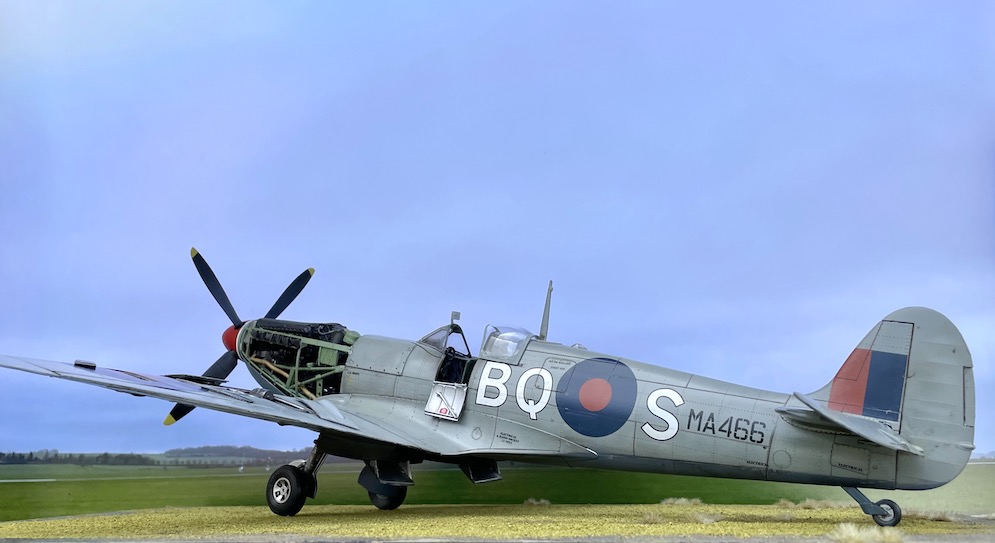
This is the superlative new tool Airfix 1:24 Spitfire IXc.
The model is from the box with the exception of HGW seatbelts as the kit ones are really the only downside – too thick in moulded plastic. I used the kit’s excellent Cartograf decals for stencils and wing roundels. The rest were Xtradecals (set X24004) depicting a RCAF aircraft in Corsica in 1944. The scheme interested me in that it was Medium Sea Grey over PRU Blue, but it was not a recce aircraft. It’s camouflage was used because the squadron did high level intercepts and this scheme suited to its mission.
The kit really needs very little to make a beautiful model and up to the engine installation is faultless. The fit on some parts of the engine bits and bobs can be vague and some of the assembly is counter intuitive. The undercarriage fitting is good but assembled in entirely the wrong sequence. It needs completion before joining.
These are niggles; nothing more and I intend to build at least one more of these beauties as it looks magnificent in my cabinet.
Les V.
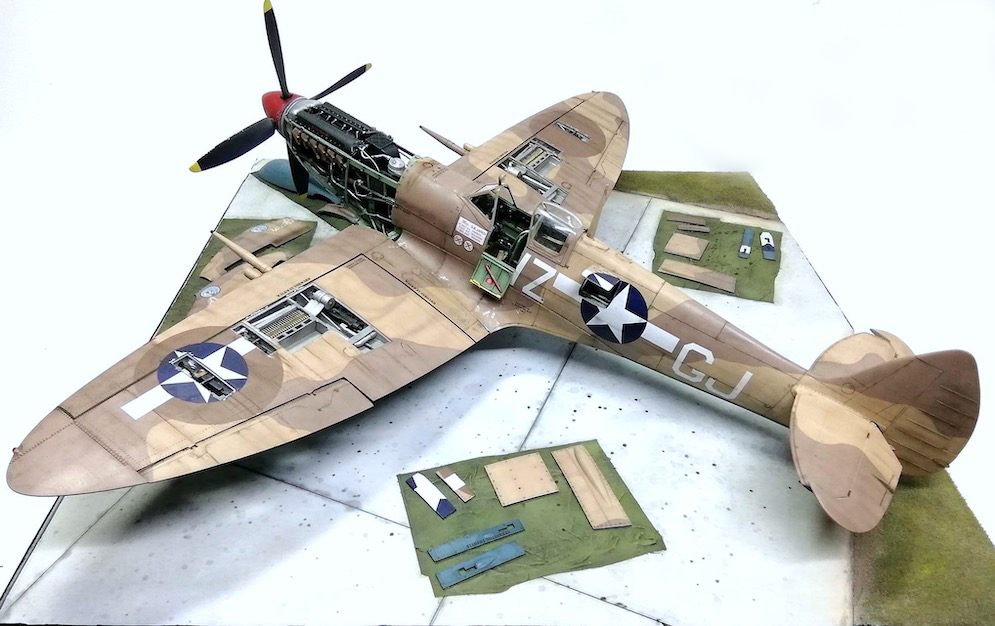
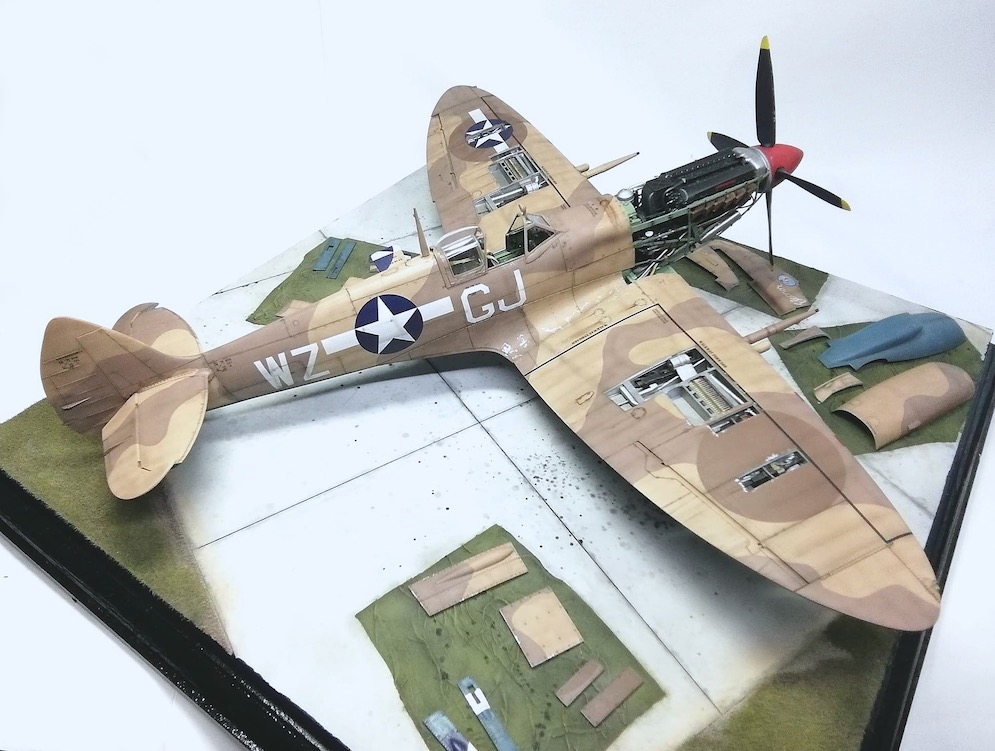
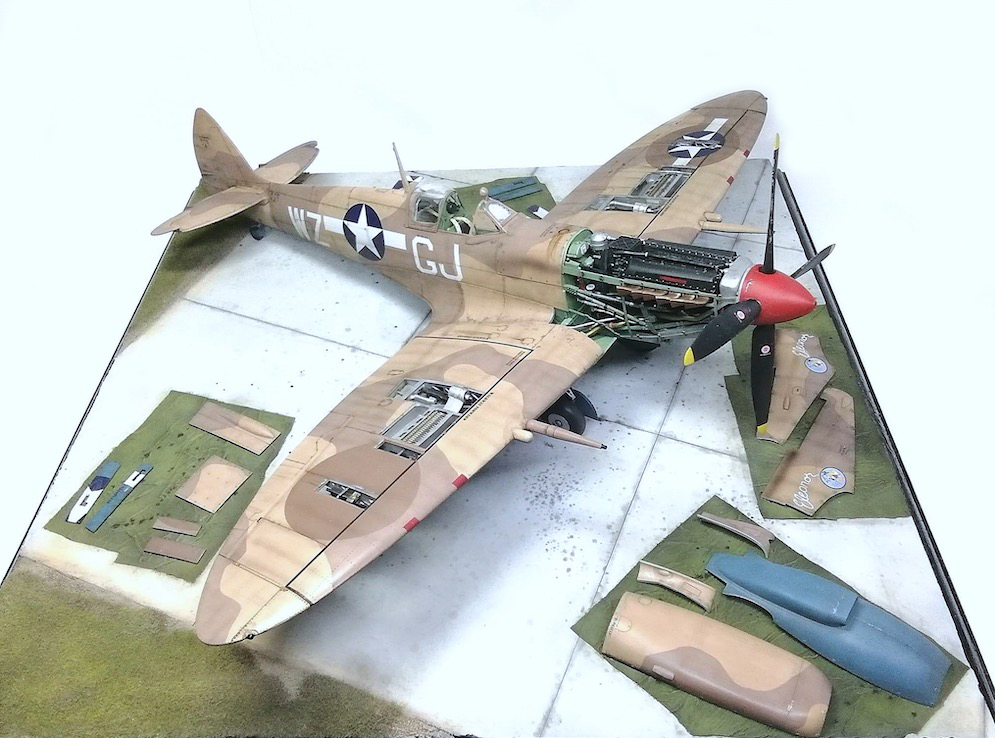
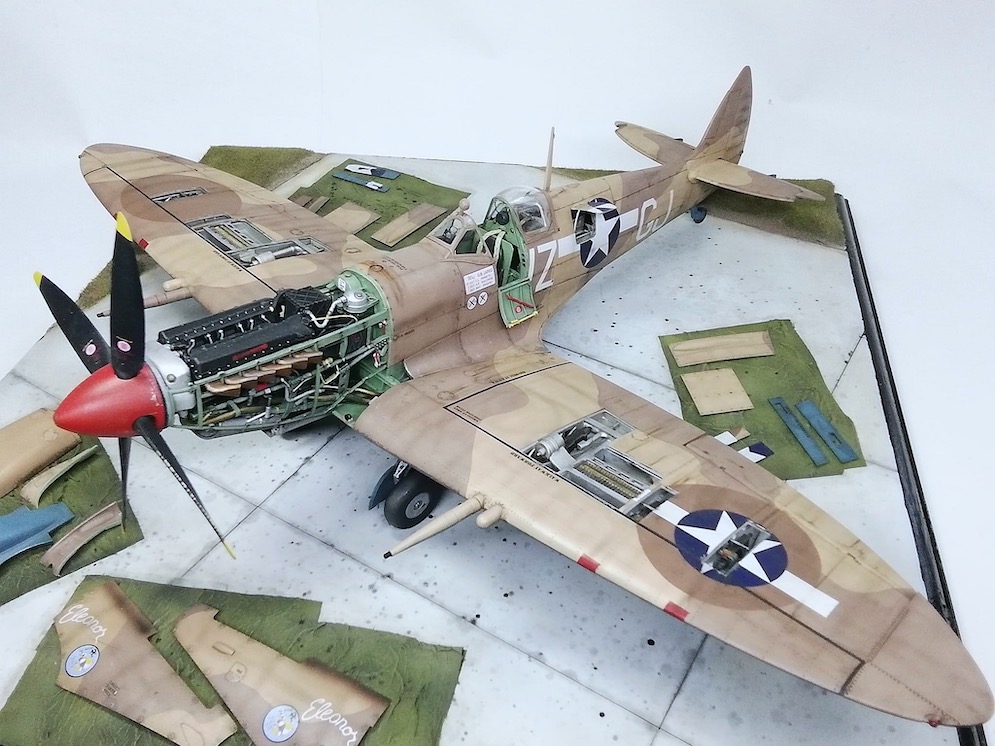
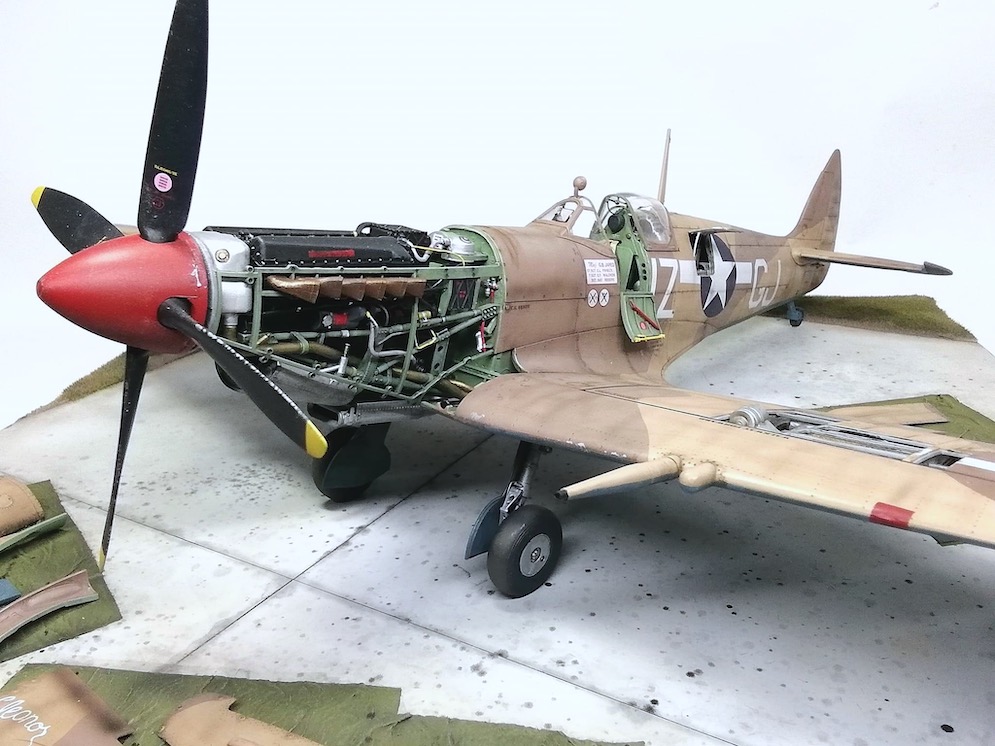
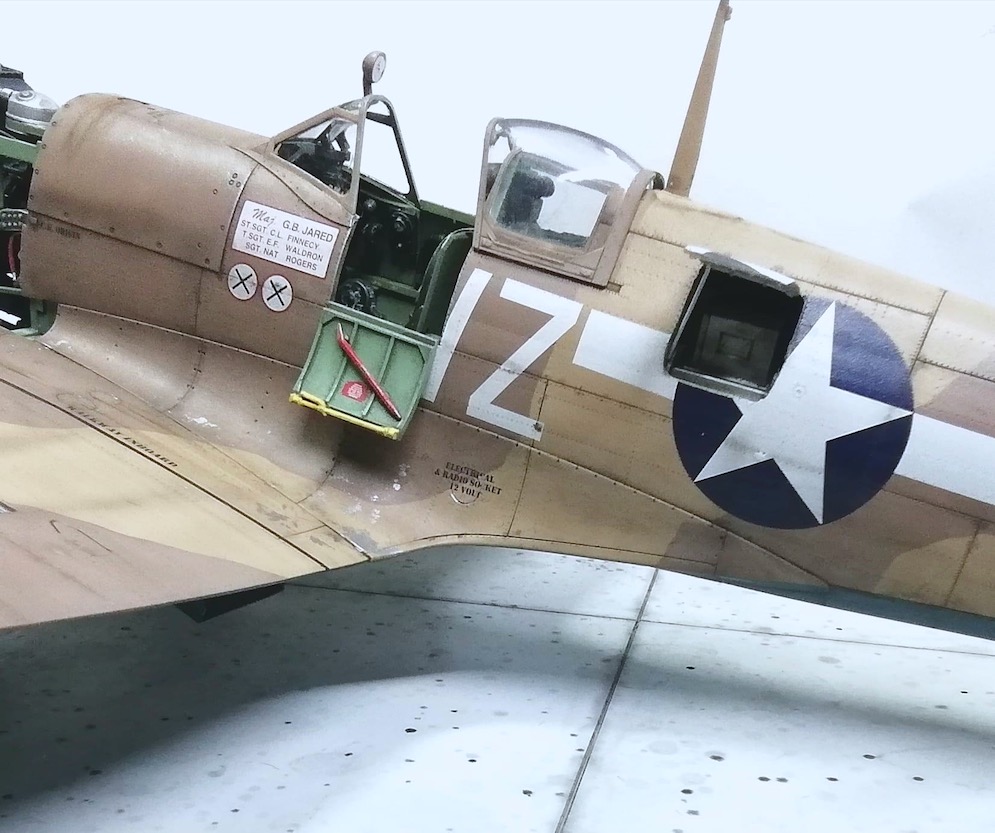
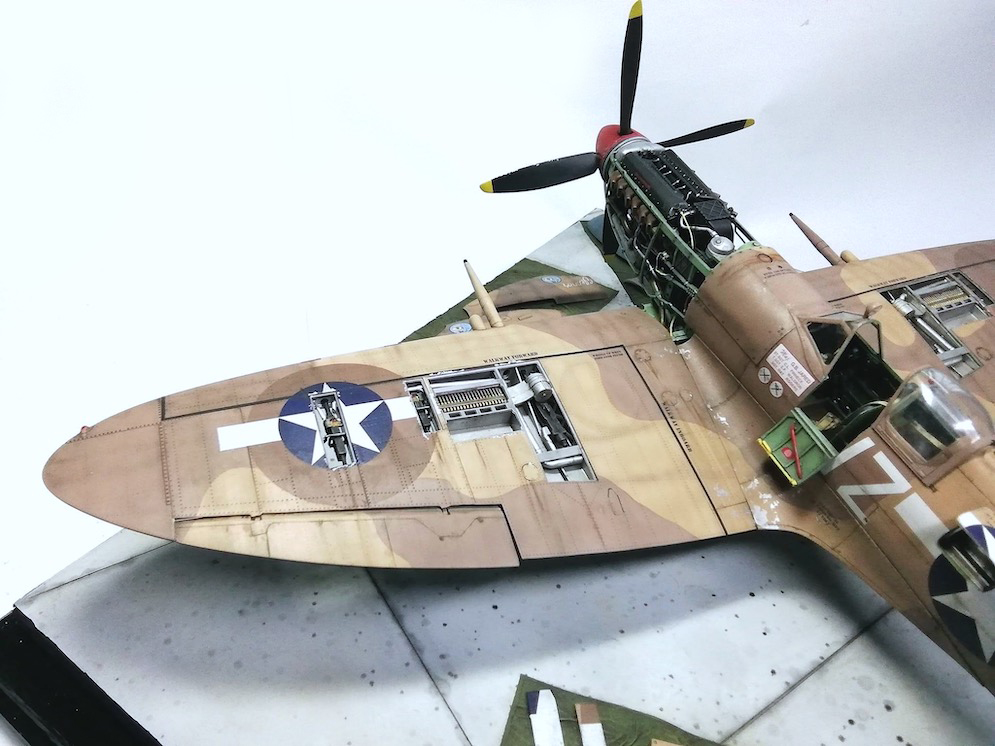
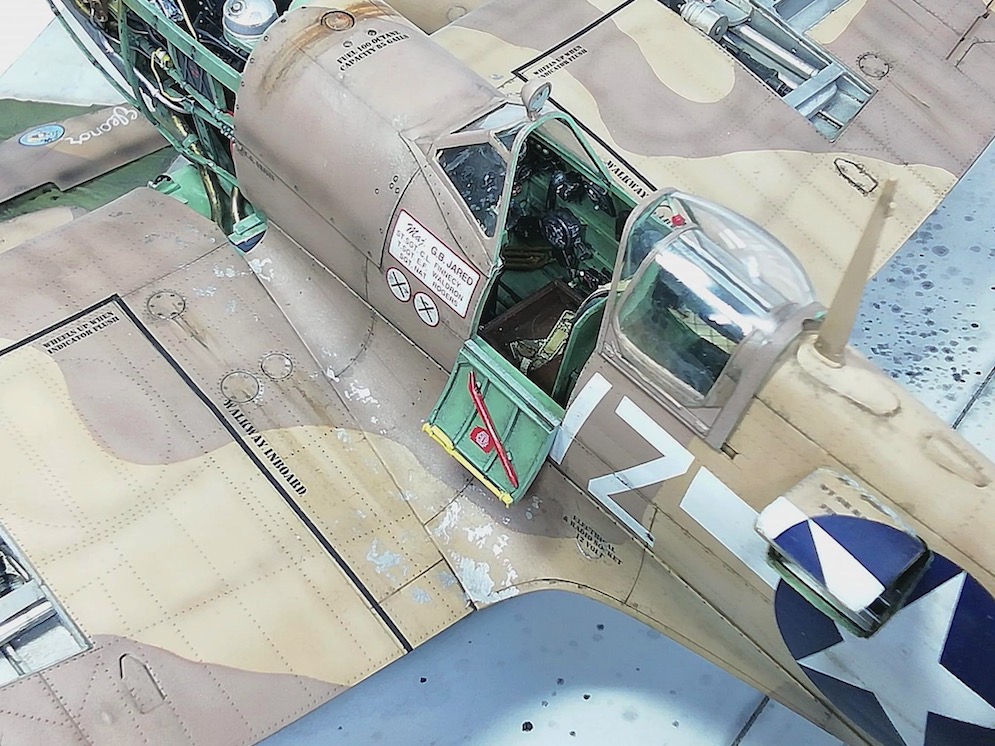
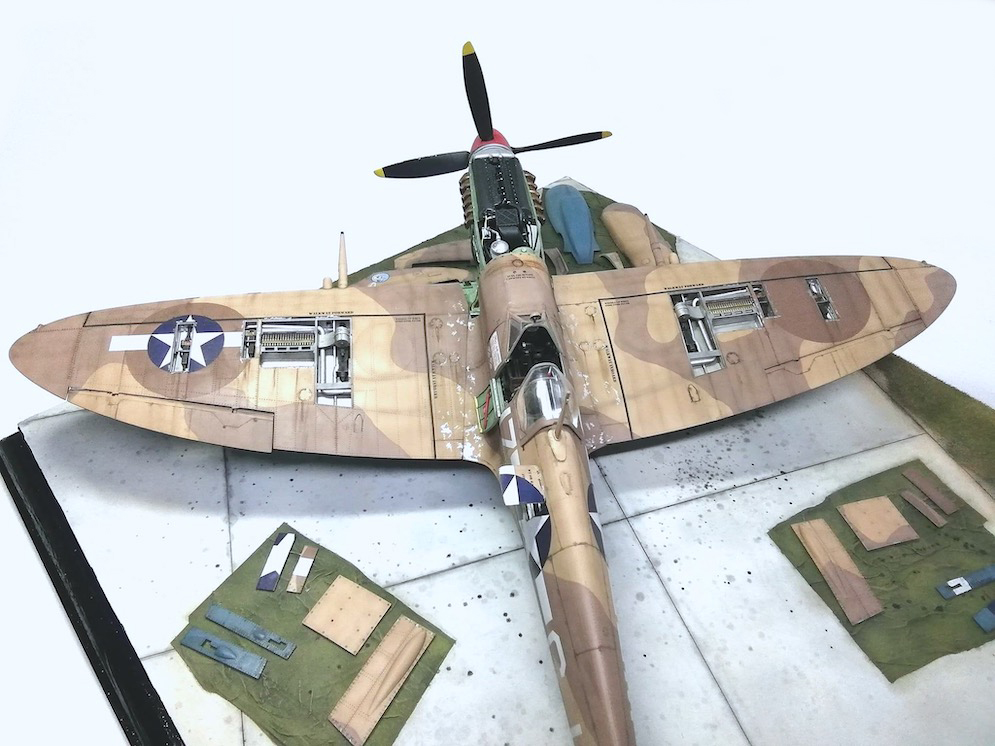
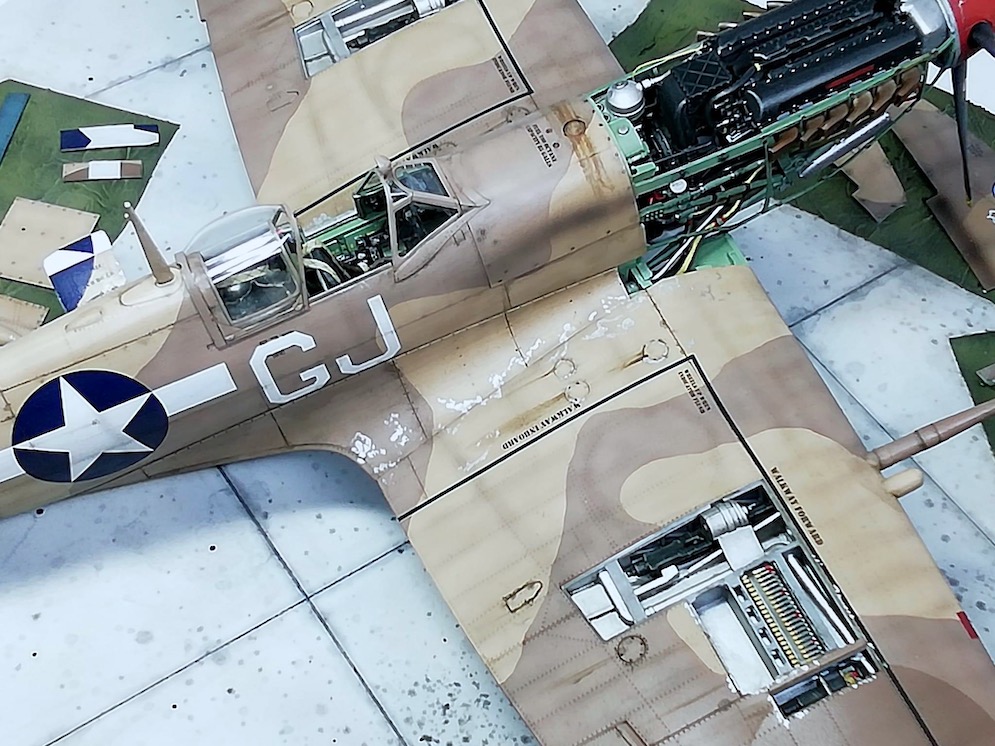
Supermarine Spitfire Mk.IXc Aircraft flown by Captain Garth Jared, Commanding Officer, 309th Fighter Squadron, 31st Fighter Group, United States Army Air Force, Italy, December 1943.
This is the all-new-tool 1:24th scale Airfix kit.
I was asked to build this model for a friend, it was built virtually out of the box with only a few additions such as aftermarket seat harnesses, opened up battery compartment behind cockpit and he wanted the alternative tail fitting.
Hope you like it.
Ian R.
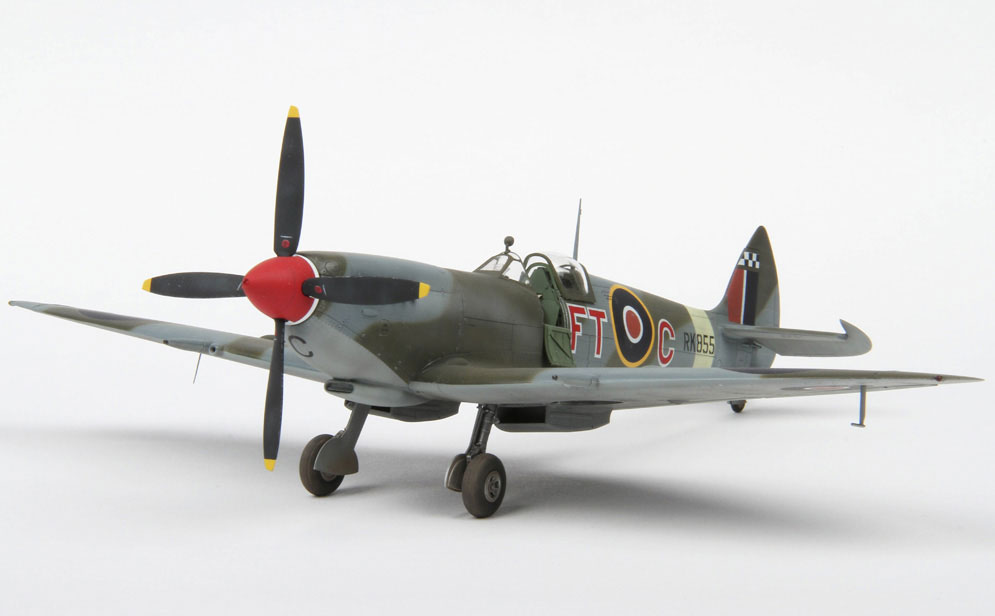
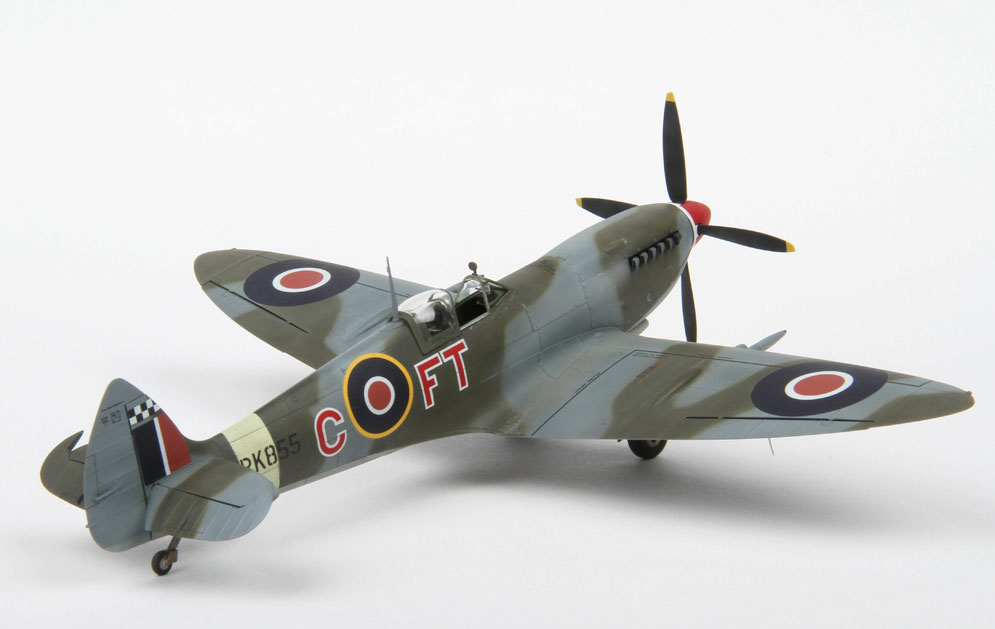
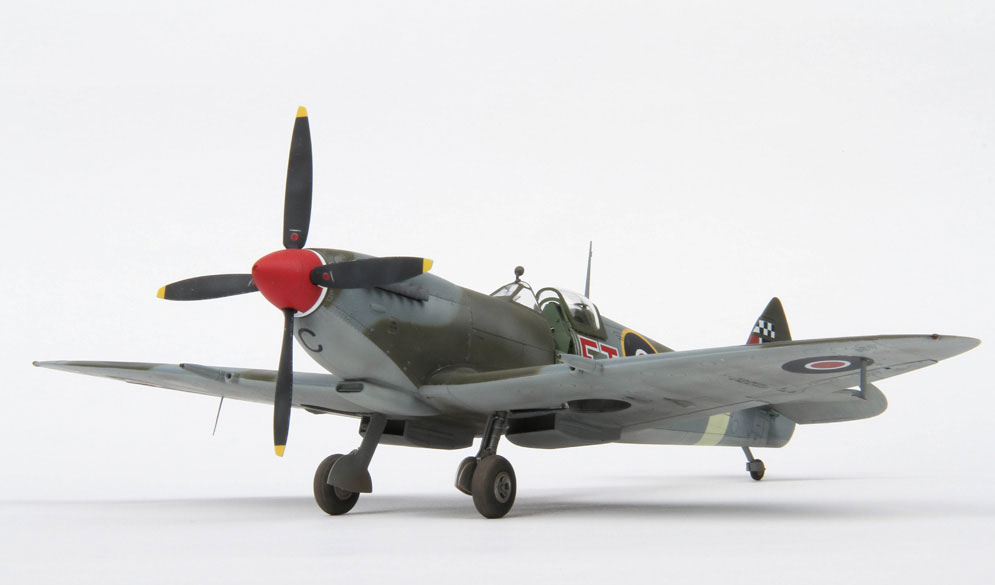
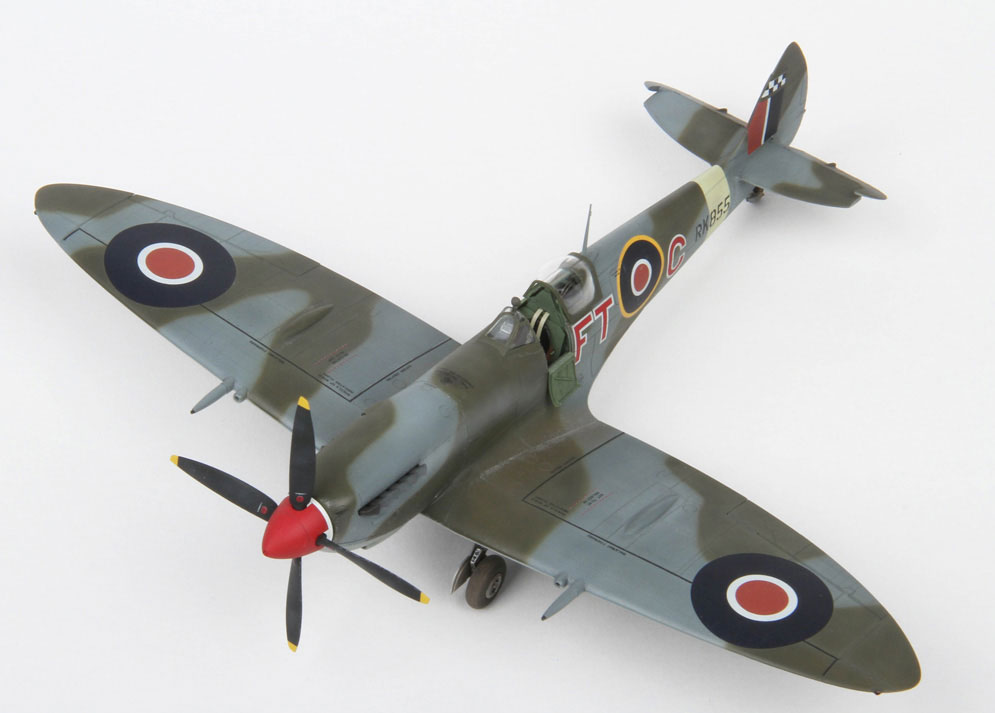
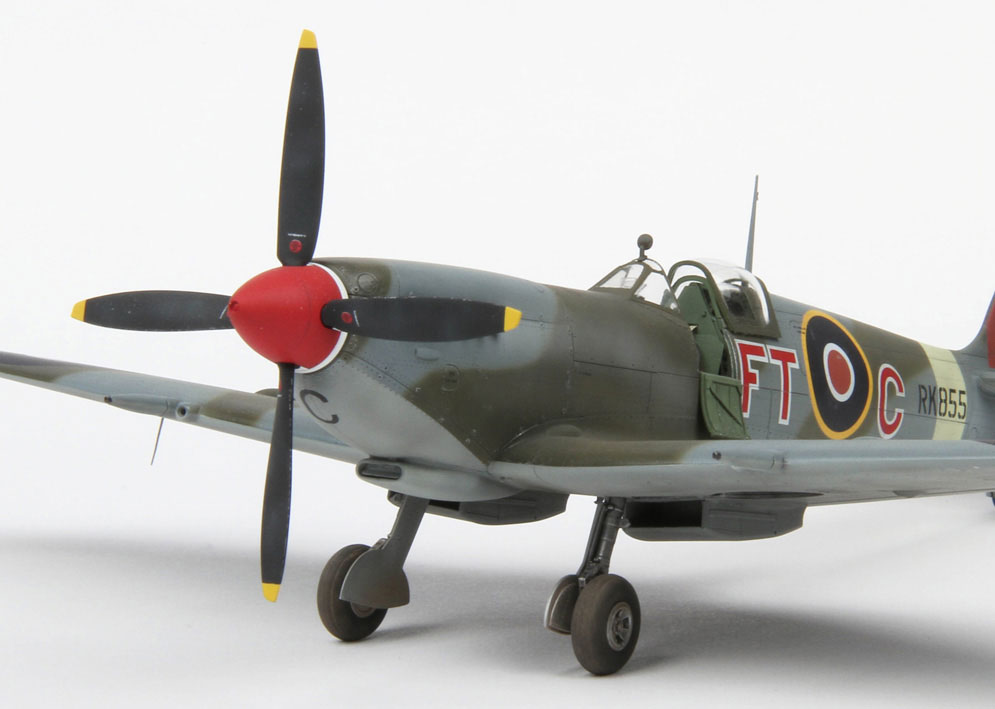
There is very little to be said about Eduard’s 1:48 Spitfire IX family, other than they are quite simply stunning. The detail is superlative and the fit is nothing short of perfection. I love the 43 Squadron colours with the red codes and checkerboard tail markings on the gate guard at the RAF Museum in London and this was the closest decal sheet I could source, so it had to be used!
Tamiya’s RAF WWII acrylic colours (Dark Green/Ocean Grey/Medium Sea Grey) were used and the undersides received some muck and staining from the classic Tamiya Red Brown/Black mix. If you haven’t built one, seriously consider getting one!
Chris Jones
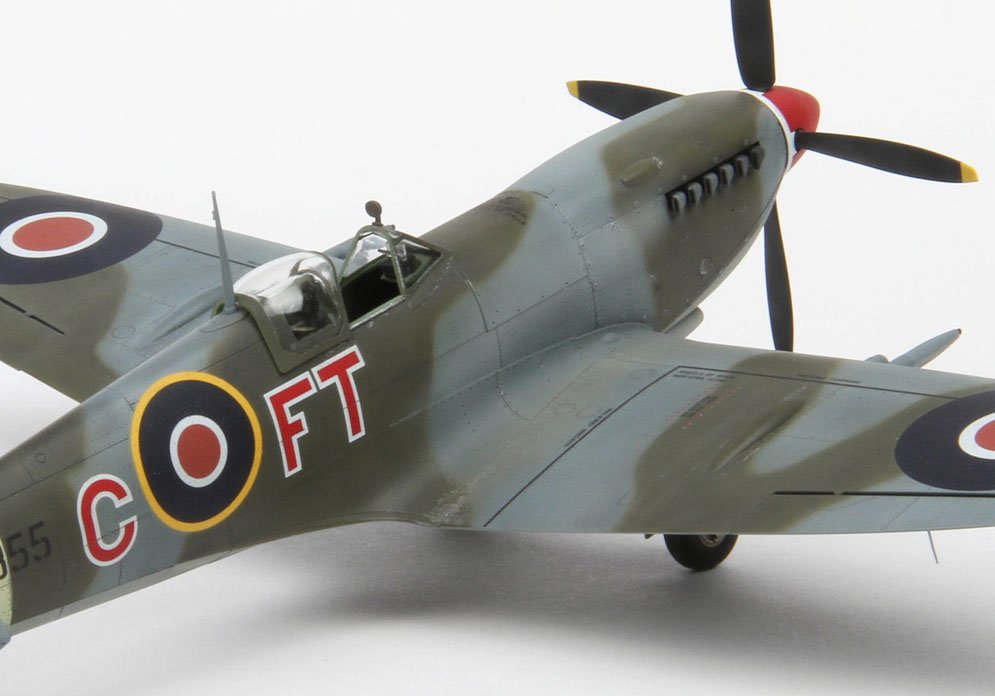
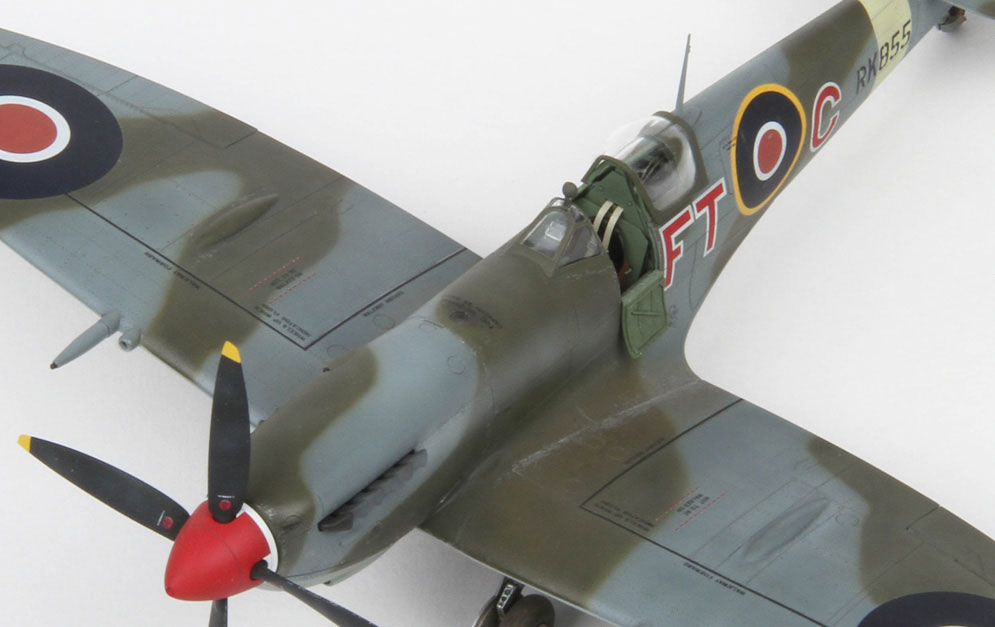
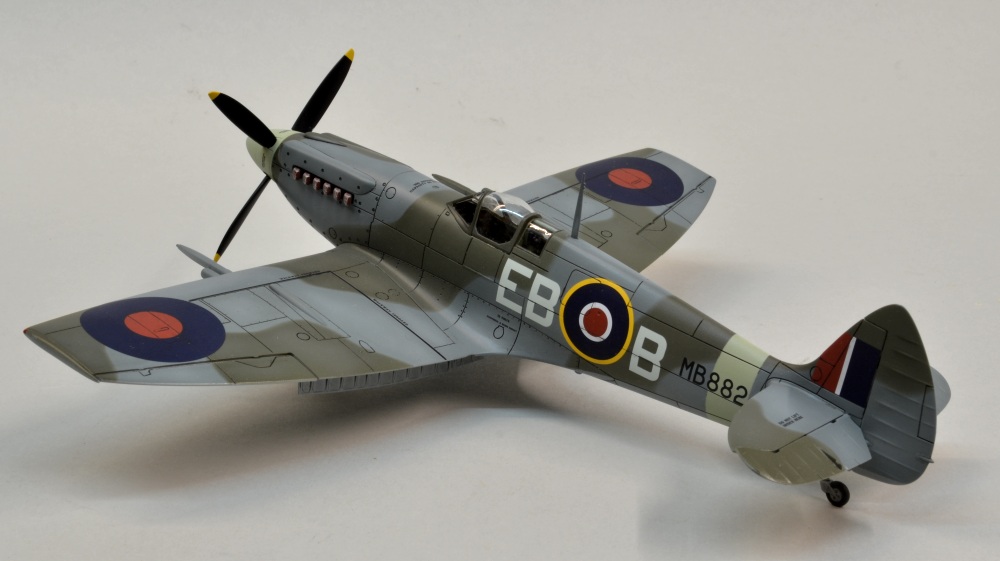
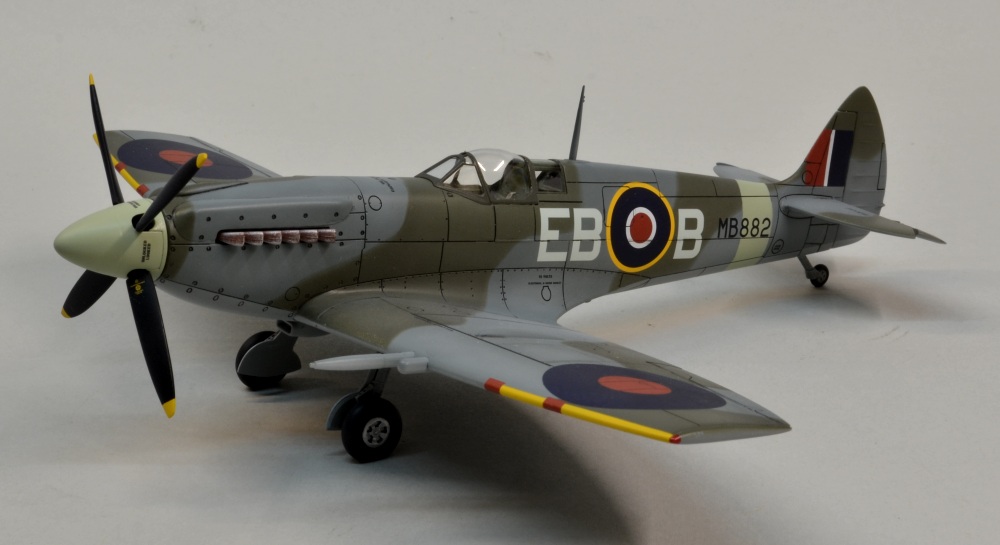
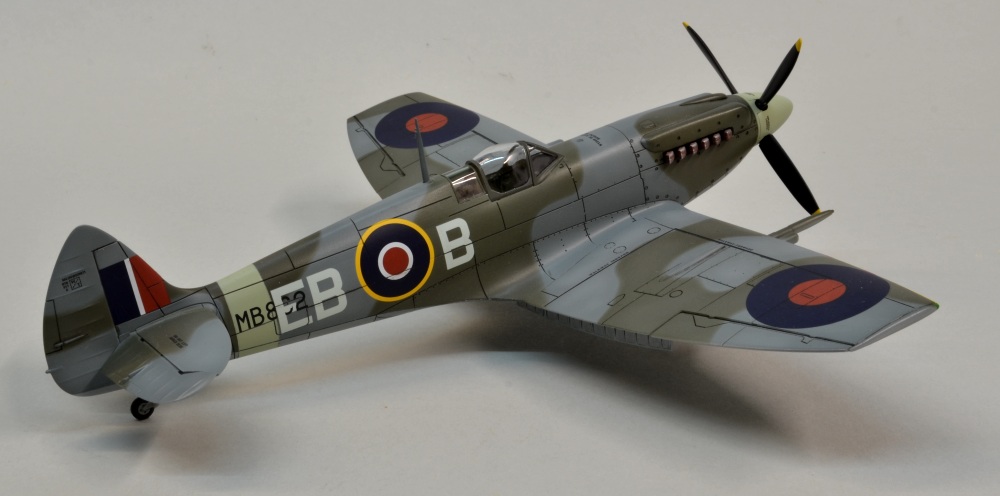
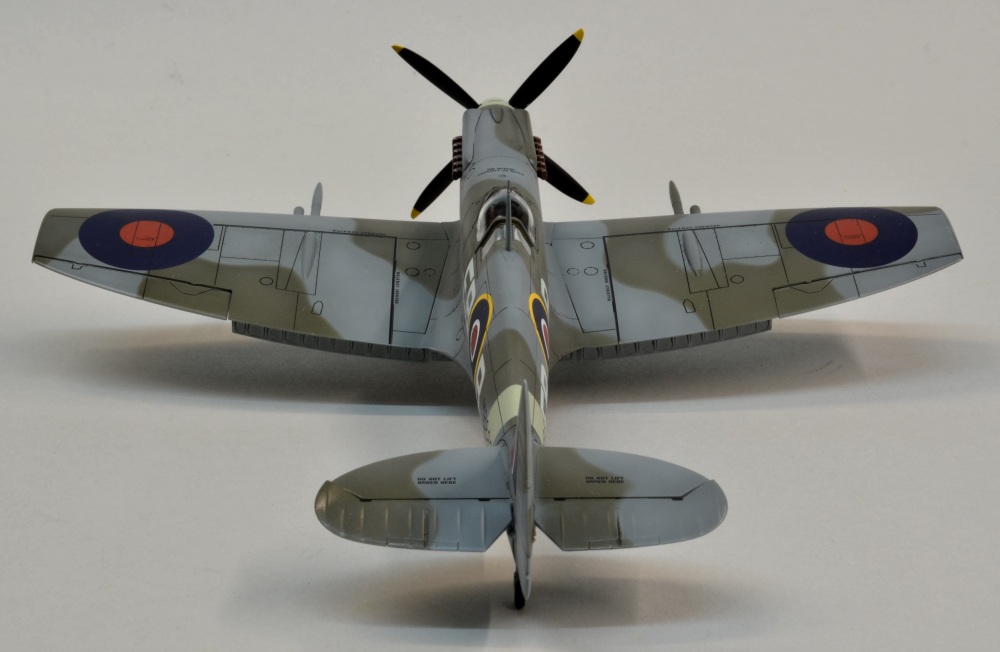
The model was finished off with a coat of Humbrol Matt Cote.
I actually built three Airfix 1:48 ‘Spitfires’ in a row, a Battle of Britain Mk.I with Superscale decals, the Mk.XII from the box and a Seafire XVII from the box. I will send these in too.
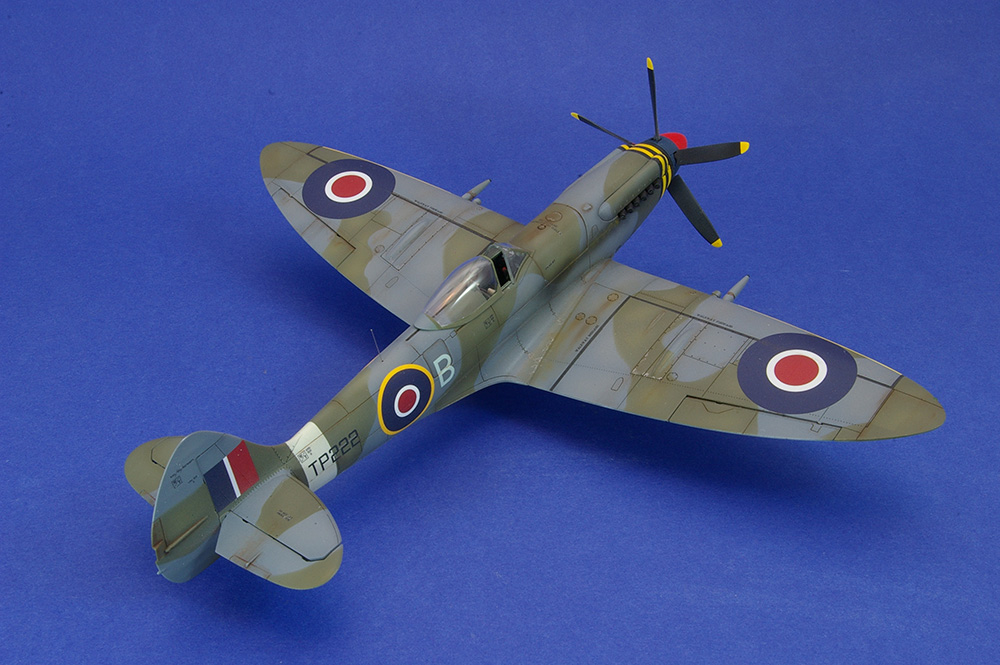
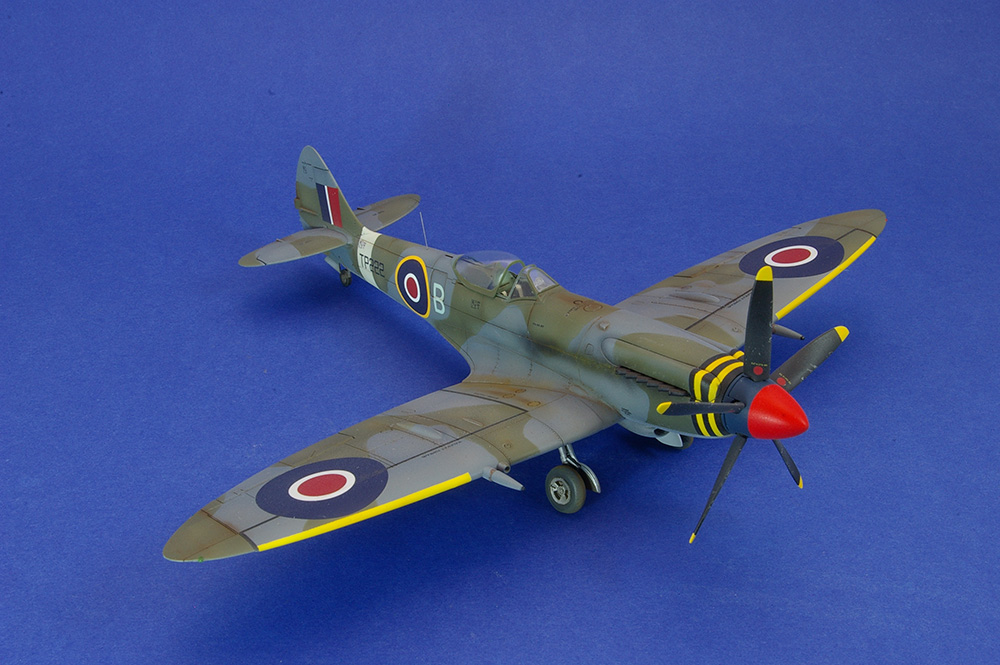
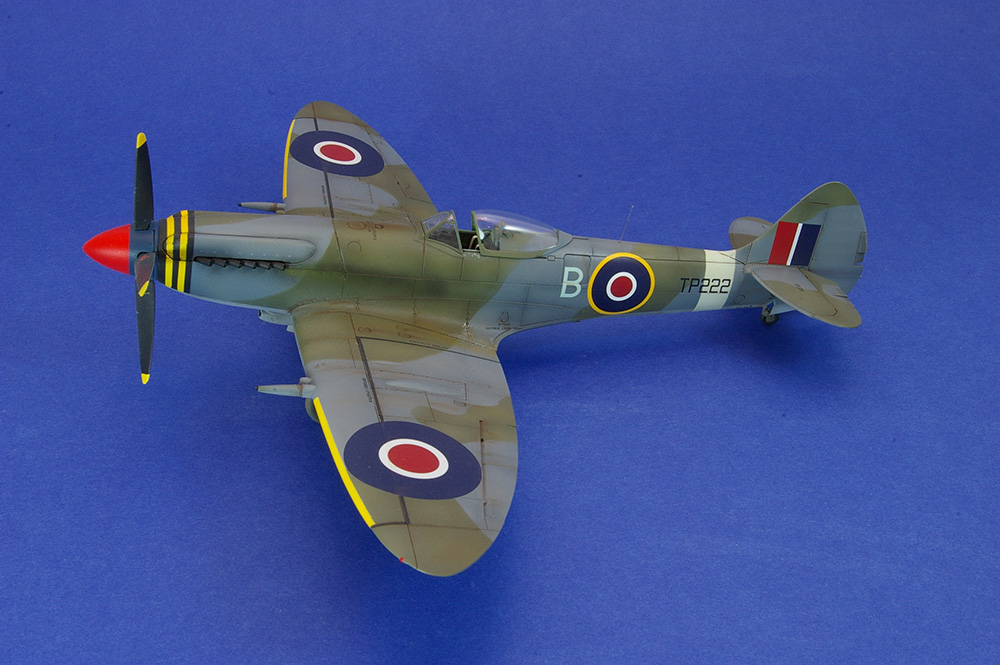
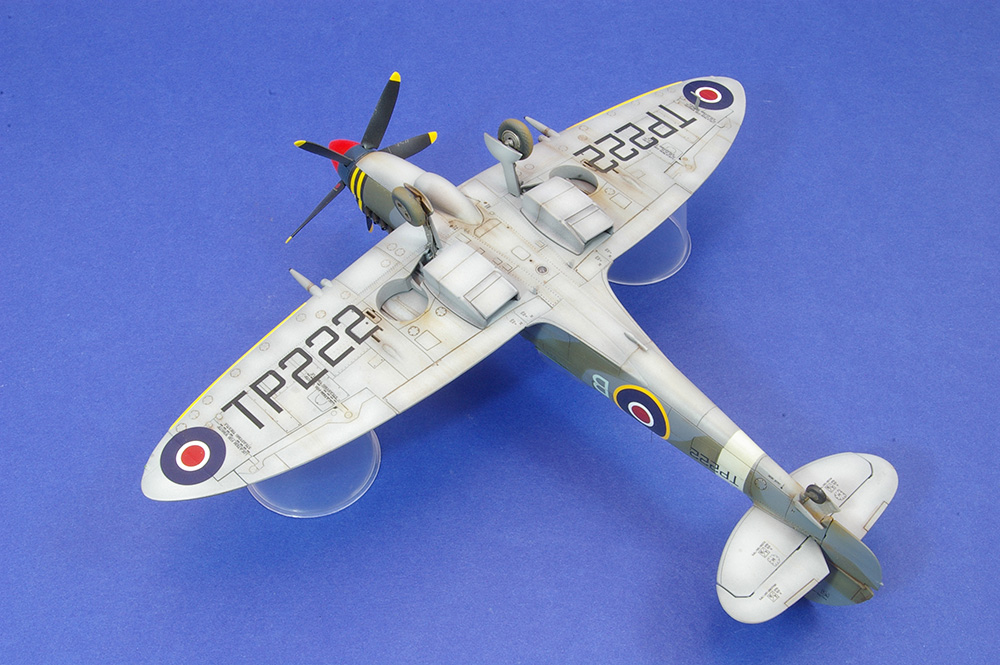
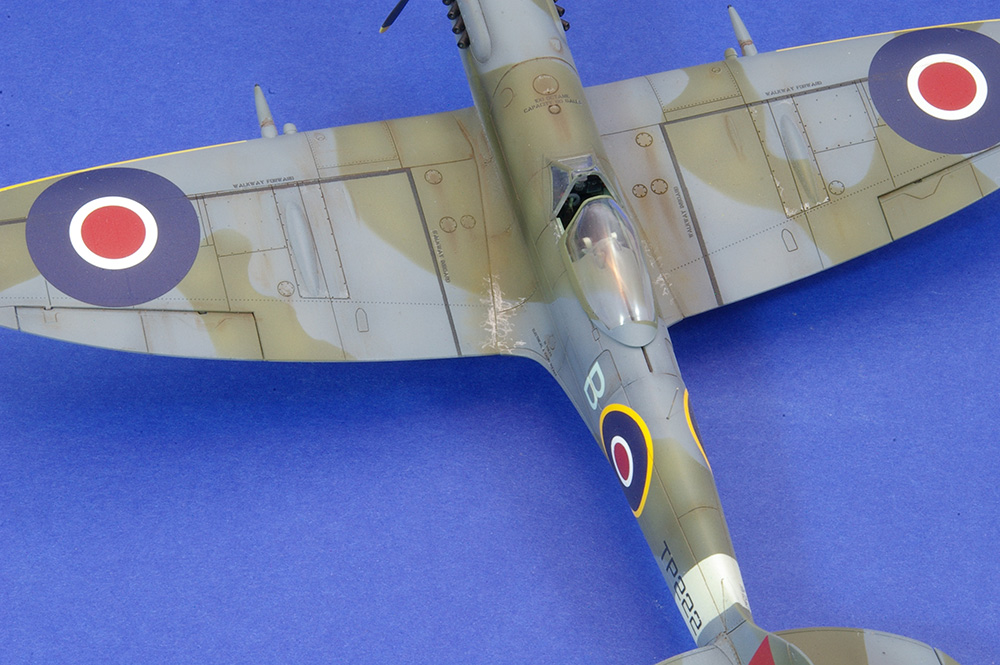
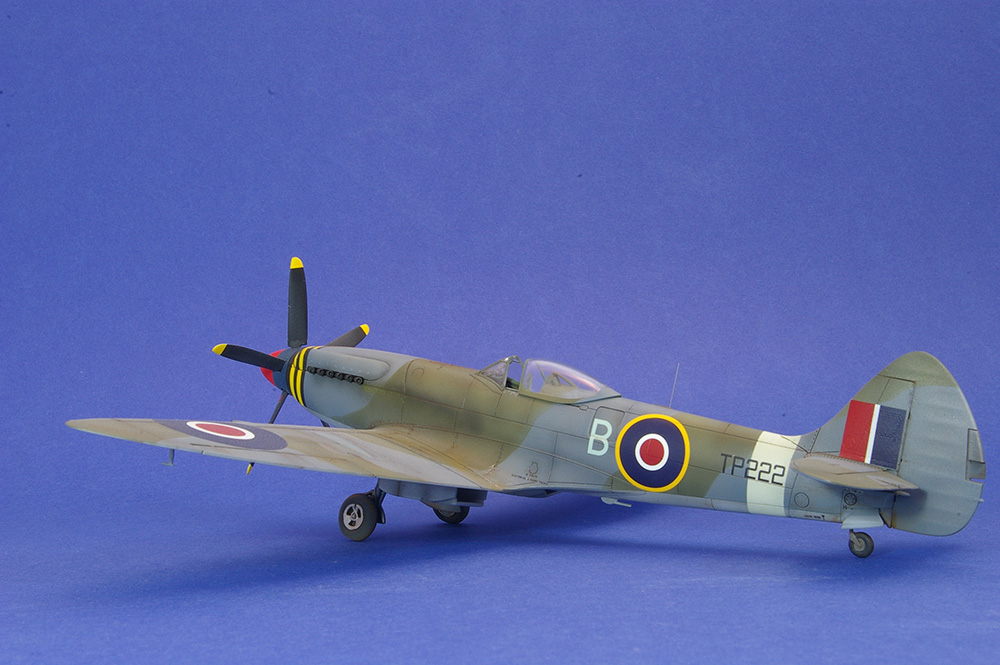
The subject of this project was the recently released Airfix Spitfire Mk. XVIII.
There are two marking options in the kit.
One is an overall silver machine from the Indian Air Force. I suspect this aircraft would have been painted silver rather than being left in unpainted natural metal. Finishing the model in this scheme with different coloured panels is probably not appropriate.
The other, which I chose, is from No. 60 Squadron based in Kuala Lumpur in 1947. This machine is finished in the familiar late war Dark Green / Ocean Grey / Medium Sea Grey scheme with some black and yellow bands around the nose which add a little extra colour.
The kit does not provide a seat harness and so I added one from an Eduard set for late war RAF machines which I think is different from the Sutton harness found on early war machines.
The quality control on my kit left something to be desired and there was a large crack running from the canopy rail to the middle of one of the fuselage halves. I ran some Tamiya cement into the crack and reinforced it from the inside with a piece of sprue. It was then carefully sanded with a fine sanding pad which eliminated the problem.
The solid plastic panels behind the cockpit (which on the FR Mk. XIV kit are clear windows for the fuselage mounted cameras) are not a particularly good fit in that they end up recessed below the surface of the fuselage. I thought that this would be less noticeable under primer and paint, but it wasn’t. I’d recommend backing these parts with thin card or maybe filling the sunken area with Milliput and re-scribing the panels.
Brake cables were added to the main undercarriage legs from soft 0.3mm lead wire. I noted after the model was completed that the top of the well for the retractable tail wheel (D36) was solid. I assume that the tail wheel would have had to retract into something so I think that maybe it should probably have been hollow?
Airfix notes in their instructions that when this particular aircraft was photographed (after a collision), the paintwork was in a poor condition with several repainted panels. I didn’t want my model to look too messy (the aircraft must have looked clean and tidy at some point!). I therefore limited my ‘distressing’ to spraying the centres of some of the panels with a lightened version of the base colour to represent fading. I also painted the elevator with a mismatched camouflage pattern as shown in the instructions to represent a replacement part.
A transfer is provided for the black and yellow bands around the nose. I really didn’t fancy my chances of getting this to conform to the complex shapes behind the propeller and so I masked and painted them.
The sky band around the rear of the fuselage was also masked and sprayed which meant that on my model it is unfortunately a slightly different colour from the sky-coloured letter ‘B’ from the transfer sheet. I should have seen that one coming!
The transfers performed well and have very thin carrier film. However, the identification numbers under the wings caused me a few problems. These transfers are large with large areas of carrier film. They adhered strongly and quickly to the surface of the model and were then difficult to move. After struggling a little with the first image I cut the transfer for the other wing into three sections and this made its application much easier.
Note that I masked and sprayed the black walkway markings after the camouflage had been applied rather than using the transfers supplied in the kit. This was to avoid these transfers and their carrier film being visible as raised areas under the wing roundels.
Quality control issues aside, I enjoyed building this kit, although as noted above there were a few areas where detail could be added and where care needed to be taken.
I found the article written by Rick Goodenough on Airfix’s Spitfire FR Mk. XIV kit in the Finished Now section of Scale Modelling Now to be a very useful guide to when building the Mk. XVIII kit. The two kits are virtually identical as far as the main parts of the aircraft are concerned.
As shown in his article, there are a few other issues with these kits (such as the ill-fitting cover over the fuel tank and the poorly represented rudder actuator) that needed to be addressed. I encountered the same problems that Rick did and fixed them on my model in pretty much the same way as he has done.
I have not listed them here as the article shows in detail what the issues are and how to deal with them – so thanks Rick!
Airfix Supermarine Spitfire FR Mk.XIV 1:48 – Scale Modelling Now
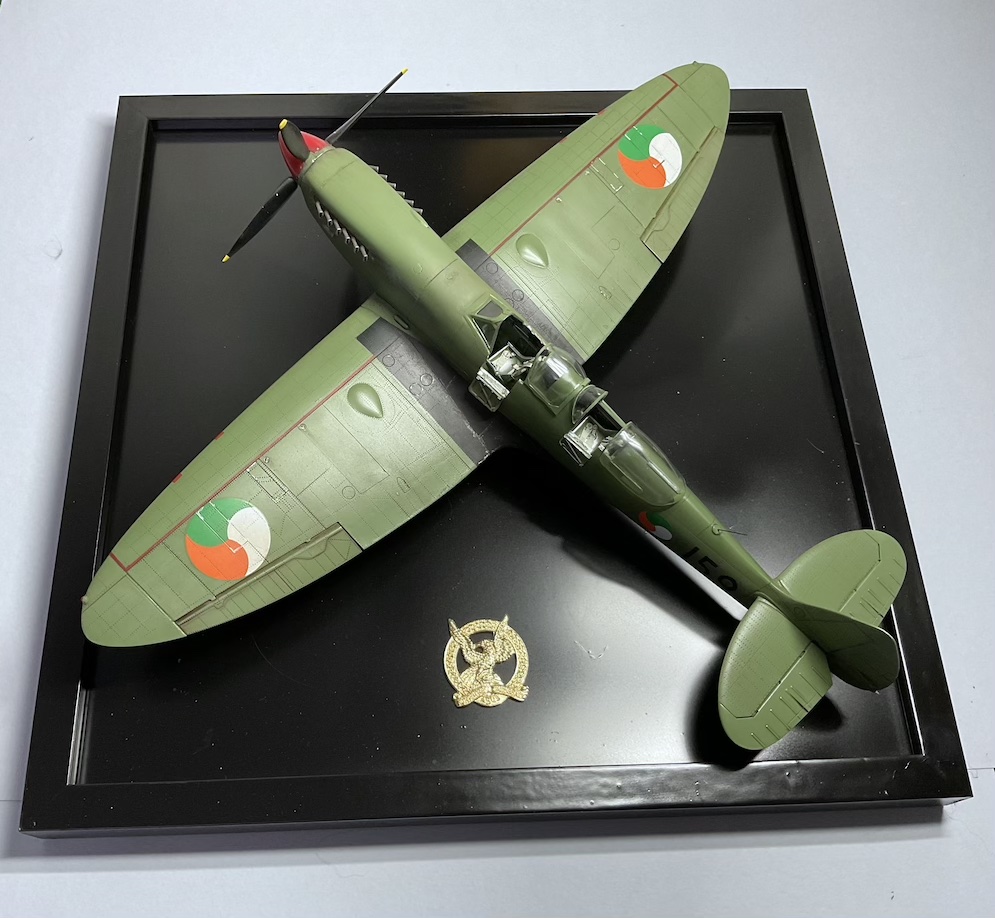
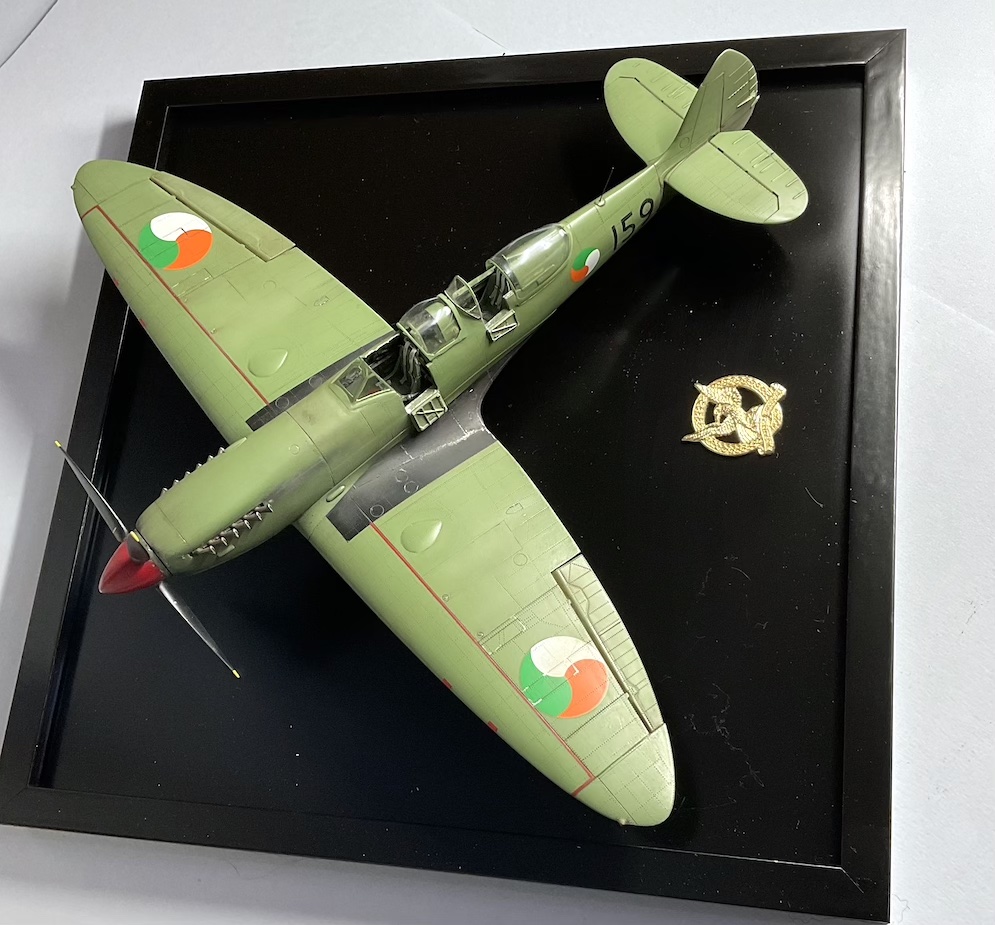
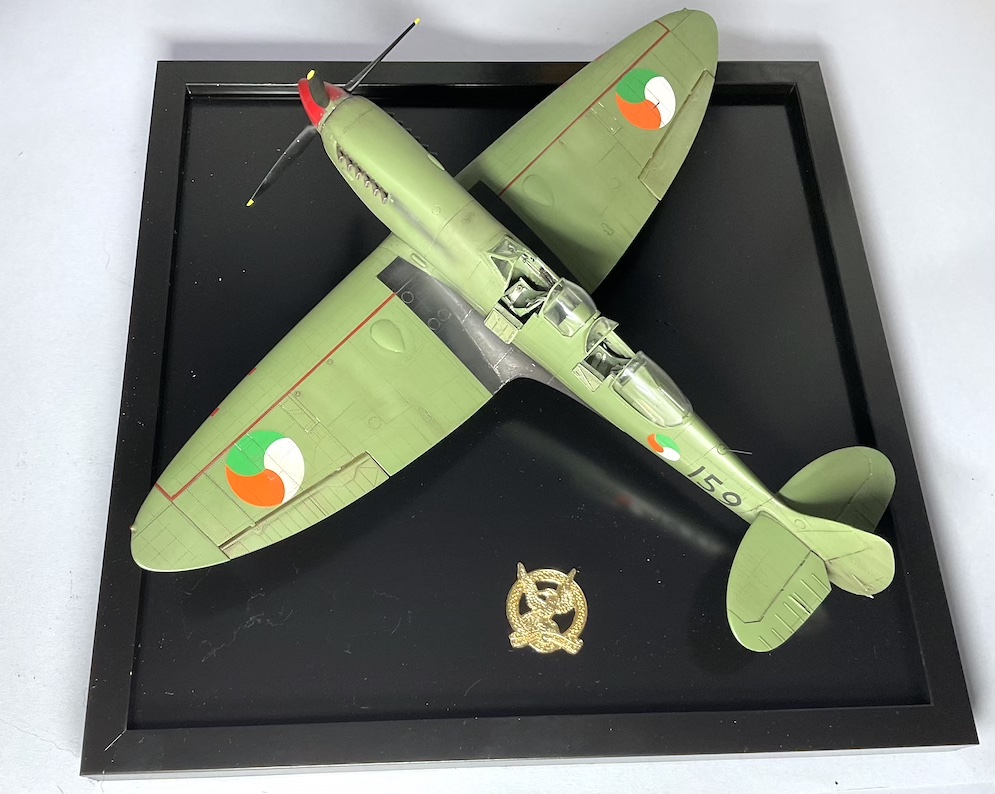
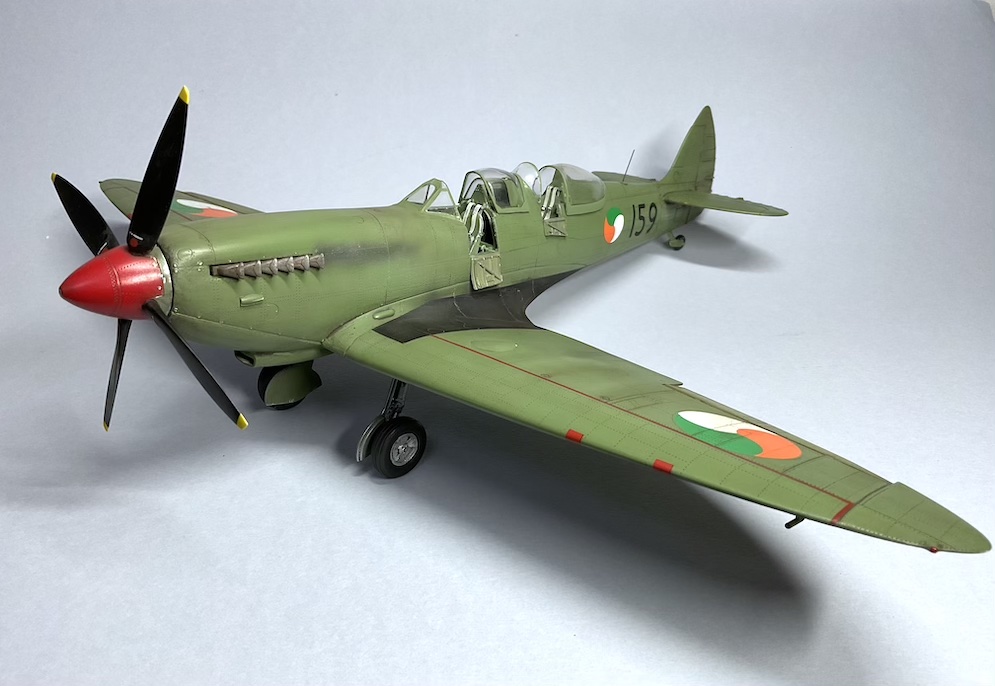
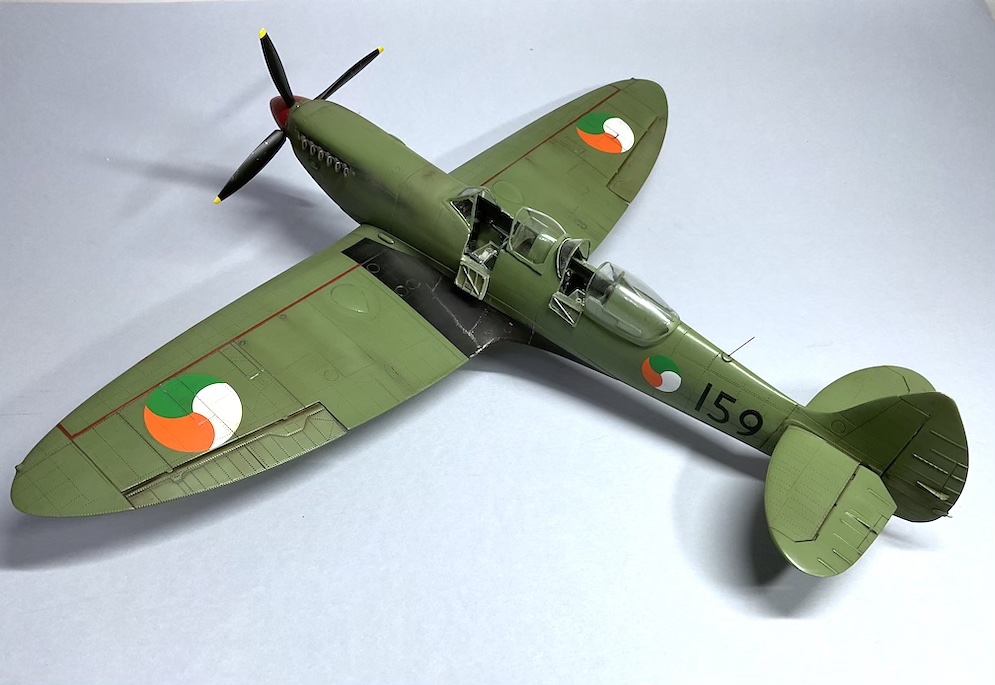
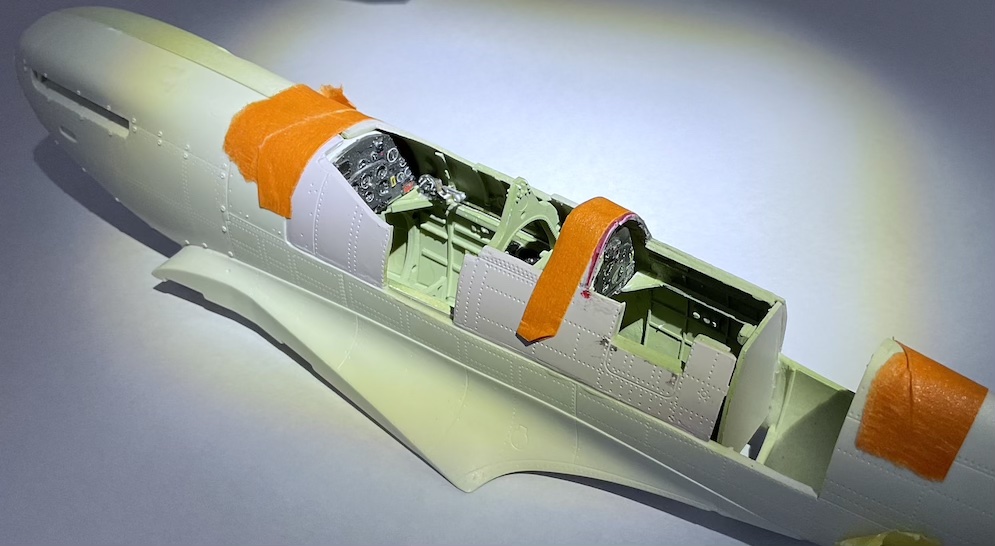
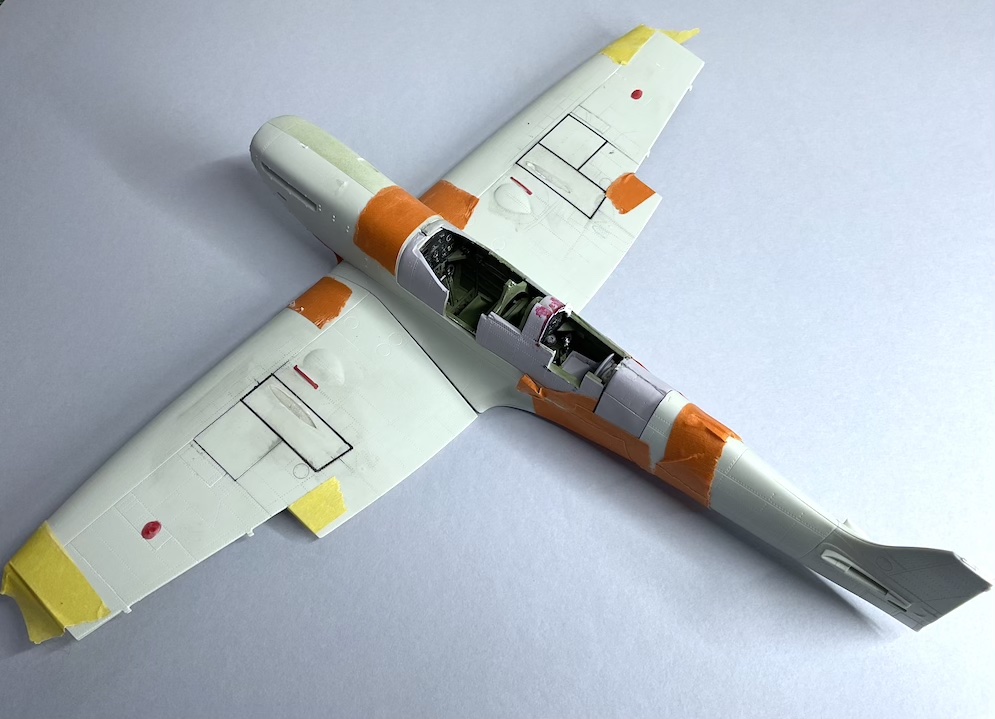
A few photos of my 1:32 Two Seat Spitfire. Built using the Brigade Models conversion and Revell Supermarine Spitfire Mk.9 base kit. I’ve made it a little more difficult for myself because I wanted to add a few extra cockpit details and cut masks for a green aircraft. Some reports state it should have a black cockpit but I’m unable to confirm this.
The Irish Air Corps (IAC) operated several two-seat Spitfire T.9 trainers from 1951 to the early 1960s, converting from their Seafire fleet for pilot training, with aircraft like PV202 (IAC161) and TE308 (IAC163) serving in distinctive Irish green colours, providing essential advanced training and gunnery practice before many transitioned to instructional airframes and later found their way back to the warbird scene for films and private collections.
Michael S.
Other Galleries:
Focke-Wulf and Fokker Aircraft Gallery
Messerschmitt Aircraft Gallery
A | B | B-2 | C | D-E | F | G | H | I-L | M | N-R | S | T-V | W-Z
Not yet a subscriber? Join our community & unlock more content
Love what you see here? There’s so much more waiting for you on Scale Modelling Now. When you subscribe, you’ll get full access to:
For just £1.50/month (£18/year), you’ll get:
✅ Unlimited access to 4,500+ in-depth build reviews
✅ Exclusive videos and how-to masterclasses
✅ New content added every week
✅ Cancel anytime
It’s a fantastic way to improve your skills, find new inspiration, and connect with other builders. Join us today — let’s build something amazing together!