• Skip to primary navigation
  • Skip to main content
  • Skip to primary sidebar

Scale Modelling Now

Scale Modelling Techniques

  • HOME
  • CONTENTS
    • What’s New
    • Techniques Bank
    • Aircraft
    • Armour
    • Classic Kit Builds
    • Civilian Aircraft Builds
    • Vehicles
    • Sci-Fi, Fantasy, Space
    • Maritime
    • Figures
    • Gift Certificate
    • Book Reviews
    • Dioramas
    • Modelling Workshops
    • Podcasts
  • WHAT WE OFFER
  • FREE SAMPLES
  • EVENTS
    • EVENTS
    • NEWS
  • ABOUT
    • CONTACT
    • ABOUT US
    • TRADERS
  • LOGIN
  • More results…

    Generic filters
    Exact matches only
    Search in title
    Search in content
    Search in excerpt
Pages: Page 1 Page 2

Alclad2 metal finishes – How to spray – Part 1

January 20, 2013 By Adam Brown

Airbrushing metallic finishes

By Geoff Coughlin
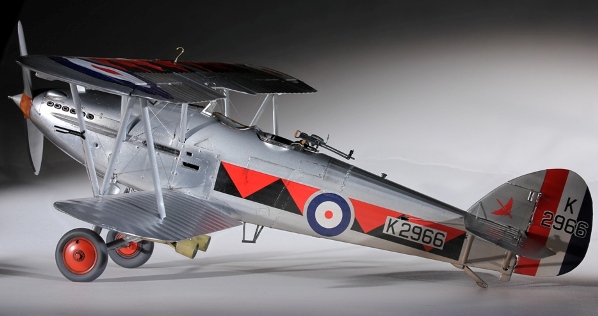
Silver Wings Hawker Hart, 1:32 by Julian Seddon

Introduction

This entry in your Techniques Bank (TB) is the first of a number of parts created to help you to achieve realistic metallic finishes on your models. I guess depending on the type of scale modelling that your spend your time on, you may have more or less of a need for this mini-series on how to use Alclad II lacquer. Having said that, there aren’t many areas of modelling that never need us to create something that looks like metal!

I have had more requests for help with using Alclad II than anything else – several requests from fellow modellers at the shows we attend and a few by e-mail so here’s the first part: Alclad II – Part 1 – what it is and what we can achieve.
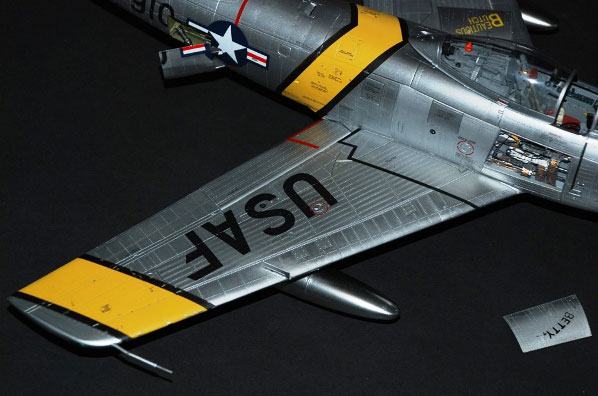
Kinetic F-86 Sabre, 1:32 by Tom Potter

We have shot a few HD videos that we’ll use when appropriate in this mini-series as we work through the different stages, so plenty for you to actually watch later on and look forward to; my intention is to press on and complete this mini-series in a reasonable time.

The challenge!

I’ve been around a while, maybe modelling for over 40 years or so (how old is that!!), and for much of that time modellers struggled to find a paint that was easy to use and created a range of realistic metallic paint finishes. Mostly what seemed to be available wasn’t bad but often unstable in the sense that you often left finger marks on the finish and sometimes these were hard to remove. Additionally, the finish wouldn’t take a varnish or, if it did, this would destroy the metallic effect that you had worked hard to create so not very useful all told.

Enter Alclad II lacquer!
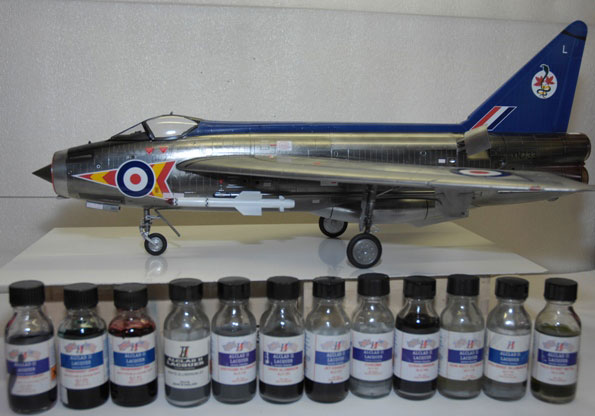
Alclad II Lacquer – what is it?

It’s a solvent-based lacquer (I still call it paint, sorry!) that’s designed to be sprayed onto your model to create multiple metallic effects. You can find out much more about this product here on the Alclad II website – some good info that will help you. Especially check out the ‘How to’ section as there are instructions, videos and all sorts of stuff in multiple languages.
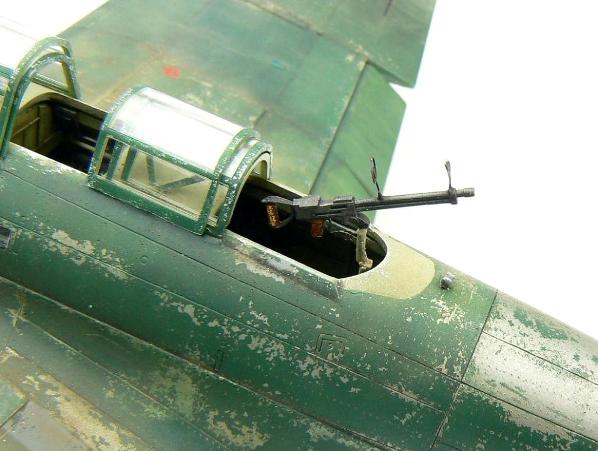
Hasegawa B5N2 Kate, 1:48 by Jamie Haggo

The benefits – a personal view…

From having used this stuff for several years now my honest opinion is that it about the best product on the market for the job (as I write this in Jan 2013). This is why:

  • It’s easy to use
  • You can create an infinite number of tones, shades, effects using different bottles in the range
  • There is a large range readily available, it’s growing and it’s easy to obtain (in the UK, Europe and USA that I know of)
  • The paint dries quickly and generally doesn’t leave finger marks, allowing you to handle your model
  • Because you spray the lacquer (paint) very thinly, you can build up the effect you want gradually and achieve a subtle, realistic finish
  • You can use any of the Alclad ‘varnishes’ (Klear Gloss etc) and spray these onto their metallic lacquer and it doesn’t affect the metallic look of the model too much – just play with the different ‘Kotes’ on scrap to see how your finish changes
  • It’s easy to clean your airbrush using a solvent airbrush cleaner.

Read on…

Pages: Page 1 Page 2

Primary Sidebar

LOGIN/LOGOUT

Lost your Password?


modelpainting
techniques-landing

Model Painting & Airbrushing Techniques

  • AIRBRUSHES
    • Evolution Airbrush – Harder & Steenbeck
    • Iwata Revolution M1 airbrush – 2 VIDEO DEMOS
    • Ultimate APEX Airbrush – VIDEO DEMO
  • AIRBRUSHING WITH ACRYLICS
    • Acrylic Ink Paints for airbrush – Mr Paint
    • Acrylic Metal Color by Vallejo – Intro
    • Correct use of AMMO Primer
    • Getting rid of airbrush overspray between colours – Video
    • How to use Hataka Red Line acrylic paints – Video
    • How to mix and spray acrylics – 4 Videos
    • How to Paint a Car Transporter Trailer – AMMO ATOM Paints
    • How to paint with AMMO Acrylics – Problems and Solutions with Mig Jimenez – Video
    • How to Paint Winter Camouflage – AMMO ATOM
    • Humbrol Acrylics and how to spray them – Video
    • Painting a Messerschmitt Bf109 with AMMO ATOM paints – Video
    • Storing your Lifecolor paints
    • Stynlrez primers and how to use them – Video
    • Using Ultimate Airbrush Thinner – 2 Videos
    • Vallejo Model Color – How to airbrush tutorial – Video
    • What paint what thinner? What to mix with what – a simple guide
    • Yellow and Red, airbrushing and painting – 6 Videos!
  • AIRBRUSHING WITH ENAMELS
    • Getting rid of airbrush overspray between colours – VIDEO DEMO
    • Getting the mix right and spraying
    • Stynlrez primers and how to use them – VIDEO DEMOS
  • AIRBRUSHING METALLIC FINISHES
    • Acrylic Metal Color by Vallejo – Intro – VIDEO DEMOS
    • Alclad2 metal finishes – How to spray – Part 1
    • Alclad2 metal finishes – How to spray – Part 2
    • Burnt metal effects
    • How to paint metal bodies
    • How to spray Alclad2 clear varnishes onto Alclad2 Metallic Lacquers – VIDEO DEMOS
    • Stynlrez primers and how to use them
  • AIRBRUSHING – LOOKING AFTER YOUR AIRBRUSH
    • Airbrush lubricant, how to use it – VIDEO DEMO
    • Choosing the right brushes
    • Cleaning your airbrush and blow-back technique – VIDEO DEMOS
    • Removal of airbrush tip for cleaning – VIDEO DEMO
    • Using an ultrasonic cleaner to clean your airbrush – VIDEO DEMO
  • BODYWORK
    • How to paint Bodywork with Cobra Motor Paints
    • How to paint metal bodies
    • How to paint a motorcycle
    • How to paint a Subaru Impreza rally car
  • BRUSH PAINTING
    • How to Brush Paint with AMMO ATOM paints
    • How to brush paint with Humbrol Water-Based Acrylics
  • CANOPIES
    • Applying tinted shades – 3 VIDEO DEMOS
    • Cleaning up frame lines after painting
    • CT Scale Models Masks – how to use them
    • FrogTape low-tack masking tape – 2 VIDEO DEMOS
  • CAR MODELLING
    • Beginners Resource
    • How to Paint a Car Transporter Trailer – AMMO ATOM Paints
  • CODES AND INSIGNIA
    • Hinomaru – Spraying Japanese Hinomaru markings
    • How to paint D-Day identification stripes
    • Spraying German WWI crosses – VIDEO DEMOS
    • Spraying your codes and insignia – VIDEO DEMOS
  • COMPRESSORS
    • Iwata Studio Series Smart Jet Pro Compressor – VIDEO DEMO
    • Neo Air for Iwata miniature air compressor 2 VIDEO DEMOS
  • FIGURE PAINTING
    • How to Paint 1:35 German Fallschirmjager Monte Cassino Tutorial – VIDEO DEMO
    • How to paint 28mm Napoleon and Napoleonic Horses – VIDEO DEMO
    • How to paint Bravo 6 ‘Wardaddy’ – VIDEO DEMO
    • Making a wet pallet – VIDEO DEMO
    • Painting 1:35 scale faces : a beginners guide – VIDEO DEMO
    • Quick figures – Painting with Lifecolor water-based acrylics
    • Ultracast SS Tiger Tank Commander 1:32
  • GERMAN VEHICLE COLOURS
    • German Vehicle Colours
  • GLOSS FINISHES
    • Why a gloss finish?
  • MASKING
    • AMMO Masking Sheets – 1mm Grid
    • AMMO Masking tape with Mig Jimenez – VIDEO DEMO
    • Blu-Tac putty : using rolls of putty – VIDEO DEMO
    • CT Scale Models Masks – how to use them
    • Creating your own camouflage masks
    • Creating your own masks with Gilles Pepin
    • Creating round masks for circular windows
    • DSPIAE Masking Tape Cutting Mat B – how to use
    • Gyro Cut swivel head cutting tool – VIDEO DEMO
    • Infini Easy cutting mat Type B – VIDEO DEMO
    • Make your own Luftwaffe paint masks
    • Making your own masks for spraying – from the decal sheet! – 2 VIDEO DEMOS
    • Masking canopies
    • Masking canopies and clear parts – 2
    • Masking canopies with Parafilm-M
    • Making paper masks
    • Masking tape
    • Masking tape adhesion problems – solved! VIDEO DEMO
    • Pre Cut Camouflage Masking Sets
    • Quick Wheel Masks for AFVs – 3 VIDEO DEMOS
    • Specialist paint masks for camo and markings
    • Strawberry laces to mask camo fine feathered edges
    • Tamiya Curved Masking Tape – How to use it – VIDEO DEMO
    • Using Tamiya tape to create curved camo patterns – VIDEO DEMO
  • METALLIC FINISHES
    • AK Xtreme Metal finishes – how to get an Aluminium finish – VIDEO DEMO
    • Alclad2 metal finishes – How to spray – Part 1
    • Alclad2 metal finishes – How to spray – Part 2 – VIDEO DEMO
    • Aluminium foil to create a NMF – The Peter Doll way
    • Applying metal pigment with a Rubber Brush – with Mig Jimenez – VIDEO DEMO
    • Burnt metal effects
    • Chrome lenses using a Molotow ink pen – VIDEO DEMO
    • Cowls on WWI aircraft – textured and hammered effects
    • How to apply metal foil – 3 HD VIDEO DEMOS
    • How to paint metal bodies
    • Mr Metal Colour – VIDEO DEMO
    • Vallejo Acrylic Metal Color – Intro – 3 VIDEO DEMOS
    • Vallejo Acrylic Metal Color – hand painting – 2 VIDEO DEMOS
  • PAINT BRUSHES
    • How to use AMMO Long Live The Brushes – VIDEO DEMO
    • Humbrol paint brushes
    • Kolibri paint brushes
  • PAINTING
    • Correct use of AMMO Primer
    • How To Paint A Rusty Turret – VIDEO DEMO
    • How To Paint A Typhoon Truck – Part 1 – VIDEO DEMO
    • How To Paint A Typhoon Truck – Part 2 – VIDEO DEMO
    • How to paint with AMMO acrylics
    • Hand-painting Tamiya Color acrylic paint
    • How to paint a resin seat with molded in belts
    • Labels for Tamiya paint pots
    • What paint what thinner? What to mix with what – a simple guide
  • PAINTING ARMOUR INTERIORS
    • How to paint and weather armour interiors tutorial
  • PAINTING CAMOUFLAGE FINISHES
    • Luftwaffe WWII camouflage mottling – VIDEO DEMO
    • Spraying acrylic camo patterns freehand – VIDEO DEMO
  • PAINTING WHEELS
    • Getting a neat demarcation between hub and tyre – 7 VIDEO DEMOS!
  • PASTELS FOR MOTTLING
    • Using pastels to apply German armour camouflage pattern – VIDEO DEMO
  • PRIMERS
    • Correct use of AMMO Primer
    • How to Use AMMO One Shot Primer – VIDEO DEMO
    • Decanting paint from spray cans for airbrushing – VIDEO DEMO
    • Humbrol Acrylic Grey Primer – how to spray – VIDEO DEMO
    • It’s Prime Time – using primers
    • Primers: Russian Green & Tracks – Ammo of Mig Jimenez
    • Stynlrez primers and how to use – 6 VIDEO DEMOS
    • Ultimate Primer – 4 VIDEO DEMOS
  • STRIPPING PAINT
    • Using Fairy Power Spray Cleaner to strip paint – VIDEO DEMO
    • Using Mr Muscle Oven Cleaner to strip paint
  • SURFACE PREPARATION
    • Correct use of AMMO Primer
    • Micromesh to get rid of paint demarcation lines – VIDEO DEMO
    • Micromesh Polishing Cloths – 6 VIDEO DEMOS
    • Using Micromesh to polish the paint surface
  • VINYL TRACKS
    • How to paint vinyl tracks
  • WOOD EFFECTS
    • Creating woodgrain effects using RB Photo etch templates – VIDEO DEMOS
    • Simulating wooden propellers
    • Wood grain effects – and how to paint them – VIDEO DEMO
  • YELLOW AND RED AIRBRUSHING / PAINTING
    • Yellow and Red, airbrushing and painting
  • OTHER
    • Choosing the right source of air
    • Hand hold for painting armour subjects
    • Hinomaru – Spraying Japanese Hinomaru markings
    • How to paint and weather cockpits – VIDEO DEMO
    • Paint pallet and cleaning
    • Pre and post shading
    • Protecting your painted finish
    • Storing your Lifecolor paints
Painting Techniques Weathering Techniques
DISCLAIMER While the hints, tips and advice in Scale Modelling Now magazine have worked for us, no guarantee is given that they will always work, that they are applicable to you or that there may be Health & Safety issues if you do follow the advice. It’s very much up to you to decide if you want to try them out. All relevant safety regulations regarding knives, adhesives, solvents, paints, etc. are implied.

Copyright © 2025 · Scale Modelling Now · Online Scale Modelling Magazine · Scale Modelling Techniques and Tips · Privacy Policy