• Skip to primary navigation
  • Skip to main content
  • Skip to primary sidebar

Scale Modelling Now

Scale Modelling Techniques

  • HOME
  • CONTENTS
    • What’s New
    • Techniques Bank
    • Aircraft
    • Armour
    • Classic Kit Builds
    • Civilian Aircraft Builds
    • Vehicles
    • Sci-Fi, Fantasy, Space
    • Maritime
    • Figures
    • Gift Certificate
    • Book Reviews
    • Dioramas
    • Modelling Workshops
    • Podcasts
  • WHAT WE OFFER
  • FREE SAMPLES
  • EVENTS
    • EVENTS
    • NEWS
  • ABOUT
    • CONTACT
    • ABOUT US
    • TRADERS
  • LOGIN
  • More results…

    Generic filters
    Exact matches only
    Search in title
    Search in content
    Search in excerpt
Pages: Page 1 Page 2 Page 3 Page 4

Reference material Operation Northern Watch 1994-95, F-4G, EF-111A, Harrier GR5

December 7, 2012 By

F-4G Phantom ‘Wild Weasel’
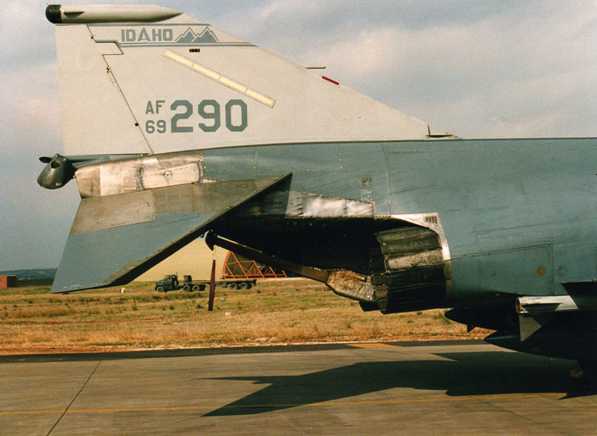
F4G, serial number AF 69-7290 of the Idaho ANG

They are the 190th Fighter Sqdn (FS) of the 124th Fighter Group (FG) from Gowen Field, Boise, Idaho. Points to note include the fin tip pod containing radar receivers of the AN/APR-47 system, the Idaho ANG colours with just below the ‘medal ribbon’ of a Presidential Unit Citation. The tail of an AIM-7M Sparrow missile can be seen below the wing root. The brake parachute has been used and discarded leaving the cover open just below the fuel dump apertures at the base of the rudder. My main aim was to record all the different hues and brightness of the natural metal areas.
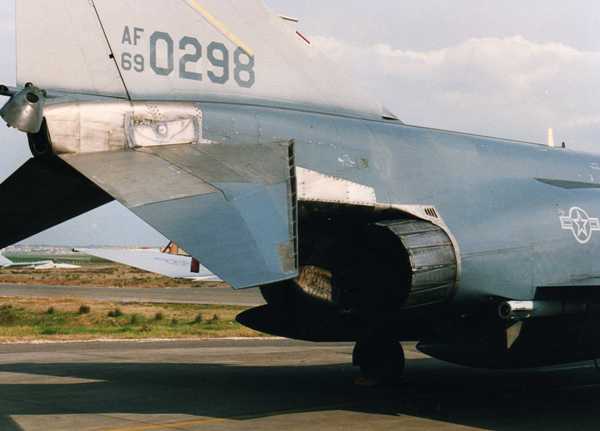
F4G, serial number AF69-0298

Points to note – again the parachute housing door, the fuel dump pipe and a nice view of the slotted stabilator. The underside of the stabilator should be painted as a mirror image of the upper surface. Two external fuel tanks can be seen, one on the outboard pylon on the port wing and one on the fuselage centreline. The rear of the fuselage walkway can also be seen, one on the outboard pylon on the port wing and one on the fuselage centreline. The rear of the fuselage walkway can also be seen above the low-viz national insignia. This aircraft is also grubbier around the stabilator swivel, a nice mixture of oil and very fine metal particles.
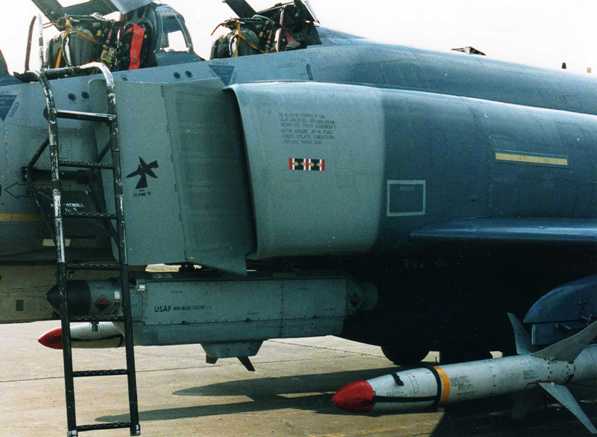
F4G serial number AF69-0298

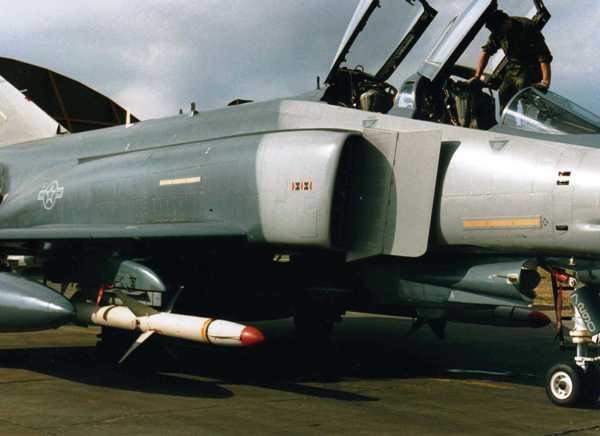
A view of the port forward and central fuselage. Points to note, both AGM-88 HARM (High Speed Anti Radiation Missile) can be seen mounted on the inboard wing pylons with an AN/ALQ 131(V) Electronic Counter Measures (ECM) pod mounted in the port forward Sparrow recess. This is unusual as the AN/ALQ 184 pod, a later model, was usually carried. On the port splitter plate is a `zap’ comprising a HARM taking out a radar with AAA 29th June 93 written below. On the port intake the Presidential Unit Citation `ribbon’ is carried and for those of a masochistic turn of mind all of the holes for the boundary layer control on the rear splitter plate can be counted and added to your 1:72 F4! Lo vis markings are in the `other’ grey (FS 36270 on FS 36118) and vice versa. The white painted interior of the nose undercarriage door can be seen behind a very `beat-up’ boarding ladder. These are big, heavy and awkward and quickly get battered!
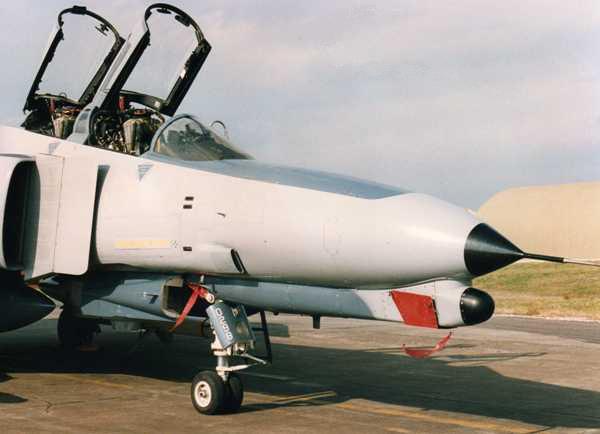
F4-G serial number 0298

Starboard nose and intake. Points to note – three internal mirrors on the pilots canopy frame while the `Bear’ (slang name for the WSO) has two internal and one external mirror on his canopy. The start of the non-slip walkway can be seen on top of the starboard air intake and the `last 4’ of the serial number displayed vertically on the nose U/C door. The scissors link on the nose U/C is offset about 30˚ to port and some of the 52 emitter and receiver aerials of the AN/APR-47 ‘radar and missile detection and launch homing system’ can be seen on the nose U/C door and on the chin gondola. The AN/APR-47 is located in the nose and occupies space available once the Midas-4 cannon had been removed. The small air intake is now used to provide cooling air to all that electronic wizardry. The small red U-shaped cover plate protects a pair of aerials on the chin gondola.
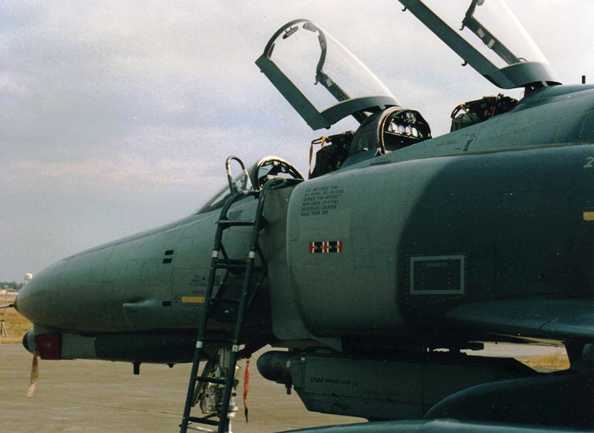
F4G serial number 69-7290

Showing port side of the nose and intake. Points to note – prominent canopy latches and probably more of the rear cockpit instrumentation than they wanted photographed.
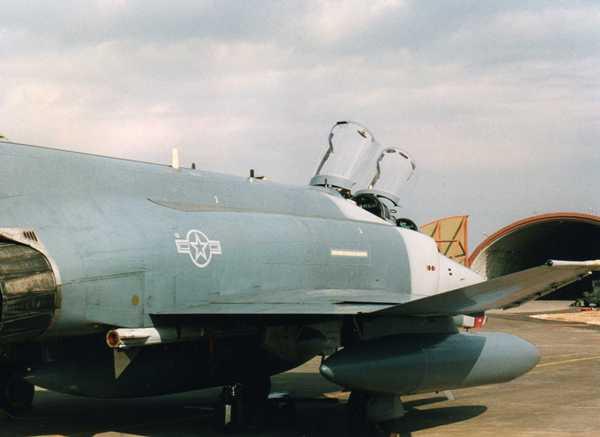
Showing starboard side and wing. Points to note – canopy mirrors, a fine selection of spine aerials, the fuselage non-slip walkway and one of the upper wing flaps (or lift devices) slightly open [not sure about this Neil, ask a Phantom Phreak]. The slatted leading edge on the outer wing and what looks like a starboard nav light at the rear of the wing tip, also a bit more of the rear seat instruments!
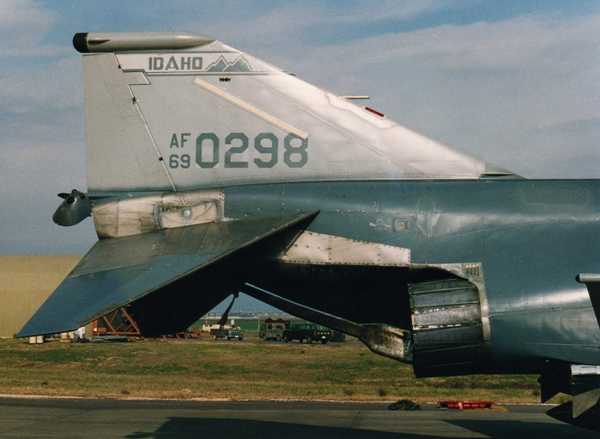
F4G serial number 69-0298

Another modelling reference shot of oily bits possibly some paint touch up around the fin leading edge pitot tube and anti-collision lamp. Note the RBF flag on the hook.
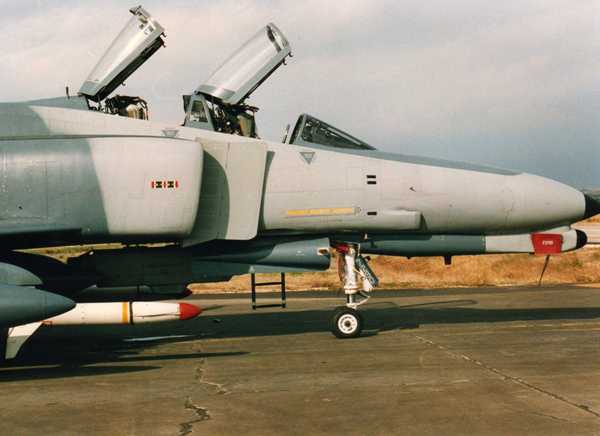
F4G serial number 69-7290

Another reference shot showing nose leg RBF flag, protective `noddy caps’ on the HARM missiles and the mounting points for the AN/ALQ 131 pod in the port forward Sparrow bay. There is a different pattern to the nose gondola dark grey painting compared to A/C No 0298 which came further forward.
F4G serial number 69-7290

Another reference shot – shows the small split intake at the forward end of the fin and the 6 aerials on the spine. Looks as though some paint touch up is required just below the `slime light’ on the intake side and a better view of the `shore’ or adaptor that mates the HARM missile to the inner pylon.

All these aircraft were painted in the Hill Grey II scheme, which is popularly known as Egypt I, using FS 36118 dark grey and FS 36270 grey in what is effectively a symmetrical mirror upper to lower surface scheme.

EF-111A Raven…

Pages: Page 1 Page 2 Page 3 Page 4

Primary Sidebar

LOGIN/LOGOUT

Lost your Password?


modelconstruction
techniques-landing

Painting Techniques

Weathering Techniques


Model Construction Techniques

  • A BEGINNER’S TUTORIAL – How to Build a 1:35 AFV Kit
  • ADDING DETAIL & SUPER DETAILING
    • Adding cast texture to turrets
    • Advantages of adding Photo Etch to your Armour kits – Video Demo
    • Aerial wires – creating realistic aerial wires
    • Annealing PE belts to soften and bend to shape – VIDEO DEMOS
    • Converting AIM-9 to AAM-3 of JASDF
    • FOD guards for jet aircraft intakes – make your own! – 7 VIDEO DEMOS
    • Making corrugated iron – Video Demo
    • Making a model tree
    • Making jet aircraft mirrors for canopies
    • Making jet landing gear retraction locks
    • Making oxygen hoses for aircraft cockpits – VIDEO DEMO
    • Making sandbags
    • Metal foil for seat belts and harness
    • Metal foil to detail undercarriage and stores
    • Mini Spares Box – do you have one?
    • Navigation lights – making wing tip navigation lights
    • Pre-painted Photo Etch (PE) Brass in cockpits
    • Quinta detail sets – how to add the F-14 detail set – VIDEO DEMO
    • Ship rigging
    • Spoked wheels for WWI Bi-planes
    • Spoked wheels – Re-spoking wheels on motorcycles
    • Stretched sprue for rigging, aerials and lots of uses! – VIDEO DEMO
    • Turret periscope lenses on AFVs – VIDEO DEMOS
  • ADDING IMPROVED PARTS
    • Adding resin parts, getting the fit right
    • How to use AMMO Anti-Slip Paste – VIDEO DEMO
    • Assembling and Burnishing Friul Tracks
    • Construction of a 1:700th scale Photo Etch catapult
    • Creating ship masts in brass – VIDEO DEMO
    • Eduard Superfabric seat belts (HGW) and how to use them – VIDEO DEMO
    • HGW Micro Textile Seatbelts
    • Hinges
    • Making curved metal parts – VIDEO DEMO
    • Making one-off new components
    • Type conversions
    • Vac-form canopies
    • Vacuum forming your own components
    • Working with Fruil Modelisimo metal tracks – VIDEO DEMOS
  • CANOPIES
    • Attaching clear parts
    • Broken glass effects
    • Dipping canopies and clear parts to improve clarity
    • Epoxy lights – how to make them – VIDEO DEMO
    • Polishing canopies
    • Polishing canopies using UMP 4-Part system – VIDEO DEMO
    • Removing mould seam lines from canopies – 4 VIDEO DEMOS
    • Seamless front windscreens on aircraft – 3 VIDEO DEMOS
    • Wing tip navigation and landing light covers – VIDEO DEMOS
  • CLAMPING & FIXING PARTS
    • Making individual track links
    • Model Clamp to hold your model
    • Mini pegs for holding small parts – VIDEO DEMO
  • CUTTING TOOLS, OTHER USEFUL TOOLS and GETTING UNDERWAY
    • Starting out on your first armour project
    • The DSPIAE MT-C Stepless Adjustment Circular Cutter
    • Gyro Cut swivel head cutting tool – VIDEO DEMO
    • Infini Easy cutting mat Type B – VIDEO DEMO
    • Knives, what Geoff C uses
    • Lighting your workbench
    • Magnetic Handle 60 by RP Toolz
    • Mini Long Nose Pliers – VIDEO DEMO
    • Mini Needle Files – VIDEO DEMO
    • Revell Precision Scraper – How to use it
    • Side cutters, important choices and decisions – VIDEO DEMO
    • Simple ideas for parts holders – VIDEO DEMO
    • Tweezers – great value set from Pixnor – VIDEO DEMO
    • Using the Flex-I-File and Touch and Flow applicator
    • Using a razor saw – VIDEO DEMO
  • DRILLS AND DRILLING
    • Drilling out gun ports on aircraft – VIDEO DEMO
    • Pin vice drills – using the Humbrol Pin Vice Drill – VIDEO DEMO
  • FILLER
    • Filling seams with Mr Surfacer
    • Milliput White as filler
    • Using PVA Glue as a filler
  • GLUES & GLUING
    • How To Use AMMO Cyanoacrylate Glues – HD VIDEO
    • Applying cyano (superglue) with an applicator with Andy Brown – HD VIDEO DEMO
    • Attaching clear parts – HD VIDEO DEMO
    • Getting started on a new project – glues, tools and approach with Andy Burton
    • Glues the choices and how to use them – 7 VIDEO DEMOS
    • Gluing deck sections using Pin Flow Applicator – VIDEO DEMO
    • Homemade cyano applicator
    • Pin Point Bottle Kit – VIDEO DEMO
    • Ultimate Glue Bottle Holder (for Tamiya glue) – VIDEO DEMO
    • Using liquid poly to join parts and avoid filling – VIDEO DEMO
    • Using polystyrene cement – HD VIDEO DEMO
  • IDF MODEL PROJECTS
    • Common errors with IDF models
  • KIT INSTRUCTIONS
    • Kit instructions – an introduction and tips
    • Making a plan
  • LIGHT and SOUND PROJECTS and RESOURCES
    • Adding light and sound to Revell 1.48 Bristol Beaufighter – VIDEO DEMO
    • Revell 1:32 F4U1A Corsair – VIDEO DEMO
    • Tamiya 1:32 De Havilland Mosquito FB.VI
    • Magic Scale Modelling Now
    • SmartFX Now
  • MAGNETS
    • Preventing aircraft with tricycle undercarriage from tail sitting – VIDEO DEMO
  • PHOTO ETCH
    • Advantages of adding Photo Etch to your Armour kits – VIDEO DEMO
    • Annealing PE belts to soften and bend to shape – VIDEO DEMOS
    • Pre-painted Photo Etch (PE) Brass in cockpits
    • Working with Photo Etch, getting started – VIDEO DEMO
  • PLANNING
    • Deciding on and planning your next project
  • PLANS
    • Questions, Thoughts and Resources for using plans
  • REFERENCE MATERIAL
    • Choosing and using reference material – Aircraft
    • Operation Northern Watch 1994-95 F-4G, EF-111A, Harrier GR5
  • REPAIRING MISTAKES, REINSTATING & CREATING SURFACE DETAIL
    • AMMO Scribing Tape, Straight Edge – How to use it – VIDEO DEMO
    • Filling seams with Mr Surfacer
    • Getting rid of mould ejector pin and sink marks – VIDEO DEMO
    • Hiding join lines inside engine cowls – VIDEO DEMOS
    • Improving overdone moulded rivet detail
    • Join lines: filling and getting rid of join lines – VIDEO DEMO
    • Mini chisel set to remove kit detail – VIDEO DEMOS
    • Oil Canning, how to create stressed metal effects – technique
    • How to use Plasticator Thin & Thick by AMMO – VIDEO DEMO
    • Removing ghost seam line joins – Micromesh – 2 VIDEO DEMOS
    • Repairing broken aircraft tail wheels – VIDEO DEMO
    • Riveting aircraft – VIDEO DEMOS
    • Scribing and re-scribing panel lines – VIDEO DEMO
    • Stressed metal effects on the Avro Lancaster
    • Stressed metal effects on panels – VIDEO DEMO
    • Using Dymo tape as a guide edge – VIDEO DEMO
  • RESIN
    • How to Use the AMMO Hot Dog Hot Air Gun – VIDEO DEMO
    • Removing the casting block from resin parts – VIDEO DEMO
    • ‘Resin Rookie’ – building your first resin armour kit
    • Thinking of trying a resin kit or accessory?
  • RIGGING
    • How to rig a WWI Albatros Bi-plane in 1.32 scale – 20 VIDEO DEMOS
    • How to rig a WWI Biplane with Dave Coward – preview
    • How To Use AMMO Rigging – VIDEO DEMOS
    • Ship Rigging
    • Stretched sprue for rigging, aerials and lots of uses! – VIDEO DEMO
  • RIVETING
    • Adding rivets using a pin vice drill – VIDEO DEMO
    • HGW Positive Rivets – how to apply them
    • Improving overdone moulded rivet detail
    • Revell Rivet Maker – 2 VIDEO DEMOS
    • Riveting aircraft – 2 VIDEO DEMOS
    • Rosie The Riveter – how to use this excellent tool – VIDEO DEMO
    • Using Dymo tape as a guide edge – VIDEO DEMO
    • Using a pin vice drill to enhance rivet detail = VIDEO DEMO
  • RUBBER-VINYL TYRES
    • Removing mould seam lines – VIDEO DEMO
    • Finishing Off – VIDEO DEMO
  • SAFETY
    • Basic safety equipment – introduction
    • IPMS(UK) Safety Advice for Modellers 2024
  • SANDING & POLISHING
    • DSPIAE Reciprocating Sander – product review – VIDEO DEMO
    • Fine-sanding alternative: the coffee filter ‘onion’
    • How to use Ultimate Modellers sanders, buffers and Skinny Sticks – VIDEO DEMO
    • Micromesh to get rid of paint demarcation lines
    • Micromesh Polishing Cloths – VIDEO DEMOS
    • Polishing canopies – VIDEO DEMO
    • Tools to get you started – sander and buffers
    • Ultimate Customisable Sanding Sheets – VIDEO DEMO
    • Using Albion Alloys plastic sanding needles – VIDEO DEMO
    • Using Micromesh to polish the paint surface – VIDEO DEMO
  • SCRATCHBUILDING
    • Scratchbuilding – getting started
    • Scratchbuilding an aero engine
  • SELECTING A KIT
    • Selecting a Kit
    • 1:48 Armour
  • SOLDERING
    • Soldering – how to do it
    • Soldering for scale modelling – an introduction
  • STORING PARTS DURING CONSTRUCTION
    • Plastic containers
  • TROUBLE-SHOOTING
    • Adding nose weight to stop tail-sitters
    • Stripping a Painted Model
  • OTHER
    • Fitting painted wheels, avoiding damage to painted areas

Disclaimer

While the hints, tips and advice in Scale Modelling Now magazine have worked for us, no guarantee is given that they will always work, that they are applicable to you or that there may be Health & Safety issues if you do follow the advice. It’s very much up to you to decide if you want to try them out. All relevant safety regulations regarding knives, adhesives, solvents, paints, etc. are implied.

Copyright © 2025 · Scale Modelling Now · Online Scale Modelling Magazine · Scale Modelling Techniques and Tips · Privacy Policy